
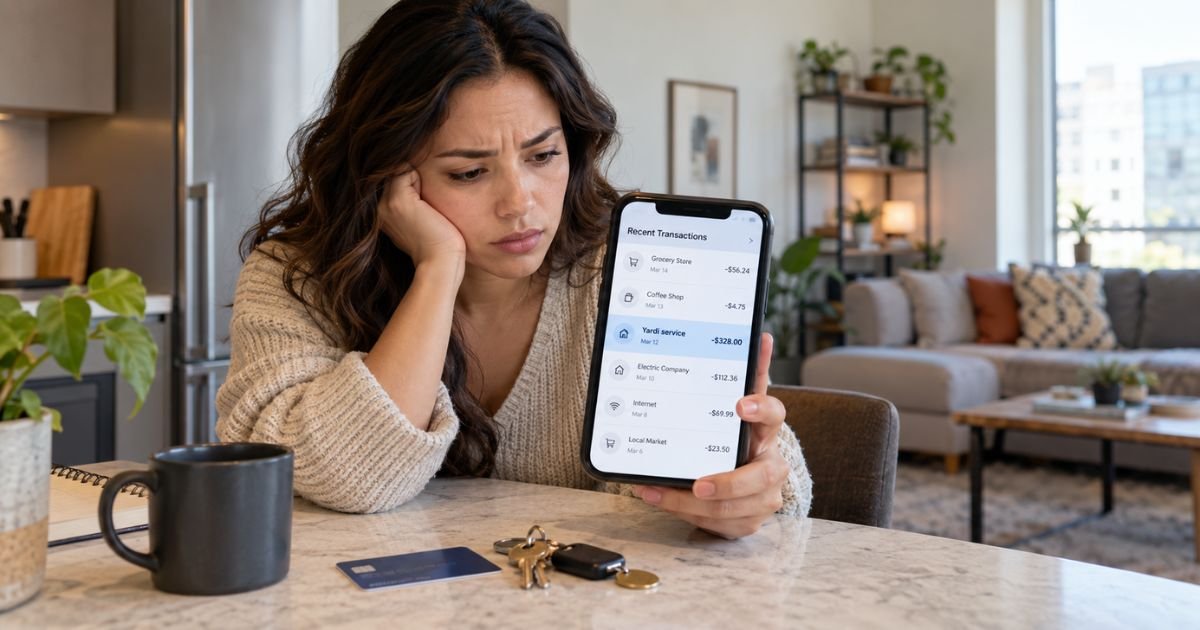
A Yardi service charge on bank statement records can feel confusing if you don’t remember paying a company called Yardi. The charge is often legitimate and may be connected with rent, a security deposit, an apartment application, or another housing payment.
Yardi provides payment technology used by landlords and property managers, including the RentCafe resident portal. This guide explains what the charge typically means, how to identify it, and what you can do if you didn’t authorize it.
Table of Contents
What Is a Yardi Service Charge on Bank Statement?
A Yardi service charge is generally a payment-processing fee connected with a transaction made through Yardi or its RentCafe platform. RentCafe is commonly used by apartment communities and property managers to collect rent and other housing payments.
Yardi’s current RentCafe terms say payments submitted through the platform may include rental deposits, rent, and other property-related transactions. The terms also state that some services can have separate charges, including screening services and lease-related fees.
Yardi may therefore appear on your statement even if you remember paying your apartment complex rather than Yardi itself.
What Can Cause a Yardi Charge?
A Yardi-related transaction can generally come from several housing activities.
Common possibilities include:
- Monthly rent
- Security deposits
- Apartment application fees
- Credit or debit card processing fees
- Utility charges collected through your resident portal
- Pet or parking charges
- Lease-related fees
- Screening services
- Recurring rent payments
- Other charges requested by your property manager
Yardi’s terms explain that many payments processed through RentCafe are for services supplied by your property owner or manager rather than Yardi itself.
That distinction can help explain why a bank statement says Yardi while your resident ledger shows the name of your apartment community.
Why Did Yardi Charge a Separate Service Fee?
You may see a separate Yardi service charge when you pay through a debit or credit card.
In a 2026 BBB response to a RentCafe complaint, Yardi said its payment agent charges a service fee for credit and debit card transactions based on the payment amount. Yardi also stated that the service fee is shown during payment and may not appear on the resident’s property ledger.
Current RentCafe terms also say certain fees may be imposed by Yardi or another company and that those fees can change.
The exact fee generally depends on your property, payment method, transaction amount, and payment setup. You should rely on the fee shown on your own checkout screen rather than assuming every RentCafe property charges the same amount.
| Payment type | What you may generally see |
|---|---|
| Bank account or ACH | May have no fee or a smaller fee |
| Debit card | May have a fixed or transaction-based service fee |
| Credit card | May have a percentage-based processing fee |
| Application payment | May include an application or processing fee |
| Rent or deposit | May show the property payment plus a separate fee |
Pro Tip: Review the final payment confirmation before submitting rent. A service fee may appear separately from the amount shown on your apartment ledger.
Is Yardi the Same as RentCafe?
RentCafe is a Yardi service.
BBB currently lists RENTCafé as one of Yardi Systems’ alternate business names. Yardi also operates several other real-estate software products.
If your apartment uses RentCafe to pay rent, Yardi may process the transaction behind the scenes.
You may therefore see wording involving:
- YARDI
- RENTCAFE
- Yardi Systems
- A Yardi transaction number
- Your property name
- A separate service charge
The exact description may vary by bank.
How to Verify a Yardi Service Charge
Start with your RentCafe resident portal if your apartment uses one.
Check your recent payment history and compare the transaction date and amount with your bank statement. Remember that your bank may post the payment a day or more after you submitted it.
You should also check:
- Your RentCafe payment confirmation.
- Your apartment ledger.
- Your email for rent payment receipts.
- Any recent apartment applications.
- Automatic payment settings.
- Payments made by a roommate or joint account holder.
If the amount is small compared with your rent payment, it may generally be the processing fee rather than the rent itself.
If you still cannot identify it, contact your property manager. Yardi’s RentCafe terms generally direct users to the property owner or manager when there is a disagreement about the underlying rent or payment amount.
Is a Yardi Service Charge a Subscription?
Usually, a consumer Yardi service charge connected with RentCafe is not a typical monthly subscription.
It is more often a payment-processing fee generated when you make a housing payment. If you pay your rent every month using the same method, you may see a similar fee every month.
That can make the transactions look like a subscription.
Yardi’s terms also allow your payment information to be stored for future or recurring transactions when you choose recurring payments.
Check your autopay settings if the payment appears automatically each month.
Why Is the Yardi Fee Higher Than Before?
Several factors may explain a changing fee.
Your payment method may have changed from a bank account to a debit or credit card. Your property may also have changed its payment setup.
Consumer complaints describe cases where renters believed a debit card had been processed under a higher-fee credit card option. In one BBB response, Yardi said its records showed that the consumer had selected the credit-card payment option and that the applicable fee had been disclosed.
BBB reviews from 2026 also contain renters reporting higher-than-expected RentCafe transaction fees. These reviews are individual consumer reports and do not establish that the same problem applies to your account.
Common Mistakes: Don’t assume a service fee is wrong because it increased. Check whether your payment method changed and review the amount shown before your payment was submitted.
Can You Avoid the Yardi Service Charge?
Possibly. Your available options generally depend on your landlord.
A bank-account payment may sometimes cost less than a card payment. Some properties may also accept checks, money orders, payment services, or other methods.
However, your property controls which payment options are available.
A 2026 Yardi response to a BBB complaint said payment choices are determined in coordination with the property management company.
Before your next rent payment, compare every payment option shown in RentCafe. You may be able to choose a lower-cost method.
Do not switch payment methods at the last minute if you are unsure how long bank verification will take. A late rent payment may create a separate problem with your landlord.
What Consumers Report About RentCafe Fees
Consumer reports show mixed experiences.
BBB currently lists billing issues as a common category among complaints involving Yardi Systems. Some consumers report concerns about service fees, failed rent payments, account verification, and payment methods.
Trustpilot currently shows mixed RentCafe feedback, including positive reviews about ease of use and negative comments about rental listings and service issues. Trustpilot reviews represent individual user experiences and should not be treated as proof about your transaction.
Reddit discussions also contain renters describing transaction fees when using cards through RentCafe. Other users report using bank-account payments to reduce or avoid those fees. These discussions are anecdotal and payment setups can vary by property.
What If You Didn’t Authorize the Yardi Charge?
Take the transaction seriously if you do not rent from a property that uses Yardi, have not submitted an apartment application, and cannot match the charge with any housing payment.
Contact your bank promptly using the number on your debit card, bank statement, or official banking app.
For U.S. consumer bank accounts, Regulation E generally provides protections for unauthorized electronic fund transfers. The CFPB says an unauthorized transfer shown on a periodic statement should generally be reported within 60 days to protect your rights regarding later transfers.
If a lost or stolen debit card or access device is involved, shorter reporting periods can affect your potential liability. Reporting suspicious activity immediately is generally the safest approach.
Also contact your property manager if you have a RentCafe account. Ask whether the transaction appears in your tenant ledger or payment history.
FAQs: Yardi Service Charge on Bank Statement
Q. Why does Yardi appear on your bank statement?
A. Yardi generally appears because your landlord or property manager uses Yardi or RentCafe to process housing payments. The transaction may relate to rent, a deposit, an application, or a payment-processing fee.
Q. Is a Yardi service charge legitimate?
A. It can be legitimate if you recently made a payment through RentCafe or another Yardi-powered property portal. You should generally compare the transaction with your resident ledger and payment confirmation before deciding whether it is authorized.
Q. Can you get a Yardi service fee refunded?
A. Refund eligibility may vary. Yardi has stated in at least one 2026 BBB response that card payment service fees were non-refundable, but your specific terms may differ. Check the payment confirmation and ask your property manager or payment provider.
Q. How do you stop Yardi charges?
A. If the charge comes from recurring rent payments, review your RentCafe autopay settings and contact your property manager before changing them. If a transaction is genuinely unauthorized, notify your bank promptly and secure the affected account.
Conclusion
A Yardi service charge on bank statement records generally points to a housing payment or processing fee made through Yardi or RentCafe. You may see it after paying rent, a deposit, an application fee, or another property-related charge.
Check your RentCafe payment history, email receipts, and apartment ledger first. If you cannot match the charge and did not authorize it, contact your property manager and bank promptly so the transaction can be investigated.
Disclaimer: This article is for informational purposes only and isn’t financial or legal advice. Payment fees, rental policies, refunds, and bank dispute rules may vary by property and financial institution, so verify account-specific questions with your property manager, Yardi, or your bank.
Meet the Author
