
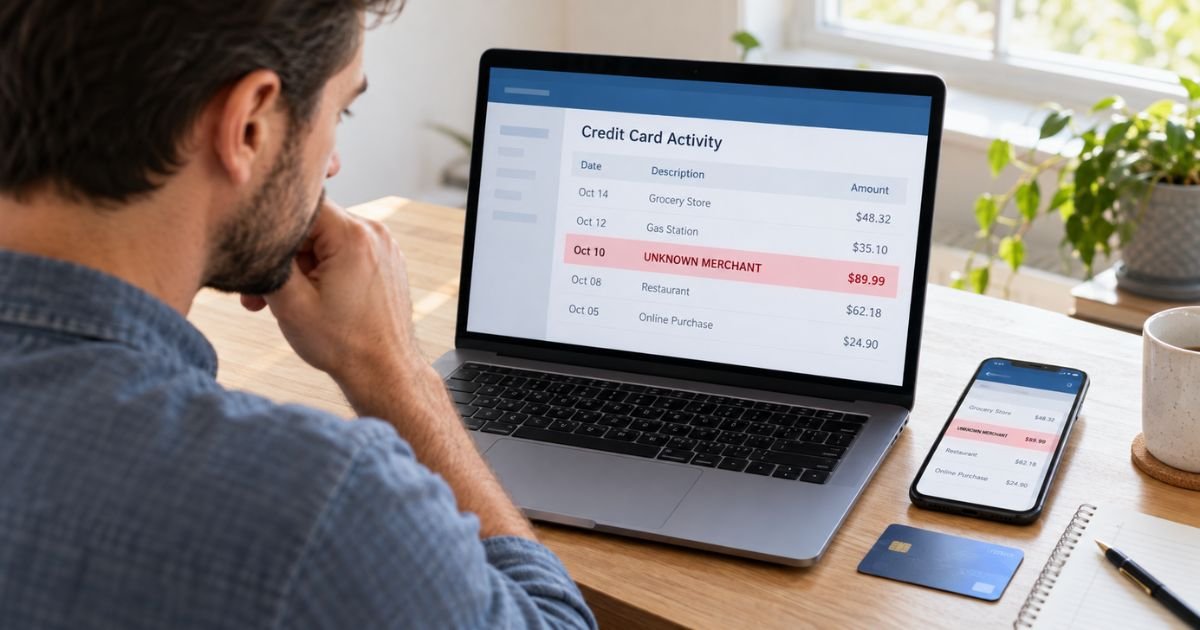
A fraudulent charge can feel alarming when you know you did not make or approve the purchase. Acting quickly can help protect your account and may improve your chances of recovering the money.
The process depends on whether the charge hit a credit card, debit card, or bank account. This guide explains what to do first, the main federal deadlines, and how to document your claim.
Table of Contents
What Does It Mean to Dispute a Fraudulent Charge?
To dispute a fraudulent charge means telling your card issuer or bank that a transaction was made without your permission and asking it to investigate.
A true unauthorized charge is different from a purchase you made but later regretted, a product problem, or a subscription you forgot to cancel.
That distinction matters because banks use different dispute categories. The CFPB generally defines an unauthorized electronic fund transfer as one initiated by someone other than you without actual authority and from which you received no benefit.
Confirm That You Do Not Recognize the Charge
Review the full transaction details before filing a fraud claim. Merchant names on statements can differ from the brand you remember.
Check:
- The exact amount and date.
- Whether the charge is pending or posted.
- Recent orders and subscriptions.
- Purchases by authorized card users.
- Digital wallets and app-store purchases.
- Email receipts.
Pro Tip: Search your email for the exact amount and merchant descriptor. This may help you rule out a legitimate purchase without delaying a fraud report.
Lock the Card and Contact the Issuer
Use your bank’s official app, website, or the number on the back of your card. Do not call a number from a suspicious text, email, or advertisement.
Tell the issuer that the transaction is unauthorized. Ask whether it recommends locking or replacing the card. The FTC advises reporting lost cards and fraudulent charges as soon as possible.
File the Dispute Under the Correct Reason
If you never made or approved the transaction, describe it as unauthorized or fraudulent. Do not call it a canceled service, refund problem, or product dispute unless that is what actually happened.
Keep the claim number, report date, and a screenshot of the transaction.
Know the Credit Card Deadline
Federal law generally limits your responsibility for unauthorized credit card charges to $50, although many issuers may provide stronger protections.
To preserve the Fair Credit Billing Act’s billing-error protections, the CFPB says you should also send written notice within 60 calendar days after the issuer sent the first statement containing the disputed charge. Calling or disputing online may be faster, but written notice helps protect your federal rights.
Send it to the issuer’s billing-dispute address, not its payment address. Include your account details, transaction date, disputed amount, and explanation.
Understand Debit Card Deadlines
Debit-card fraud can be more urgent because the money leaves your bank account directly.
If your debit card is lost or stolen, reporting within two business days can generally limit your liability to the lesser of $50 or the unauthorized transfers that occurred before notice. Waiting longer may raise potential liability to as much as $500 in some cases.
You should also report unauthorized withdrawals shown on a bank statement within 60 days. Waiting longer may increase your responsibility for later transactions, depending on the circumstances.
What Happens During a Debit Card Investigation?
After you report an unauthorized electronic fund transfer, a bank generally has 10 business days to investigate. If it needs longer, Regulation E may allow more time if the bank provides provisional credit and meets other requirements.
Provisional credit is temporary. The bank may reverse it if the investigation concludes that the transaction was authorized.
Some transaction types and newer accounts can have different timelines.
Keep Evidence of Your Fraud Claim
Keep records showing when you reported the problem and what you told the issuer:
- Screenshots of the transaction.
- Fraud claim numbers.
- Dates and times of calls.
- Emails and letters.
- Copies of supporting documents.
- An identity theft or police report, if applicable.
The FTC recommends keeping records and following up card disputes in writing.
Common Mistakes: Do not assume temporary credit means the case is closed. It may still be reversed after the investigation.
Keep Paying Undisputed Credit Card Charges
A fraud dispute does not normally let you stop paying the rest of your credit card bill.
Under the federal billing-error process, you generally do not have to pay the disputed amount or related finance charges while the issuer investigates. You should still pay legitimate charges on time.
For a properly submitted written dispute, the issuer generally must acknowledge it within 30 days unless the matter is already resolved. It generally must complete the investigation within two billing cycles, but no more than 90 days.
Protect Yourself From Wider Identity Theft
Several unfamiliar accounts, loans, or credit inquiries may point to broader identity theft. The CFPB recommends contacting affected financial institutions and using IdentityTheft.gov for a recovery plan.
You may also consider a fraud alert or security freeze. A freeze can help stop new credit from being opened in your name, but it does not stop fraud on an existing card.
What to Do if the Bank Denies the Claim
Read the denial notice and ask what evidence the issuer relied on. Check whether the bank has an appeal or reconsideration process.
For a credit-card billing dispute, the issuer must generally explain in writing why it believes the charge is valid. You may also request supporting documents.
If you believe the bank mishandled the dispute, you can submit a complaint to the Consumer Financial Protection Bureau.
Consumer reports on Reddit also show that dispute coding errors and requests for additional evidence can occur, although those experiences do not predict how your bank will handle your case.
Fraudulent Charge vs. Merchant Dispute
Not every bad transaction is fraud. If you made the purchase but the merchant failed to deliver, charged the wrong amount, or did not issue a promised refund, you may have a billing or merchant dispute instead.
| Situation | Typical dispute type |
|---|---|
| You never made the purchase | Fraud or unauthorized charge |
| You were charged twice | Billing error |
| Item never arrived | Merchant or billing dispute |
| Refund never posted | Billing dispute |
| You dislike the product | Merchant issue first |
| You knowingly sent a payment to a scammer | Protections may vary |
A scam payment can be more complicated. If you personally approved the payment, it may not be treated the same way as a transaction initiated by someone who stole your card or account credentials.
FAQs: How to Dispute a Fraudulent Charge
Q. How quickly should I dispute a fraudulent charge?
A. Report it as soon as you notice it. Credit-card billing-error rights generally include a 60-day written-notice period, while lost or stolen debit-card cases can have much shorter liability deadlines.
Q. Will my bank refund a fraudulent charge immediately?
A. Not always. A bank may provide temporary or provisional credit during an investigation, but the timing and final outcome may vary.
Q. Can I dispute a fraudulent charge that I already paid?
A. Yes, you may still dispute an unauthorized credit-card charge after paying the statement. The CFPB notes that repayment generally depends on the issuer’s investigation.
Q. Should I contact the merchant before reporting fraud?
A. If you truly did not authorize the purchase, contact your issuer promptly instead of delaying the fraud report. You can investigate the merchant too, but securing the account should come first.
Conclusion
Knowing how to dispute a fraudulent charge starts with acting quickly. Confirm the transaction, contact your issuer through an official channel, use the correct fraud category, and keep records.
Credit and debit cards have different deadlines and protections, so do not wait for another statement. If the problem may involve broader identity theft, secure your other accounts and review your credit reports too.
Disclaimer: This article is for informational purposes only and is not financial or legal advice. Fraud liability, investigation procedures, and dispute rights may vary by issuer and transaction type, so verify account-specific questions with your bank or card company.
Meet the Author
