
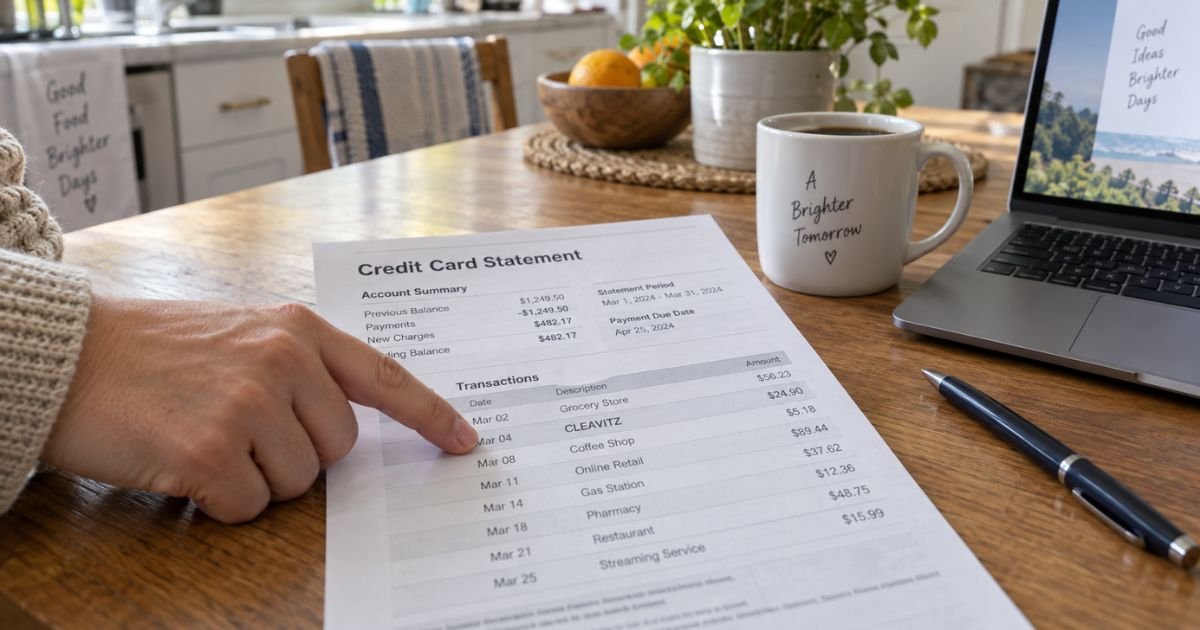
A Cleavitz charge on a credit card can feel confusing if you don’t recall signing up for anything. An odd brand name is often an old store, a shortened processor label, or a lookalike, not instant proof of fraud.
This guide explains the best public match, what is not confirmed, and how to match, stop, or dispute the line.
Table of Contents
What Is a Cleavitz Charge on a Credit Card?
A Cleavitz charge on credit card is a statement line that uses “CLEAVITZ,” “Cleavitz,” or a close cut-off of that name.
The strongest public match is a small Maryland fashion brand that sold half-tops under the Cleavitz name. Founder Julie Crotty launched the line around 2008.
Press releases from 2013 and 2014 describe a Gaithersburg-area company that sold the tops online at cleavitz.com and through boutiques. A 2014 release also cites U.S. patent 8,550,872 B2 for the crop-top design.
That brand is not a current national chain with a live help center. Charge-lookup pages have said cleavitz.com is no longer active. No official page today publishes a consumer billing glossary for “CLEAVITZ.” Treat a brand-new charge as unconfirmed until the date and amount match a receipt you can find.
Banks also shorten merchant text. Card networks generally limit a descriptor to a short field, often around 22 characters. A legal name, city, or processor tag can get cut off. That is why the line may look like a mystery even when it started as a real sale years ago, or as a different company with a similar spelling.
| Statement clue | What it may tell you |
|---|---|
| CLEAVITZ or Cleavitz | Most often discussed as the old Maryland half-top brand |
| City or MD / Maryland tag | Fits the historic Gaithersburg and Montgomery Village area |
| CLEVERBRIDGE, CBI, or CBA | Official software reseller, not Cleavitz |
| PENDING or PRE-AUTH | Typically a hold that may drop or post later |
| A 10-digit string | Usually a merchant reference or registered phone, not a number from a search ad |
Pro Tip: Search your email for the exact dollar amount and the word “Cleavitz.” Also search “Cleverbridge,” because many people misread that software reseller as a clothing name.
How the charge may show up
Issuers format the same sale in different ways. You may see a pending hold first, then a posted purchase a few days later.
The line may include POS, CHECKCARD, PURCHASE, or a state abbreviation. Those words generally describe how the payment ran. They do not prove the product.
Some charge-explainer sites list extra labels such as CLVZ or “Cleavitz Online.” Those nicknames are not published on an official Cleavitz help page. Do not treat them as a company glossary.
A one-time amount near the size of a clothing order can be a leftover sale, a boutique ticket, or a reused descriptor. A repeating amount on a cycle looks more like a subscription or a stored-card renewal. Look at two or three statements before you decide.
What is verified, and what is not
Verified from older public materials
Cleavitz existed as a consumer clothing product. 2013 PR Newswire coverage placed the company in Gaithersburg, Maryland, and listed cleavitz.com plus 877-387-9897. A 2013 Urban Chic trunk-show release listed additional press contacts at 301-482-2333 and 240-780-6195. Those numbers are historical. They may be disconnected now.
Not verified
There is no current official refund policy, live shop, or published statement-descriptor list. Charge sites have also pasted an Altaquip equipment-repair email next to Cleavitz. Altaquip is a different company. Do not use that email as Cleavitz support.
Complaint signal is thin
Public comments on charge-lookup pages are sparse. A few readers described small or unrecognized card activity. That is not the same as a large, documented complaint cluster on BBB or Reddit under this exact name.
If your charge is from this week and you never bought a Cleavitz top, do not assume the old boutique is still shipping. A dead website plus a fresh card line is a reason to match carefully, then use your issuer if nothing fits.
Lookalikes that are easier to confirm
Cleverbridge
This is the closest everyday mix-up. Cleverbridge is an official online reseller for software and digital subscriptions. Official help says a card line may show Cleverbridge, CBI, or CBA. The company sends an order email and offers a purchase lookup by the email used at checkout.
BBB materials for Cleverbridge have listed 1-866-522-6855 for refund requests. If your statement actually says Cleverbridge, start there, not with a clothing search.
Corteiz
This is a separate streetwear brand with a different spelling. It is not the Maryland half-top company.
A processor or reused DBA
A small seller can bill under an old trade name even after a website goes dark. Your issuer can often see a fuller merchant name, city, and category than the printed statement shows.
What to do first
Start with records you already have.
- Write down the exact descriptor, date, amount, last four card digits, and whether the line is pending or posted.
- Search email, texts, PayPal, Venmo, and shopping apps for that amount.
- Ask household members or authorized users about a clothing site, boutique, or software checkout around that date.
- Open the transaction in your issuer’s app. Many apps show a longer merchant name than the paper statement.
- Compare the wording to Cleverbridge. One extra syllable changes the whole story.
If you find an old Cleavitz order email, use that thread first. If the 2013 toll-free number still connects, ask for the order date and product. If it does not connect, do not keep dialing random numbers from ads.
If nothing matches and the card may be compromised, call the number on the back of the card the same day. Ask the issuer to freeze or replace the card while you keep checking email.
How to stop a related charge
You cannot cancel a name. You cancel the account that billed you.
If the match is an old Cleavitz clothing order, there is no confirmed live customer portal. A one-time posted sale does not renew by itself. Recurring billing would need a stored card or a subscription you can still find.
If the match is Cleverbridge, use that company’s official lookup and help center. Cancel the software product in the partner account as well, because the reseller and the software brand can both keep a card on file.
Closing the credit card does not stop a merchant that still has the old number. Ask the issuer to block that merchant if the charge keeps returning after a dispute.
Do not “log in” on a site you found only by searching the charge. A parked or copycat domain is not the 2008 brand.
Common Mistakes: Calling 1-800 numbers invented on random blogs. Emailing Altaquip about a Cleavitz line. Paying a stranger a “refund processing fee.” Ignoring a pending $1 test while waiting to see if a larger sale posts.
How to dispute a Cleavitz charge on a credit card
If the sale is still pending and you have a real merchant, ask that merchant to void it. Your issuer generally cannot force a live authorization to drop on demand. Many holds fall off in a few days. Hotel, gas, and rental holds can last longer.
If the sale has posted and you recognize the seller, ask for a refund first. Keep the email. Then watch for a credit. A refund and a dispute for the same amount can collide.
If you do not recognize the charge, use your card issuer.
For a U.S. credit card, the Fair Credit Billing Act covers many billing errors. That includes unauthorized use, a wrong amount, a charge you want explained, and goods you never received.
Send a written billing-error notice so it arrives within 60 days after the issuer sent the first statement that shows the problem. Use the billing-inquiry address on the statement, not the payment stub address. A phone call may start a case, but writing generally preserves the federal timeline.
After a timely written notice, the issuer generally must acknowledge it within 30 days unless it has already finished the case. It generally must resolve the case within two billing cycles, and not later than 90 days after it received the notice.
Federal rules also cap most unauthorized credit card use at $50. Many large issuers advertise $0 liability when you report promptly. If only the number was stolen, CFPB guidance generally describes $0 liability for that unauthorized use. Your card agreement still controls the details.
Pay the rest of the bill that you do not dispute. You can usually withhold the disputed amount during a proper billing-error case. Interest on undisputed balances can still apply.
If the payment ran on a debit card or as an ACH debit, different Electronic Fund Transfer rules may apply. Report a debit problem quickly. Loss limits and investigation clocks differ from credit cards.
You can also file a complaint with the CFPB at consumerfinance.gov/complaint and report fraud at reportfraud.ftc.gov. Those reports do not replace the issuer dispute.
FAQs: Cleavitz Charge on Credit Card
Q. Is a Cleavitz charge on a credit card always a scam?
A. No. Public records show a real Maryland clothing brand used that name. The website is widely described as inactive now, so a brand-new charge still needs a receipt match. If nobody in your household authorized it, report it.
Q. Could my statement actually say Cleverbridge?
A. Yes. Cleverbridge is a live software reseller. Official help lists Cleverbridge, CBI, and CBA as statement text. Look up the order with the email used at checkout, or use the official help pages, before you hunt for a clothing shop.
Q. Is there an official Cleavitz refund phone?
A. Not a confirmed current one. A 2013 company press release listed 877-387-9897. That number may no longer work. Do not use invented toll-free numbers or an Altaquip email from charge blogs.
Q. How long do I have to dispute it?
A. For many credit card billing errors, send written notice so the issuer receives it within 60 days after it sent the statement that first listed the charge. The issuer generally has 30 days to acknowledge and 90 days to finish. Debit and ACH clocks can be shorter, so report those faster.
Conclusion
A Cleavitz charge on a credit card most often points to an older Maryland half-top brand that once billed through cleavitz.com. That shop is not a documented live national storefront today.
Match the date and amount first. Check whether the line is actually Cleverbridge. If nothing in your email or household records fits, freeze the card if needed and send a timely written dispute to your issuer.
Disclaimer: This article is for general information only. It is not financial, legal, or tax advice. Card agreements, merchant descriptors, and refund rules vary by issuer and company. Confirm account-specific questions with a merchant you can verify or with the phone number on the back of your card.
Meet the Author
