
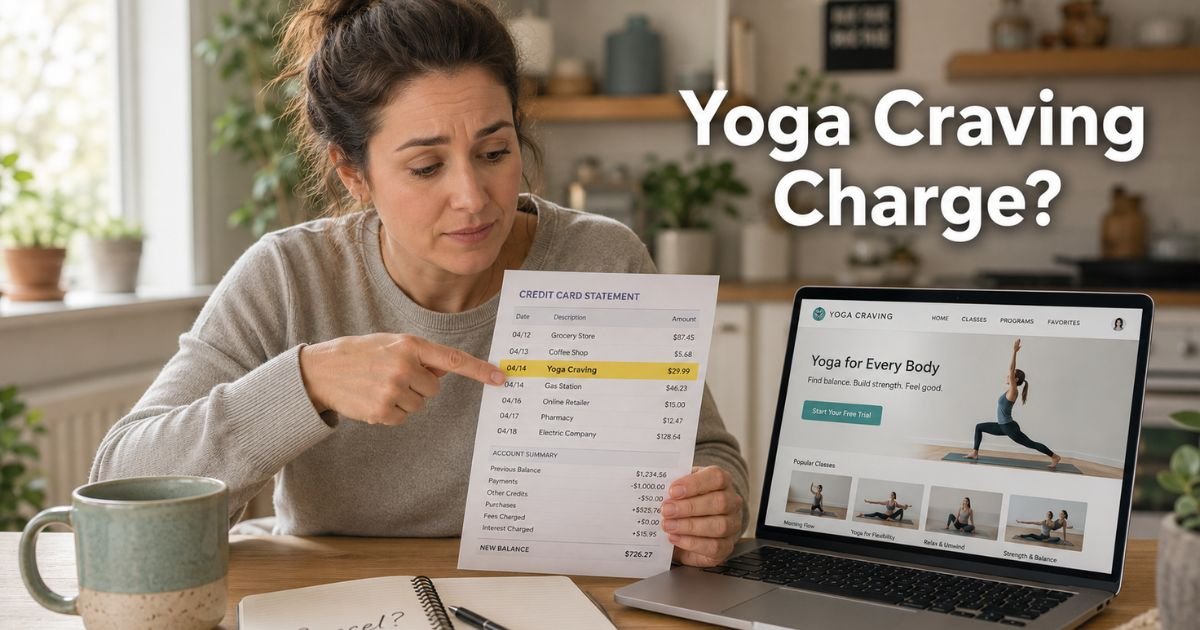
You open your credit card statement and there it is — “Yoga Craving” staring back at you. The amount is small, maybe $9.99 or $19.99, but you do not remember signing up for anything yoga-related.
Sound familiar? You are not alone. Thousands of people every month see this exact charge and wonder what on earth it means.
The good news? You can figure it out quickly and stop it for good. In this guide you will discover what the Yoga Craving charge on credit card really is, how it got on your statement, and the exact steps to cancel or dispute it.
Table of Contents
How the Yoga Craving Charge Shows Up on Statements
Billing descriptors can be tricky. The charge may appear exactly as “Yoga Craving,” “YOGACRAVING,” “YOCAHELP,” or “YCABILL.” These variations come from the same company or its payment processors. The amount is usually low at first — often a trial fee that quietly switches to full price after a week or two.
If you recently searched for yoga apps, streamed a free class, or filled out a wellness quiz online, that is likely how it started. The service uses automatic renewal, so the charge keeps coming until you cancel.
Why You Might Not Recognize It Right Away
- The name sounds friendly and wellness-focused, so it blends in with legitimate gym or app charges.
- You may have signed up months ago during a busy week and completely forgot.
- Some people report the initial trial was free, making the first paid charge feel like a surprise.
Bottom line: Even if the service itself is real, the charge often feels unexpected because of how the signup flow works.
Real Life Story
Take a 39-year-old teacher from Austin, Texas. Last month she opened her statement and saw a $14.99 charge labeled “Yoga Craving.” She had zero memory of it.
After a quick search she realized she had clicked a “7-day free yoga challenge” ad while scrolling Instagram during her lunch break. The trial ended, and the billing kicked in without an extra confirmation email that stood out.
She felt annoyed but empowered. She followed the steps we outline below and got her money refunded within two weeks. You can do the same.
How to Stop the Yoga Craving Charge: Step-by-Step
You have two main paths: cancel directly with the company or dispute it with your bank. Most people succeed with a simple cancellation, but we will cover both.
1. Cancel Your Subscription Yourself
- Visit yoga-craving.com and log into the account you created (use the email you signed up with).
- Look for “Account,” “Subscription,” or “Billing” in the menu.
- Find the cancel button and follow the prompts.
- Take a screenshot of the confirmation page and save the email they send you.
Pro tip: Set a calendar reminder for 24 hours later to check your statement. Sometimes companies keep charging until they process the cancellation.
Pro Tip: Always cancel from a computer instead of your phone. Mobile apps sometimes hide the cancel option or make you jump through extra hoops.
2. Dispute the Charge with Your Bank or Card Issuer
If you cannot log in or the company refuses to refund you, call the number on the back of your card right away. Explain that you did not authorize the ongoing charges. Most banks will reverse the fee while they investigate. Have your statement ready and note the exact date and amount.
3. Prevent Future Surprises
Turn on transaction alerts for every purchase over $1. Review your statements weekly instead of monthly. These small habits catch mystery charges before they add up.
Common Mistake: Ignoring the charge because it is “only $15.” Small recurring fees can quietly drain hundreds of dollars a year. Acting fast gives you the best chance at a full refund.
Comparison of Yoga Subscription Charges
Here is a quick look at how Yoga Craving stacks up against similar services so you know what is normal:
| Service | Typical Monthly Charge | Trial Period | Common Billing Descriptor | Easy to Cancel? |
|---|---|---|---|---|
| Yoga Craving | $9.99 – $19.99 | 7 days | Yoga Craving / YOCAHELP | Sometimes tricky |
| Yoga-Go | $14.99 – $29.99 | 3–7 days | Yoga-Go / YOGAGO | Often difficult |
| Daily Yoga | $12.99 | 14 days | DailyYoga | Varies |
| Yoga Anytime | $17.99 | 30 days | YYOGA or OTT Subscription | Straightforward |
Source: Public user reports and company terms as of 2026. Your experience may vary.
When to File a Formal Dispute
If the company drags its feet or you never signed up at all, treat it as possible unauthorized billing. Your card issuer must investigate within 30–60 days under federal rules. Keep records of every conversation. In most cases you will not be responsible for fraudulent charges.
Many readers also check our guide on [[how to spot unauthorized credit card charges]] for extra peace of mind.
More Ways to Protect Your Wallet from Mystery Wellness Charges
You can learn from this experience. Next time you see a tempting free trial, write down the exact date and set a phone alarm for the day before it ends.
Or skip entering your card altogether and use a virtual card number that expires quickly (check our article on [[virtual credit cards for safe shopping]]).
If you enjoy yoga but prefer no-recurring-fee options, explore free YouTube channels or local studio drop-in classes. You do not need another subscription to stay consistent.
We also recommend reading [[why your gym membership keeps charging after you cancel]] — the same rules often apply to digital wellness services.
FAQs: Yoga Craving Charge on Credit Card
Q. Why did I get charged for Yoga Craving when I only signed up for a free trial?
A. Many wellness apps start with a short free period that automatically converts to a paid subscription unless you cancel before the deadline. The fine print usually says this, but it is easy to miss. Check your email for any signup confirmation and cancel immediately to stop future bills.
Q. Can I get my Yoga Craving money back if I never used the service?
A. Yes, in most cases. Contact your credit card issuer within 60 days of the charge and explain you did not authorize the recurring billing. Banks often side with cardholders on unclear subscriptions and will reverse the fee while they investigate.
Q. Is Yoga Craving a scam or just a regular yoga subscription?
A. The service offers real yoga content, but the website has received low trust scores and complaints about hidden billing. It is not always fraudulent, yet the signup process makes it feel sneaky. Treat it like any other subscription — verify it first and cancel promptly if you change your mind.
Conclusion
Seeing an unexpected Yoga Craving charge on credit card does not have to stress you out. Now you know exactly what it is, why it showed up, and how to make it disappear for good. The key is acting quickly, keeping records, and building simple habits like weekly statement checks and alert notifications.
You have already taken the first step by reading this far. Go ahead and check your account right now, cancel the subscription, and request a refund if needed. Your future self will thank you.
Disclaimer: The content on ExplainCharges.com is for informational and educational purposes only and does not constitute financial, legal, or professional advice. We are not affiliated with any companies or services mentioned. The information provided may not apply to your specific situation. If you suspect unauthorized charges or fraud, contact your bank or credit card issuer immediately. Always verify details directly with the source and consult a qualified professional if needed.
Meet the Author
