
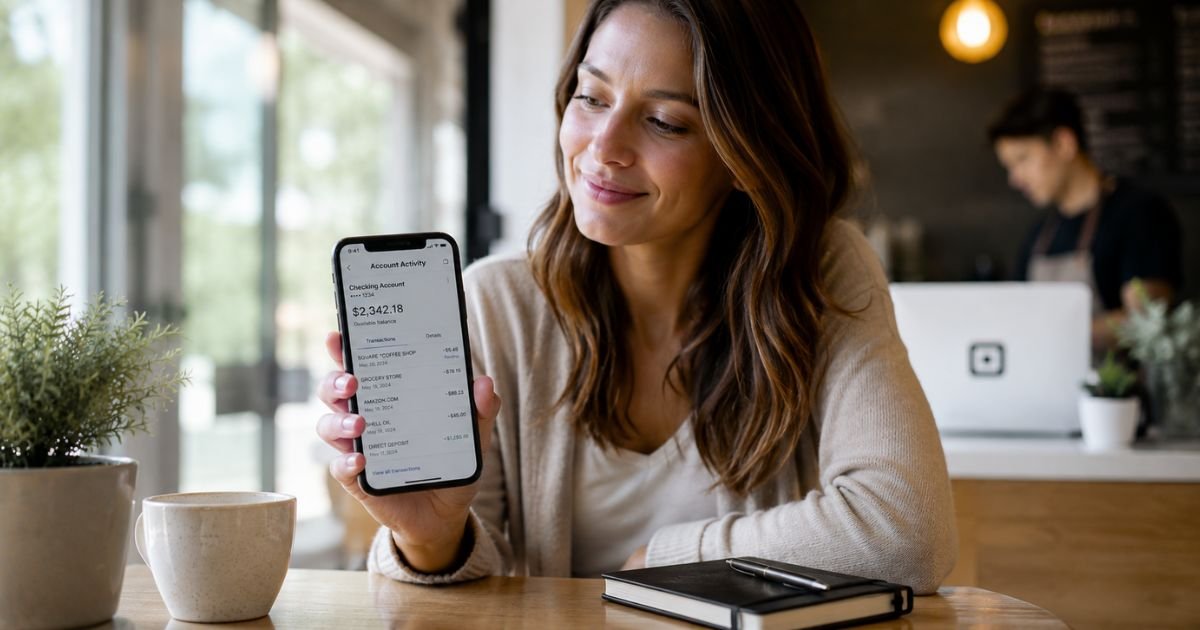
You open your bank or credit card statement and notice a charge that starts with “SQ” or “SQ *.” It can feel confusing if you don’t recall the purchase right away.
Most of these charges are legitimate. They typically come from a business that used Square to process your payment. Here’s how to identify the source and what to do next.
Table of Contents
What Is an SQ Charge on Your Bank Statement?
SQ stands for Square. Square is a payment processor (part of Block, Inc.) that many small and mid-sized businesses use to accept credit and debit cards.
When a merchant runs your card through a Square reader, terminal, online checkout, or invoice, the charge often appears on your statement with the prefix “SQ *” followed by a shortened business name.
Banks limit the characters that show, so the full store name may get truncated.
Common formats include:
- SQ *MERCHANT NAME
- SQ *COFFEE SHOP
- GOSQ.COM
- SQ *CASH APP (related to Cash App, also under Block)
- SQUARE INC
The text after “SQ *” is usually the merchant that charged you. For example, “SQ *JOES TACO TRUCK” typically means you paid a food truck or similar vendor that uses Square.
These charges are most often one-time purchases at local spots such as coffee shops, food trucks, farmers markets, salons, or independent sellers.
Some merchants also use Square for invoices or recurring billing, so an SQ charge can occasionally be a subscription or membership fee.
Is the SQ Charge Legit?
Yes, in the large majority of cases. Square is a well-established U.S. company that processes payments for millions of businesses. Seeing the “SQ *” prefix simply means Square handled the transaction for the seller.
Consumer review sites show mixed feedback. Many users praise the ease of use for small businesses, while others report frustrations with account holds or dispute support (mostly from the merchant side).
The presence of complaints does not make every SQ charge fraudulent. Always match the merchant name and amount to your own records.
Here is a quick reference table:
| Statement Appearance | What It Typically Means | Best First Step |
|---|---|---|
| SQ *BUSINESS NAME | Purchase at a Square-using merchant | Check receipts or memory of visit |
| GOSQ.COM | Online or invoice payment via Square | Search email for Square receipt |
| SQ *CASH APP | Cash App related transaction | Review Cash App activity |
| SQUARE INC | Generic Square-processed charge | Use receipt lookup tool |
| Vague SQ * code | Truncated or mobile vendor name | Match date and amount carefully |
Unauthorized or Wrong Charges (And How to Check)
Start by identifying the merchant. Look at the full description after “SQ *” and the exact date and amount.
- Search your email or texts for a Square receipt from around that date. Many merchants send digital receipts automatically if you gave an email or phone number.
- Use Square’s free receipt lookup tool at squareup.com/receipts. Enter the last four digits of the card used, the approximate date, and the amount.
- Think back to places you visited that day (markets, food trucks, local shops, service providers).
If the charge still looks wrong or unauthorized:
- Contact the merchant first if you can identify them. Many will refund a clear mistake quickly.
- If you cannot resolve it, dispute the charge with your bank or card issuer. Use the number on the back of your card. Provide the date, amount, and full statement description.
Card network rules generally give you a window (often 60 days from the statement date for many billing errors) to report problems. Report promptly and keep records of all communications.
Pro Tip: The receipt lookup tool works even if you never received an email. It is often the fastest way to confirm the exact business name.
How to Stop Recurring Charges or Cancel a Subscription
Most SQ charges are one-time. If you see repeated SQ charges from the same merchant, the seller may have set up recurring billing through Square.
Canceling happens with the merchant, not with Square itself. Square is only the payment processor.
Contact the business directly using the details on any receipt or their website. Ask them to cancel the subscription or automatic payment and confirm in writing.
If they do not respond or the charges continue, dispute future charges with your bank and ask them to block the merchant if possible.
Common Mistake: Assuming every unfamiliar SQ charge is fraud. Most turn out to be a real purchase at a small business whose name was shortened on the statement.
Preventing Future Unknown Charges
A few habits help:
- Save digital receipts or take a photo of paper ones from small vendors.
- Turn on transaction alerts in your bank or card app.
- Review statements weekly instead of waiting for the full bill.
- When paying at a market or food truck, note the business name on the reader or sign.
- Unlink cards from apps or services you no longer use.
These steps make it easier to match any future SQ charge quickly.
FAQs: SQ Charge on Credit Card
Q. What does SQ mean on my bank statement?
A. SQ stands for Square, the payment processor. The charge comes from a business that used Square to accept your card. The name after SQ * is usually the merchant.
Q. How can I find out which store charged me with an SQ * entry?
A. Check the text after SQ *, search your email for a Square receipt, or use the free lookup tool at squareup.com/receipts with the last four digits of your card, the date, and the amount.
Q. Is an SQ charge a scam?
A. Rarely. Most SQ charges are real purchases processed through Square. Always verify the merchant name and amount against your own activity before assuming fraud.
Q. Can I get a refund for an unrecognized SQ charge?
A. Yes, if the charge is unauthorized or incorrect. First try the merchant. If that fails, file a dispute with your bank or card issuer within the allowed timeframe and provide the statement details.
Conclusion
An SQ charge on your credit card or bank statement almost always means a payment processed through Square for a merchant. Match the name after SQ *, check receipts, and use Square’s lookup tool to confirm the source.
Most turn out to be ordinary purchases at small businesses. If the charge is wrong or unauthorized, contact the merchant and then your bank.
Staying aware of these common descriptors keeps your statements clear and your accounts protected.
Disclaimer: This article is for informational purposes only and is not financial or legal advice. Policies and timeframes can vary by bank, card issuer, and individual account. Always verify details with your financial institution or the merchant involved.
Meet the Author
