
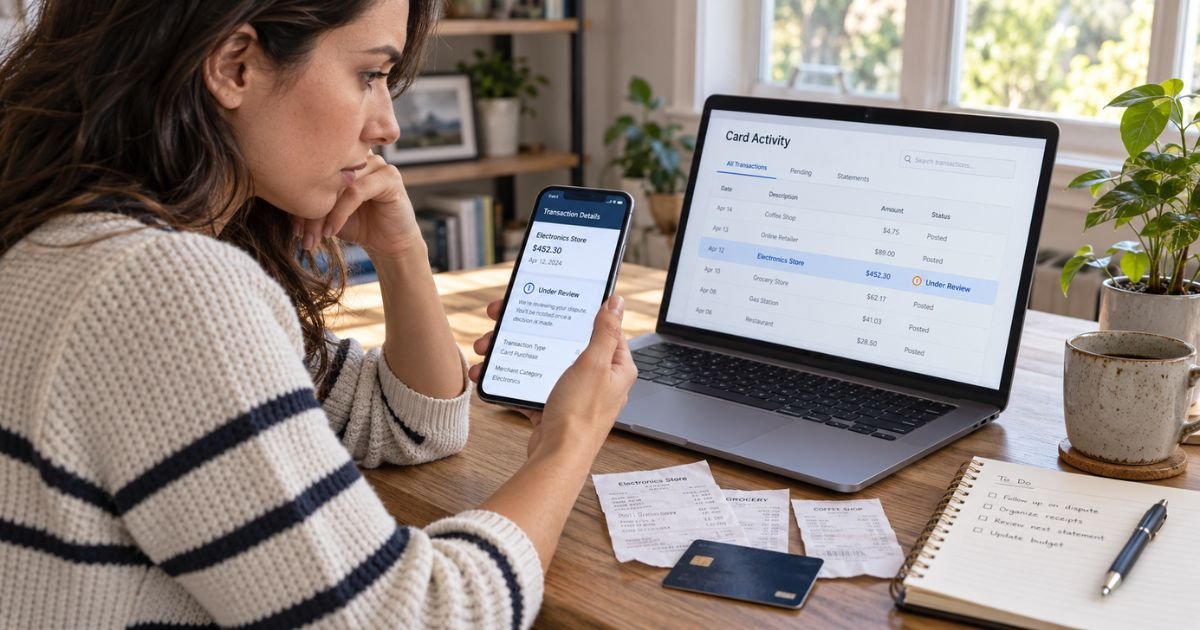
What happens when you dispute a credit card charge can feel confusing if a transaction is unfamiliar, duplicated, incorrect, or connected to something you never received. Your card issuer generally opens an investigation and may contact the merchant for information.
You may receive a temporary credit while the review continues, but that credit does not necessarily mean you won the dispute. This guide explains each stage, your deadlines, and what happens when the issuer makes a final decision.
Table of Contents
What Happens When You Dispute a Credit Card Charge?
When you dispute a credit card charge, you generally tell your card issuer that you believe something on your bill is wrong. Your issuer reviews the claim, may ask you for evidence, and may request information from the merchant.
Federal billing-error protections can apply to several problems, including unauthorized charges, incorrect amounts, duplicate charges, and certain goods or services that you did not receive as agreed.
The final outcome generally depends on your dispute reason and available evidence.
What Happens After You File the Dispute?
Your card issuer generally creates a case and records why you are challenging the transaction.
The process can include several stages:
| Stage | What generally happens |
|---|---|
| Dispute filed | Your issuer records your claim |
| Initial review | Issuer checks transaction and account information |
| Evidence requested | You or the merchant may provide documents |
| Temporary credit | Your issuer may issue one while reviewing |
| Merchant response | Merchant may accept or challenge the dispute |
| Final decision | Credit becomes permanent or charge returns |
Not every dispute follows exactly the same process. Card issuers and payment networks may use different internal procedures.
Do You Get Your Money Back Immediately?
Sometimes, but not always.
Your issuer may give you a temporary or provisional credit for the disputed amount while it investigates. Credit card issuers do not always provide an immediate temporary credit, so your experience can vary.
If you receive one, do not assume the dispute is finished. The issuer may later remove the credit if it decides the transaction was valid.
Recent Reddit reports show consumers sometimes confusing an early credit with a final decision. In one case, a cardholder later had to provide more evidence after initially believing the dispute had been resolved. These are individual experiences, but they highlight why you should keep watching the case until your issuer says it is closed.
Pro Tip: Treat any credit labeled temporary, provisional, or conditional as money that could still be reversed. Keep your supporting documents until you receive a final decision.
Does the Merchant Get Notified?
Generally, the merchant may have an opportunity to respond to your dispute.
The merchant can provide records that support the charge. These may include a receipt, delivery confirmation, cancellation policy, signed agreement, transaction authorization, or correspondence with you.
Your issuer generally compares the available information with your claim. A merchant response does not automatically mean you lose.
Likewise, simply opening a dispute does not automatically mean the merchant loses the money permanently.
What Evidence Should You Provide?
You should generally provide documents that directly support your dispute reason.
Useful evidence may include:
- Receipts.
- Order confirmations.
- Cancellation emails.
- Refund promises.
- Tracking information.
- Photos of an incorrect item.
- Merchant correspondence.
- Screenshots showing the agreed price.
- Proof that you tried to resolve the problem.
Keep your explanation consistent and factual. Your issuer may have difficulty reviewing a case if your reason changes from an incorrect amount to fraud or another unrelated claim.
Common Mistakes: Do not call a purchase unauthorized just because you are unhappy with what you received. If you approved the purchase, you generally need to dispute the actual problem, such as a duplicate charge, missing refund, or goods not delivered as agreed.
How Long Does a Credit Card Dispute Take?
Federal law gives you important timing protections when you properly report a qualifying billing error.
To preserve Fair Credit Billing Act protections, you generally should send your written billing-error notice so the issuer receives it within 60 days after it sent the first statement showing the error. The dispute address may differ from the address used for card payments.
Your issuer generally must acknowledge a qualifying written notice within 30 days unless it resolves the problem sooner. It generally must complete its billing-error procedures within two complete billing cycles and no later than 90 days after receiving your notice.
Your issuer’s online dispute process may move faster.
Do You Have to Pay the Disputed Charge?
For a qualifying billing-error dispute, you generally do not have to pay the disputed amount or related finance charges while the issuer investigates.
You should continue paying the rest of your bill on time. The issuer generally cannot treat you as late for refusing to pay the properly disputed amount while the investigation is pending.
Check your statement carefully because you may still see the disputed transaction listed during the investigation.
What Happens If You Win the Dispute?
If the issuer determines that the charge was a billing error, it generally must correct your account.
The disputed charge should generally be removed or credited. Applicable finance charges or other amounts connected with the billing error should also generally be corrected.
If you already paid the disputed transaction, you can still dispute it. However, the CFPB notes that you may not receive the money back until the issuer decides the dispute in your favor.
Keep the final decision for your records.
What Happens If You Lose the Dispute?
If your card issuer determines that the bill is correct, it generally must explain its decision and tell you how much you owe.
A temporary credit may then be removed. The disputed amount can return to your balance, and you may need to pay it by the date provided by your issuer.
Review the reason carefully before assuming the case cannot be challenged further. If the issuer overlooked evidence, ask whether you can provide additional documentation or request reconsideration.
BBB and Trustpilot complaints show consumers sometimes report frustration when they believe their documentation was not fully considered. These reports are anecdotal and do not establish that your issuer will handle your claim the same way.
What Happens With an Unauthorized Charge?
An unauthorized charge generally means someone who did not have the right to use your card made the transaction.
If your physical credit card is lost or stolen and used before you report it, federal law generally limits your liability for unauthorized credit card charges to $50. Many card agreements provide stronger zero-liability protections.
If someone steals only your account number and you still have the card, you generally have no federal liability for unauthorized use.
Contact your issuer promptly. It may close the affected card number and issue a replacement.
Should You Contact the Merchant First?
For an authorized purchase with a product, delivery, cancellation, or refund problem, contacting the merchant can generally be useful.
The merchant may solve the issue without a formal dispute. The CFPB generally recommends contacting the seller first when you are seeking a refund for a product or service.
However, do not let repeated merchant promises cause you to miss your dispute deadline. Keep copies of the merchant’s responses because they may support your case later.
For a genuinely unauthorized charge, contact your card issuer promptly rather than waiting for an unfamiliar merchant to respond.
Can a Merchant Refund You During a Dispute?
A merchant may sometimes issue a refund after you have already opened a dispute.
Tell your issuer if that happens. Otherwise, you could temporarily receive both a merchant refund and a dispute credit for the same transaction.
Do not cancel a dispute solely because someone promises that a refund will arrive later. Make sure you understand how cancellation affects your ability to reopen the claim if the promised refund never appears.
Can a Dispute Affect Your Credit Score?
Filing a legitimate billing dispute generally does not directly lower your credit score.
You should still pay your undisputed balance on time. Under federal billing-error rules, your issuer generally cannot report you as delinquent solely because you withhold payment of a properly disputed amount while the investigation is pending.
Missing required payments on the rest of your balance can create a separate problem.
FAQs: What Happens When You Dispute a Credit Card Charge
Q. Does the merchant know when you dispute a credit card charge?
A. The merchant may generally be notified and given a chance to provide evidence supporting the transaction. Your issuer then reviews the available information before making a final decision.
Q. Is a temporary credit the same as winning a dispute?
A. No. A temporary or provisional credit generally means your issuer has credited your account while the review continues. It may be removed if the final decision goes against you.
Q. How long does a credit card company have to resolve a dispute?
A. For a qualifying written billing-error notice, federal rules generally require resolution within two complete billing cycles and no later than 90 days. Your issuer may resolve the case sooner.
Q. What happens if your credit card dispute is denied?
A. Your issuer generally explains why it believes the charge is valid and tells you what you owe. Any temporary credit may be removed, but you can generally review whether additional evidence or an issuer appeal process is available.
Conclusion
What happens when you dispute a credit card charge generally depends on why you challenged the transaction and what evidence you and the merchant provide. Your card issuer reviews the claim, may issue a temporary credit, and eventually decides whether the charge should remain.
Act promptly and keep every receipt, email, and refund confirmation. Continue paying your undisputed balance, watch any temporary credit carefully, and do not treat the case as finished until your issuer provides its final decision.
Disclaimer: This article is for general informational purposes only and is not financial or legal advice. Credit card dispute rights, issuer procedures, network rules, and deadlines may vary, so verify account-specific questions with your card issuer or a qualified professional.
Meet the Author
