
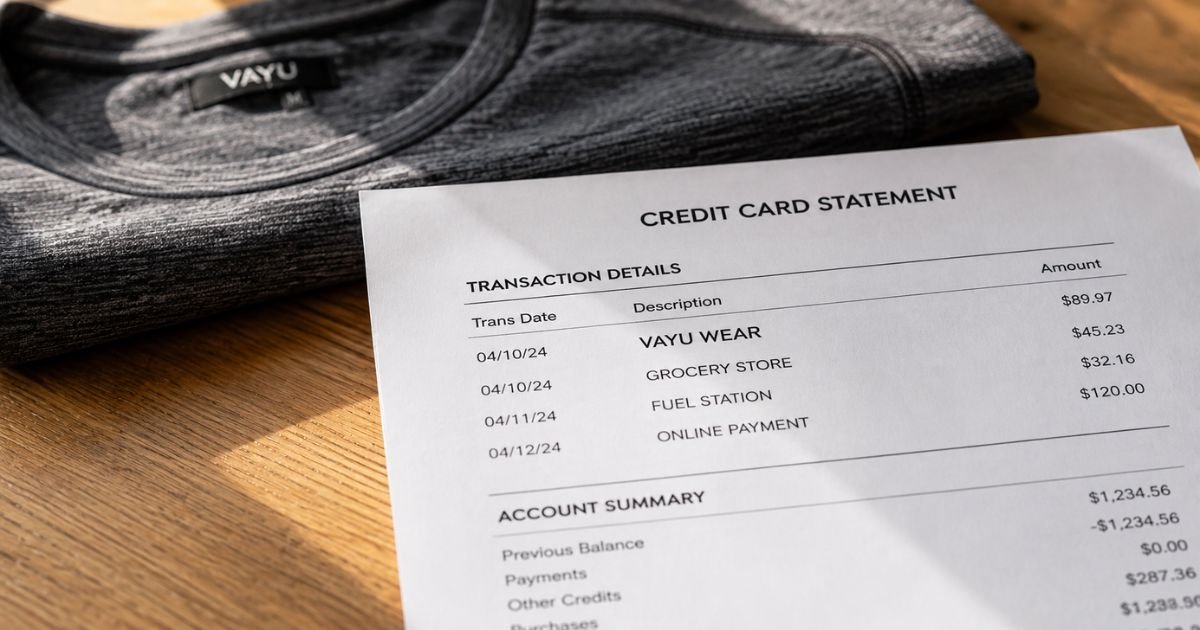
Seeing an unfamiliar Vayu Wear charge on credit card statement can raise questions. You may not remember ordering anything under that name, which often leads people to wonder whether the charge is legitimate or something to dispute.
In many cases, this charge relates to a clothing or activewear purchase.
This article explains what the Vayu Wear charge typically means, common reasons it appears, how to verify it, and practical steps if you need to cancel or dispute it.
Table of Contents
What Is the Vayu Wear Charge?
Vayu Wear (sometimes styled as Vāyu or Vayu Clothing) is associated with apparel brands that sell performance or everyday clothing, including V-neck shirts, activewear, and related items.
One established brand operates at wearvayu.com and focuses on USA-made, ethical, and sustainable clothing designed for comfort across seasons.
The charge appears on statements when a purchase is processed under this or a similar merchant name. Billing descriptors can vary by card issuer and may show as:
- VAYU WEAR
- VAYU CLOTHING
- VĀYU
- Shortened or bank-formatted versions
The amount usually matches the total of an online order, including any shipping or taxes. Smaller amounts can sometimes appear as processing or authorization holds.
Why Did This Charge Appear?
Common reasons for a Vayu Wear charge include:
- A one-time online purchase of clothing or activewear from a Vayu-branded site or marketplace seller
- A family member or household member using the card for a clothing order
- Free trial or promotional offer that converted to a paid order
- Subscription or membership tied to a clothing or wellness brand (less common but possible)
- Third-party retailer or payment processor using “Vayu Wear” as the billing descriptor
- Authorization hold that later posts as a final charge
- Duplicate or delayed posting of a prior order
If you recently shopped for performance shirts, yoga or fitness apparel, or similar items, this is often the source.
How to Verify the Charge
Follow this checklist:
- Note the exact date, amount, and full descriptor on your statement.
- Search your email for order confirmations, shipping notices, or receipts containing “Vayu,” “Vāyu,” or similar names around the same date.
- Check browser history or saved passwords for any clothing or activewear sites you may have visited.
- Ask household members if they placed an order using the card.
- Compare the amount to any recent clothing purchases you recall.
- Look up the brand website (such as wearvayu.com) and review their order or contact options if you believe it is a legitimate purchase.
Matching the charge to a receipt or confirmation usually confirms it is valid.
Is It Legitimate or Fraud?
Many Vayu Wear charges are legitimate purchases from clothing brands. However, unfamiliar or very small charges sometimes raise concerns.
Common legitimate scenarios:
- You or a family member ordered apparel online.
- The merchant name on the statement differs slightly from the store name you remember.
- The amount matches an order confirmation you received.
Warning signs that warrant closer review:
- No matching email receipt or order history.
- The charge is for a very small amount (under a few dollars) with no recollection of any purchase.
- Multiple unexpected small charges appear in a short period.
- You have never shopped for clothing or activewear online recently.
If the charge does not match any activity you or your household recognize, treat it as potentially unauthorized and contact your card issuer promptly.
How to Cancel or Stop Future Charges
Most Vayu Wear charges are one-time purchases rather than ongoing subscriptions. If you believe a recurring charge is involved:
- Locate any order confirmation or account email linked to the purchase.
- Visit the brand’s website and look for an account login, order history, or customer support section.
- Contact the merchant directly using the email or contact form on their official site and request cancellation of any recurring billing.
- Ask for written confirmation that future charges will stop.
- Remove the card from any saved payment methods on the site.
- Monitor your next statement to confirm the charge does not reappear.
If you cannot reach the merchant or receive no response, move to the dispute process with your card issuer.
Can You Get a Refund?
Refund eligibility depends on the merchant’s policy and the circumstances of the charge.
- For legitimate purchases, contact the brand using the details on your order confirmation and request a return or refund according to their stated policy.
- Many clothing brands have specific windows for returns or exchanges.
- Unauthorized charges can be disputed with your credit card issuer under the Fair Credit Billing Act.
Start with the merchant if you have an order record. Keep copies of all communications.
If the merchant does not resolve the issue, file a dispute with your card issuer within the required timeframe (typically within 60 days of the statement date for billing errors).
What to Do If the Charge Is Unauthorized
If you confirm no one authorized the purchase:
- Call the number on the back of your credit card and report the charge as unauthorized.
- Request that the issuer open a dispute and, if appropriate, issue a temporary credit.
- Ask the issuer to monitor the account for similar activity.
- Change passwords on any shopping or email accounts that may have been compromised.
- Document the date, amount, descriptor, and all reference numbers from your conversations.
- Follow up in writing if the issuer requests additional information.
Acting quickly helps protect your account and limits potential liability under federal credit card rules.
Prevention Tips
- Review credit card and bank statements every month.
- Enable transaction alerts for new merchants or amounts above a set threshold.
- Keep a simple list of recent online clothing or activewear orders.
- Use unique passwords and consider a password manager for shopping sites.
- Prefer virtual card numbers or single-use cards for occasional online apparel purchases when available.
- Ask household members to notify you before using a shared card for online orders.
- Save order confirmation emails in a dedicated folder for easy reference.
- Log out of shopping accounts on shared devices.
- Double-check the merchant name at checkout before submitting payment.
Possible Meanings of a Vayu Wear Charge
| Scenario | Typical Amount | What to Check |
|---|---|---|
| Clothing or activewear order | Full order total | Email receipt or order history |
| Family member purchase | Varies | Ask household members |
| Small test or unknown charge | Under a few dollars | No matching activity → contact bank |
| Processing or authorization hold | Small temporary | Often drops off or posts as final |
Common Next Steps
| Situation | Recommended Action |
|---|---|
| Matches a known order | No further action needed |
| Unrecognized but possible | Search emails and contact merchant |
| Clearly unauthorized | Dispute with card issuer immediately |
FAQs: Vayu Wear Charge on Credit Card
Q. What is a Vayu Wear charge on my credit card?
A. It is most often a purchase from a clothing or activewear brand using the name Vayu, Vāyu, or Vayu Wear. It can also appear from a third-party seller or payment processor.
Q. Why don’t I recognize the Vayu Wear charge?
A. The merchant name on your statement may differ from the website or brand name you remember. Small or unexpected charges should be verified against your email receipts and recent activity.
Q. How do I dispute a Vayu Wear charge?
A. Contact your credit card issuer using the number on the back of your card, report the charge as unauthorized or incorrect, and provide the date, amount, and any supporting details. Follow the issuer’s dispute process.
Q. Can I get a refund for a Vayu Wear charge?
A. For legitimate orders, contact the merchant with your order details and request a refund or return under their policy. For unauthorized charges, dispute the transaction with your card issuer.
Conclusion
A Vayu Wear charge on credit card is frequently tied to a clothing or activewear purchase processed under that merchant name.
Match the date and amount to any recent orders, check your email confirmations, and contact the brand if needed.
If the charge is unfamiliar or unauthorized, report it promptly to your card issuer. Reviewing statements regularly and keeping records of online purchases helps prevent similar surprises.
Disclaimer: This article is for informational purposes only and is not financial, legal, or professional advice. Merchant policies, refund rules, and billing practices can change. Always verify details directly with the merchant (when identifiable) or your financial institution.
Meet the Author
