
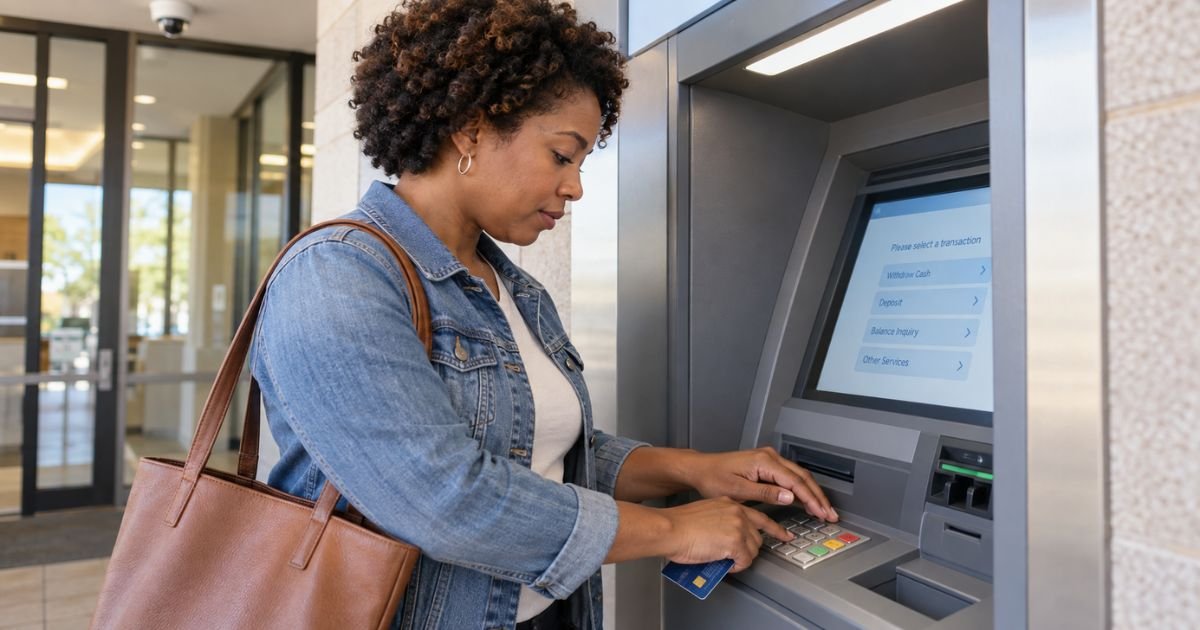
The top ways to protect your PIN at ATMs start with simple habits you can use every time you withdraw cash. A stolen PIN can give a criminal access to your checking account if they also capture your debit-card information.
You can lower the risk by shielding the keypad, checking the machine for tampering, and choosing safer ATM locations. You should also know what to do if your card gets stuck or you notice an unauthorized withdrawal.
Table of Contents
What Are the Top Ways to Protect Your PIN at ATMs?
The top ways to protect your PIN at ATMs are to keep the number secret, block the keypad while typing, inspect the machine before use, and avoid ATMs that look damaged or altered. You should also choose bank-operated ATMs in well-lit locations when possible.
ATM criminals may use skimmers, hidden cameras, or fake keypad overlays to capture your card information and PIN. Some devices fit over the real card reader, while others can be inserted inside it.
| PIN safety step | Why it helps |
|---|---|
| Cover the keypad | Blocks cameras and nearby observers |
| Inspect the ATM | May reveal skimmers or overlays |
| Use bank ATMs | Reduces exposure to poorly monitored machines |
| Set transaction alerts | Helps you spot unauthorized withdrawals quickly |
| Keep your PIN private | Reduces social engineering risk |
| Report problems quickly | May limit further losses |
Always Cover the Keypad
Use your free hand to cover the keypad whenever you enter your PIN. Shield it from the top and sides as much as practical.
This protects you from people standing nearby and tiny cameras hidden around the ATM. Cover the keypad even when nobody appears to be watching.
Pro Tip: Make shielding the keypad automatic. Use the same hand position every time you enter a PIN, even at an ATM you use regularly.
Inspect the ATM Before Using It
Look closely at the card reader and keypad before inserting your card. Watch for loose parts, crooked plastic, unusual gaps, scratches, adhesive residue, or anything that looks added to the machine.
Gently check the edges of the reader and keypad. If a part moves unexpectedly or the card slot feels damaged, use another ATM and alert the operator.
Modern skimmers can be difficult to see. A normal-looking machine is not a guarantee that it is safe, so continue covering your PIN.
Choose a Safer ATM Location
Use an ATM inside a bank branch or another controlled, well-lit location when practical. Machines that receive regular staff attention may be harder for criminals to tamper with unnoticed.
Be more cautious with isolated ATMs or machines in poorly lit spaces. A freestanding ATM is not automatically unsafe, but you should inspect it carefully.
Pay attention to people around you. If someone stands too close, watches the keypad, or tries to distract you, cancel the transaction and leave.
Keep Your PIN Completely Private
Treat your PIN like a password. Do not tell it to friends, coworkers, strangers, or anyone who contacts you unexpectedly.
A bank generally will not need you to reveal your PIN in a phone call, text, or email. If someone claiming to represent your bank asks for it, end the conversation and contact the bank through an official number.
Do not write your PIN on your debit card or keep it on paper in the same wallet.
Common Mistakes: Don’t trust a caller simply because they know your name, bank, or part of your card number. Scammers may already have some personal information and use it to persuade you to reveal the PIN.
Choose a PIN That Is Hard to Guess
Avoid obvious PINs such as 1234, 0000, 1111, or repeating and sequential patterns. You should also avoid numbers that someone could easily connect to you.
Birth years, birthdays, phone-number digits, and address numbers can be weak choices. A thief who steals your wallet may find personal information that helps them guess these combinations.
If your bank lets you choose a longer PIN, consider it. PIN length and ATM compatibility may vary by financial institution.
Use Contactless ATM Access When Available
Some ATMs let you use a contactless card or mobile wallet instead of inserting your physical card. Contactless access may reduce exposure to certain card-reader skimmers.
You may still need to enter your PIN. Continue covering the keypad because contactless technology does not protect you from hidden cameras or someone watching.
If the ATM requires your physical card, never force it into a reader that feels damaged or unusually resistant.
Act Quickly if the ATM Keeps Your Card
If the ATM does not return your card after you cancel or finish the transaction, contact your bank immediately. A trapped card may result from a malfunction, but criminals can also use devices that capture cards.
Lock the card through your banking app if that feature is available. Ask your bank whether it should be canceled and replaced.
Do not leave the problem unresolved because a branch is closed. Use your bank’s official lost-card or emergency channel when available.
Turn On Transaction Alerts
Enable push, text, or email alerts for ATM withdrawals and debit-card purchases if your bank offers them. Fast notifications can help you identify unauthorized activity quickly.
Consider using a low alert threshold so you can see small transactions too. Criminals may sometimes test compromised payment information with a small transaction.
Review your account regularly even when alerts are active. A notification can fail because of phone settings or network problems.
Watch for Skimmers and Fake Keypads
A skimmer captures payment-card information. Criminals may pair it with a hidden camera or fake keypad to steal your PIN.
Some devices sit inside the card reader and can be difficult to detect. This is why visual inspection alone is not enough.
Use several safeguards together. Inspect the machine, cover the keypad, choose safer locations, and monitor your account afterward.
What to Do if You Think Your PIN Was Stolen
Change your PIN promptly if you believe someone saw or captured it. Contact your bank even if you have not noticed an unauthorized withdrawal yet.
Review recent account activity and report transactions you did not authorize. Ask whether the bank recommends replacing your debit card rather than only changing the PIN.
For U.S. debit accounts, reporting speed can affect your protections. Keep records of when you contacted the bank and follow any dispute instructions it provides.
FAQs: Top Ways to Protect Your PIN at ATMs
Q. Should you cover the keypad at your bank’s ATM?
A. Yes. You should generally cover the keypad every time you enter your PIN because hidden cameras can be difficult to notice. A bank-operated ATM may reduce some risks, but shielding is still important.
Q. How can you tell if an ATM has a skimmer?
A. Look for loose or crooked card readers, raised keypads, unusual plastic, scratches, adhesive residue, or parts that move unexpectedly. Avoid the ATM if anything looks or feels altered.
Q. What should you do if someone sees your PIN?
A. Change the PIN as soon as possible and monitor your account. If you believe the person also has your card information, contact your bank and ask whether the debit card should be replaced.
Q. What should you do after an unauthorized ATM withdrawal?
A. Contact your bank or credit union immediately and report the withdrawal. Lock the card if available, review the account for additional transactions, and follow the bank’s dispute process.
Conclusion
The top ways to protect your PIN at ATMs are simple but effective when you use them consistently. Cover the keypad, inspect the machine, choose well-monitored ATMs, keep your PIN private, and turn on transaction alerts.
If anything about an ATM looks suspicious, use another machine. If your card or PIN may have been compromised, contact your bank promptly because quick action can help stop additional withdrawals and preserve your available protections.
Disclaimer: This article is for informational purposes only and is not financial or legal advice. ATM security features, card controls, and unauthorized-transaction policies may vary by issuer. Verify account-specific questions with your bank or credit union.
Meet the Author
