
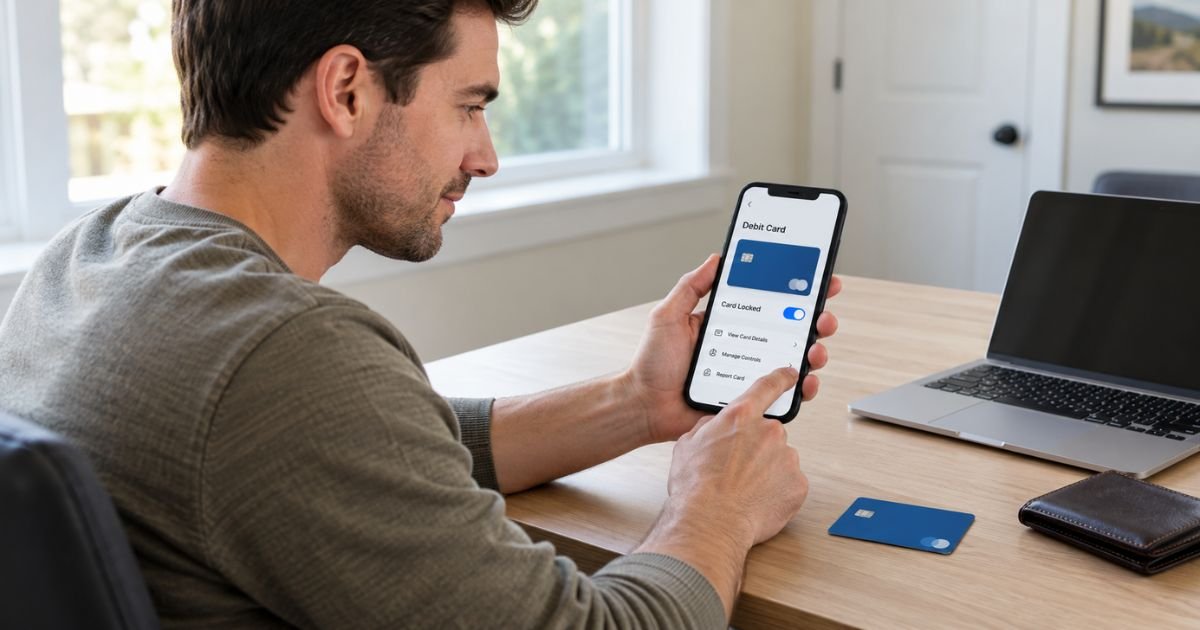
Knowing how to freeze and unfreeze a debit card can help when you temporarily misplace your card or want to stop new purchases while checking suspicious activity. Many U.S. banks call this feature “lock card,” “freeze card,” “turn card off,” or “card controls.”
A freeze is usually temporary. You can generally turn the same card back on if you find it, but a lost, stolen, or compromised card may need to be reported and replaced instead.
Table of Contents
What Does It Mean to Freeze and Unfreeze a Debit Card?
Freezing a debit card generally means temporarily blocking certain new transactions made with that card. Your checking account normally stays open, and money in the account is not frozen.
Unfreezing removes that temporary restriction. You can generally start using the same physical card again without waiting for a replacement.
Banks vary in what a card lock blocks. New purchases and ATM withdrawals are commonly stopped, while recurring payments, transactions already authorized, and some digital-wallet purchases may still go through.
| Card status | What generally happens |
|---|---|
| Frozen or locked | Many new card purchases are declined |
| Unfrozen or unlocked | Normal card use generally resumes |
| Checking account | Usually remains open |
| Recurring payments | May continue |
| Pending transactions | May still post |
| Reported stolen | Card is usually replaced |
How to Freeze a Debit Card
The fastest method for many banks is the mobile banking app. Open your bank’s official app, sign in, and select the checking account connected to your debit card.
Look for Manage card, Card controls, Lock card, Freeze card, or similar wording. Select the correct debit card, turn the setting on, and confirm the change if required.
Pro Tip: If your card is temporarily missing, freeze it before you start searching your home, car, office, or luggage. You can generally unlock it later if you find it and nothing looks suspicious.
How to Unfreeze a Debit Card
If you find the card and believe it remained secure, return to the same card-management section. Select Unlock, Unfreeze, or Turn card on.
The card may become usable quickly, but timing can vary by bank. Wait until the app or website confirms that the card is active before relying on it.
If the card still declines after you unlock it, contact your bank. Another security restriction may be affecting the account.
What Does Freezing a Debit Card Block?
A card freeze is mainly designed to stop new transactions using the debit card. It is not the same as closing your checking account or placing a stop payment on every withdrawal.
Depending on the issuer, a freeze may block new in-person purchases, online card purchases, ATM withdrawals, and some phone transactions.
However, some activity may continue. This can include:
- Recurring subscriptions
- Automatic bill payments
- Transactions authorized before the freeze
- Refunds and credits
- Some digital-wallet transactions
- ACH payments or checks
The exact rules vary by bank. Read the lock feature’s description before assuming every payment has stopped.
Common Mistakes: Don’t freeze your card as a substitute for canceling an unwanted subscription. Previously authorized recurring charges may still process even while the debit card is locked.
When Should You Freeze Instead of Replace the Card?
A freeze is generally best when the card is only temporarily misplaced. You may think it is under a car seat, in another bag, or somewhere at home.
You should generally report the card and ask for a replacement if:
- You know it was stolen
- You cannot find it after searching
- You see confirmed unauthorized transactions
- Your card number may have been exposed
- Your PIN may have been stolen
- Your bank says the card is compromised
A replacement card generally comes with updated card credentials. That provides stronger protection than keeping a compromised card active but temporarily locked.
What If You See an Unauthorized Transaction?
Freeze the card immediately if the feature is available, then contact your bank or credit union. A card lock does not automatically open a fraud investigation.
Tell the bank which transactions you did not authorize. Ask whether the debit card should be canceled and replaced.
For U.S. debit cards, reporting speed can affect your protections. If the physical card or PIN was lost or stolen, notifying your financial institution promptly is especially important.
Review the entire account, not only the first suspicious charge. Keep the date you reported the problem and any dispute or case number the bank provides.
What Happens to Pending and Recurring Payments?
Pending transactions can still post after you freeze the card if the merchant received authorization before the lock. This can happen with restaurants, gas stations, hotels, and other merchants that authorize a payment before final settlement.
Recurring payments may also continue because the merchant already has authorization to bill the card. Your bank’s policy determines which recurring transactions are allowed.
If you want to stop a legitimate subscription, cancel it with the merchant. If the recurring payment is unauthorized, report it to your bank rather than relying only on the card lock.
Refunds may also continue to reach your account. Freezing the debit card generally does not close the checking account itself.
Can You Withdraw Money With a Frozen Debit Card?
ATM withdrawals using the frozen card are generally blocked. However, you may still have other ways to access your checking account.
Do not unlock a card you believe was stolen just because you need cash. Ask your bank for a safer way to access your money.
What to Check Before Unfreezing Your Card
Review recent account activity before switching the card back on. Make sure you recognize purchases, ATM withdrawals, and recurring payments.
If the card was outside your control or found in a public place, replacement may be safer than unlocking it. Someone could have copied the card details even if you recovered the physical card.
Before unfreezing, you should generally:
- Review recent transactions
- Confirm the card is physically secure
- Change the PIN if you are concerned
- Turn on purchase and ATM alerts
- Verify your contact information
FAQs: How to Freeze and Unfreeze a Debit Card
Q. Can you freeze a debit card temporarily?
A. Yes. Many U.S. banks let you temporarily lock or freeze a debit card through mobile or online banking. You can generally unlock the same card later if you find it and believe it is still secure.
Q. Will freezing a debit card stop automatic payments?
A. Not always. Recurring subscriptions and previously authorized payments may still process while the card is frozen. Your bank’s exact treatment can vary.
Q. Should you freeze or cancel a lost debit card?
A. A freeze is generally useful when the card is temporarily misplaced. If it was stolen, cannot be found, or shows unauthorized activity, report it and ask your bank about replacing it.
Q. How quickly does a debit card work after you unfreeze it?
A. Many banks restore access quickly after you unlock the card, but timing may vary. Wait until your banking app confirms the card is active before relying on it.
Conclusion
Knowing how to freeze and unfreeze a debit card gives you a quick way to protect a temporarily misplaced card. In many banking apps, you can open card controls, switch the debit card off, and turn it back on when you are comfortable using it again.
A freeze is not a substitute for reporting fraud or a stolen card. If you cannot find the card, notice unauthorized transactions, or think its information was compromised, contact your bank promptly and ask whether it should be replaced.
Disclaimer: This article is for informational purposes only and is not financial or legal advice. Debit-card lock features, transaction handling, and fraud protections vary by issuer. Verify account-specific questions with your bank or credit union.
Meet the Author
