
A revolving charge account definition can feel confusing if you grew up hearing “charge account,” “store card,” and “credit card” used as if they were the same thing. They overlap, but they are not identical.
This guide explains the official open-end credit test, how the account works month to month, and how it differs from a loan you pay off on a fixed schedule.
Table of Contents
What Is the Revolving Charge Account Definition?
A revolving charge account is generally an open-end credit plan. You can buy now, repay some or all of the balance later, and use the freed-up credit again.
Regulation Z, at 12 CFR 1026.2(a)(20), defines open-end credit as consumer credit under a plan with three features.
The creditor reasonably expects repeated transactions. The creditor may impose a finance charge from time to time on an unpaid balance. Credit that you repay generally becomes available again, up to any limit the creditor sets.
That third point is the “revolving” part. Pay $200 on a $1,000 limit, and you typically have about $200 more room to charge, unless the issuer holds or reduces the line.
Older store and state-law language often called this a revolving charge account. The idea matches a department-store plate or a modern Visa card. Purchases post to one running balance.
Finance charges, if any, are computed on the unpaid balance from time to time. You may pay in full or in installments.
| Term you may see | What it usually means |
|---|---|
| Revolving charge account | Open-end store or card plan you can reuse as you repay |
| Open-end credit | Official Regulation Z name for this kind of plan |
| Revolving credit | Everyday name for the same reuse-as-you-pay structure |
| Charge card | Card where no periodic rate computes the finance charge |
| Closed-end credit | A set loan, such as an auto loan or many personal loans |
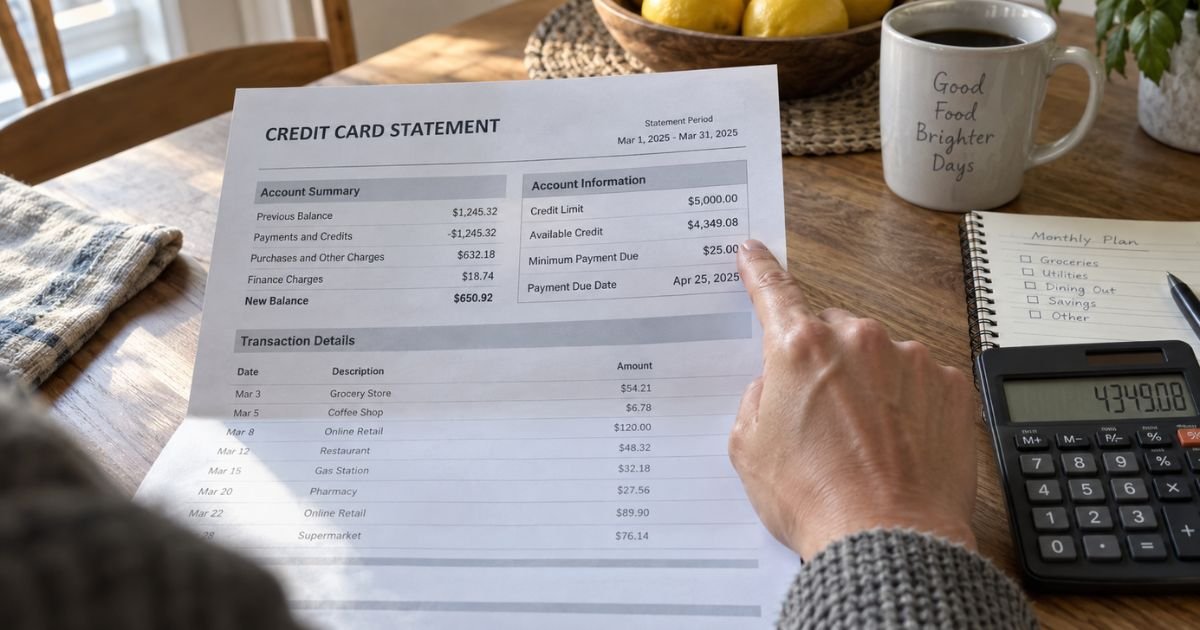
Pro Tip: Look at the statement for a credit limit, available credit, and a minimum payment. Those three lines usually mean you are looking at a revolving account, not a one-time installment contract.
How a revolving charge account works
The issuer or store sets a credit limit. Each purchase reduces available credit. Each payment generally restores some of that room.
If you pay the statement balance in full by the due date, and the account has a grace period on purchases, you may owe no periodic interest on those purchases. CFPB writing describes people who pay in full as transacting. People who leave part of the balance unpaid are revolving.
If you revolve, the creditor may add a finance charge. Regulation Z defines the finance charge as the dollar cost of consumer credit. On cards, that cost is usually periodic interest. Cash advances and some fees can add more.
You generally must pay at least the minimum by the due date to stay current. The minimum is often a small slice of the balance plus interest and fees. Paying only the minimum can keep the account open for a long time.
CFPB research has noted that many active card accounts carry a revolving balance, and that once revolving starts it can last many months.
The plan stays open until you or the creditor close it. Paying to zero does not automatically close the account. Available credit simply returns.
Revolving charge account vs. closed-end loan
Closed-end credit is everything that is not open-end credit under Regulation Z. A typical auto loan, mortgage installment, or many personal loans fit that box.
On a closed-end loan you borrow a set amount. You repay it on a schedule. You do not get that same dollars back to spend again unless you take a new loan.
On a revolving charge account the limit is a ceiling, not a one-time advance. You can charge, repay, and charge again during the life of the plan. The monthly payment changes with the balance. There is usually no fixed payoff date unless you stop using the account and pay it down.
That flexibility is useful for everyday spending. It also makes it easier to carry high-cost balances if you only send the minimum.
Revolving account vs. charge card
Regulation Z commentary says a charge card is a credit card on an account where no periodic rate is used to compute the finance charge. A reference to credit cards generally includes charge cards, with some special rules.
In plain English, a classic charge card expects you to pay the statement in full. It is not built around a minimum payment and a leftover balance that accrues a periodic APR.
A revolving charge account is built around that leftover balance. You can pay in full. You can also pay a minimum and carry the rest, usually with interest.
Some modern charge cards let you move selected purchases into a pay-over-time plan. That add-on can start to look like revolving credit for those items. Read the agreement for that product. Do not assume every card with “charge” in the nickname works the same way.
Store accounts sit in the middle of the language. Many store cards are revolving charge accounts even if the plastic says “charge.” If the statement shows an APR, a minimum payment, and available credit, you are generally in revolving territory.
What you will see on a statement
A revolving account statement typically lists:
- Previous balance
- New purchases, credits, and payments
- Fees and interest if you revolved or triggered a fee
- New balance
- Minimum payment due and due date
- Credit limit and available credit
The periodic rate is the finance-charge rate for a day, week, month, or other slice of a year. The APR is the yearly way that cost is disclosed.
If you paid in full during a grace period, the interest line for purchases may be $0. If you carried a balance or took a cash advance, interest generally appears. Cash advances often have no grace period.
A credit score model may treat revolving balances as utilization. That is the share of your revolving limits that you are using. Charge cards with no preset limit generally do not work the same way in utilization math. Payment history still matters on both.
How to use one without surprises
Pay the statement balance in full when you can. That is the simplest way to avoid revolving interest on purchases that have a grace period.
If you cannot pay in full, pay more than the minimum. The statement’s 36-month payoff box, when it appears, shows a rough path if you send only a stated amount and do not add new charges.
Watch cash advances, balance transfers, and late payments. Those can have separate APRs and fees. A late payment can also trigger penalty pricing under the card agreement.
Closing the account after you pay it off can help if you no longer want the limit. It can also change your mix of accounts and available credit. That tradeoff depends on the rest of your file.
If a charge on the account is wrong, the Fair Credit Billing Act path still applies to many credit card billing errors. Send written notice so it arrives within 60 days after the issuer sent the first statement that shows the problem.
The issuer generally must acknowledge a timely written notice within 30 days unless it already finished the case, and resolve it within two billing cycles, not later than 90 days.
Common Mistakes: Treating “charge account” as a card that never charges interest. Paying only the minimum and assuming the balance will shrink fast. Confusing a HELOC or personal line of credit with a closed-end installment loan.
FAQs: Revolving Charge Account Definition
Q. Is a revolving charge account the same as a credit card?
A. Often yes in daily use. Most bank and store cards that let you carry a balance are revolving, open-end accounts. Official rules still use “open-end credit” and “credit card account.” A charge card that uses no periodic rate is a different design.
Q. Do I have to pay the full balance each month?
A. On a revolving account, generally no. You must pay at least the minimum by the due date to stay current. If you leave a balance, the creditor may add a finance charge. A classic charge card usually requires payment in full.
Q. Is a store card a revolving charge account?
A. Many store cards are. If you can keep shopping as you repay, and interest is computed on the unpaid balance from time to time, that matches the revolving definition. Check the agreement for the APR, limit, and minimum-payment rule.
Q. How is this different from a personal loan?
A. A typical personal loan is closed-end. You borrow a set sum and repay it on a schedule. A revolving charge account stays open and restores available credit as you pay, up to the limit.
Conclusion
The revolving charge account definition is the open-end credit idea in Regulation Z. The creditor expects repeat use, may charge a finance charge on an unpaid balance, and generally restores credit as you repay.
That is why a store plate and a bank card can share the same structure. Pay in full when you can. If a purchase on the account is wrong, use the written billing-error path with your issuer.
Disclaimer: This article is for general information only. It is not financial, legal, or tax advice. Card agreements, merchant descriptors, and refund rules vary by issuer and company. Confirm account-specific questions with the issuer or with the phone number on the back of your card.
Meet the Author
