
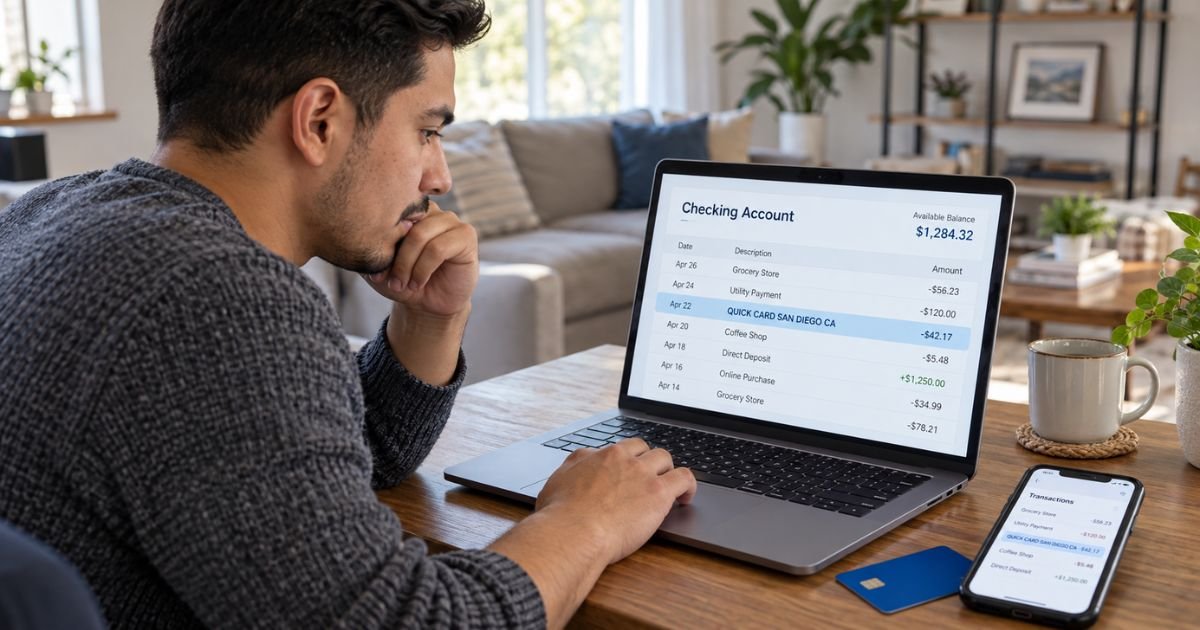
A Quick Card San Diego Charge on Bank Statement can feel confusing if you don’t remember buying anything from a company called Quick Card.
The descriptor was generally connected with QuickCard, a payment-processing platform based in San Diego rather than one specific store.
Many older QuickCard payments were connected with merchants using the processor, including cannabis dispensaries.
However, the former operator stopped direct QuickCard credit card processing in 2024, so a genuinely new charge deserves closer review.
Table of Contents
What Is a Quick Card San Diego Charge on Bank Statement?
A Quick Card San Diego Charge on Bank Statement generally identified a payment processed through the former QuickCard platform. QuickCard was operated by the company formerly known as GreenBox POS, which later became RYVYL Inc.
QuickCard acted as a payment intermediary. That means the name on your statement might show Quick Card instead of the business where you actually made the purchase.
Common statement variations included:
| Statement Description | What It May Mean |
|---|---|
| QUICK CARD SAN DIEGO | Payment processed through QuickCard |
| QUICK CARD SAN DIEGO CA | QuickCard transaction with San Diego location |
| QUICK CARD SAN DIEGO CA US | Longer version of the same descriptor |
| QUICKCARD SAN DIEGO | Shortened processor name |
| POS DEBIT QUICK CARD | Debit card purchase using QuickCard |
| QUICK CARD E-WALLET | Legacy QuickCard wallet-related transaction |
| QUICK CARD REFUND | Refund or reversal tied to an older payment |
The San Diego wording generally referred to the payment company rather than necessarily the place where you made the purchase.
Was Quick Card San Diego Used by Dispensaries?
Yes. QuickCard was heavily associated with cannabis merchants during its active period.
The former operator has stated in company filings that cannabis merchants represented a substantial majority of QuickCard’s processing volume before the service was discontinued.
Consumer reports on Reddit also repeatedly connect Quick Card San Diego transactions with dispensary purchases in several states. These reports are anecdotal, but they are consistent with the operator’s own description of its former customer base.
However, QuickCard was not limited exclusively to dispensaries.
You should not assume that every Quick Card transaction represents a cannabis purchase. It was a payment processor, so another type of merchant could also have used the platform.
Pro Tip: Think back to where you spent money on the transaction date rather than looking for a store called Quick Card. The processor name may be hiding the actual merchant you remember.
Is QuickCard Still Processing Payments?
This is important if you are seeing a recent charge.
The former operator reported that it stopped processing credit card payments directly through QuickCard in February 2024. The company later explored an app-based version and licensing the QuickCard technology.
Those efforts were eventually discontinued. Recent company filings state that the company is no longer actively seeking to license the QuickCard product.
That means an older Quick Card San Diego entry from 2022, 2023, or around early 2024 may reasonably relate to the original payment platform.
A newly posted transaction in 2026 deserves additional investigation.
It could potentially be an older adjustment, refund, delayed correction, merchant record, or another transaction retaining legacy descriptor information.
However, you should not assume that a new charge is legitimate solely because the QuickCard name existed previously.
Why Does the Charge Say San Diego If You Live Elsewhere?
QuickCard’s former business address was in San Diego, California. That helps explain why San Diego appeared on card and bank statement descriptors.
The city shown in a transaction does not always tell you where you physically bought something.
A statement location may represent:
- The payment processor’s office
- A merchant’s registered business address
- A payment gateway location
- A corporate billing location
- Information stored in the merchant account
Consumer reports have connected QuickCard transactions with purchases in states far outside California.
So, a Quick Card San Diego transaction does not necessarily mean somebody used your card in San Diego.
How to Identify the Merchant Behind Quick Card San Diego
Your first step should be checking the amount and date.
Think about purchases you made around that time. If the transaction is older, check email receipts, text messages, loyalty accounts, or purchase histories.
You should also open the detailed transaction in your bank’s app.
Look for:
- Full merchant descriptor
- Transaction date
- Purchase amount
- Merchant phone information
- Merchant category
- Whether it was card-present
- Whether it was pending or completed
- Any reference or transaction number
Your bank may have more merchant information than it displays on your regular statement.
Ask other authorized users of your debit card or bank account as well.
What If You Remember Visiting a Dispensary?
If you made a purchase at a dispensary around the same date, the Quick Card charge may be connected with that transaction.
Compare the amount carefully.
The total may not be exactly what you remember if the merchant added applicable fees or if you made more than one purchase.
Check your receipt if you still have it. Some consumers report that they initially thought their QuickCard transaction was fraud before remembering a dispensary purchase.
Do not dispute the transaction as unauthorized until you have compared your purchases with the statement.
Why Are There Two Quick Card Charges?
Two entries do not automatically mean you were charged twice.
One transaction may be a temporary authorization while another is the completed payment.
Other possibilities include:
- Two separate purchases
- A failed payment followed by a successful payment
- A duplicate transaction
- A pending and completed entry
- A refund paired with an original charge
- Unauthorized card use
Wait for pending charges to settle when you recognize the purchase. If both transactions fully post and you only made one payment, contact your bank and the merchant if you can identify it.
Is Quick Card San Diego a Scam?
The QuickCard platform itself was a real payment-processing product. Its former operator is documented in public corporate records, and the Better Business Bureau maintains a profile for Quick Card in San Diego.
The BBB profile currently lists the business as not accredited but gives it an A+ rating. BBB ratings do not guarantee that a particular transaction is legitimate.
Trustpilot evidence is extremely limited. The QuickCard profile has only one older review, so it does not provide enough consumer feedback to reach a meaningful conclusion.
The real question is whether your specific transaction was authorized.
A genuine payment processor can still appear on a fraudulent transaction if somebody uses stolen payment information.
What Should You Do About a New Quick Card Charge?
Treat a newly dated Quick Card transaction more cautiously because direct QuickCard credit card processing stopped in 2024.
First, check your bank’s detailed merchant information.
Then:
- Compare the amount with recent purchases.
- Ask authorized account users.
- Check whether it might be a refund or adjustment.
- Ask your bank for the complete merchant descriptor.
- Review nearby transactions for other unfamiliar activity.
If your bank cannot connect the charge with a purchase you authorized, report it promptly.
Common Mistakes: Don’t assume every Quick Card San Diego charge came from a dispensary. Also don’t assume a new transaction is legitimate simply because QuickCard was a real company. The platform’s direct processing activity changed significantly after February 2024.
How to Dispute a Quick Card San Diego Charge
If you cannot identify the transaction, contact your bank through its official app or the number printed on your debit card.
Explain that you do not recognize the Quick Card San Diego transaction.
Your bank may ask:
- Whether you still have your card
- Whether anyone else can use it
- Whether you made a similar purchase
- When you first noticed the transaction
- Whether other unknown charges appeared
The bank may recommend locking or replacing your debit card.
Debit-card and electronic-payment protections can depend on how quickly you report unauthorized activity. Contact your bank promptly rather than waiting for another charge.
How to Protect Your Bank Account
Review your other recent transactions after finding an unknown Quick Card entry.
If somebody obtained your debit card information, they may attempt purchases at other merchants.
You can also:
- Turn on transaction alerts.
- Lock your card while investigating.
- Review saved payment methods.
- Change compromised account passwords.
- Enable two-factor authentication.
- Monitor your checking account daily for a while.
- Replace the card if your bank recommends it.
Never give someone your online banking password, debit card PIN, or one-time security code to receive a supposed refund.
FAQs: Quick Card San Diego Charge on Bank Statement
Q. What is Quick Card San Diego on my bank statement?
A. Quick Card San Diego generally refers to a payment processed through the former QuickCard payment platform. QuickCard acted as a processor, so the descriptor may not show the name of the merchant where you actually made the purchase.
Q. Is Quick Card San Diego a dispensary charge?
A. It may be. Cannabis merchants represented a substantial part of QuickCard’s former payment volume, and many consumers have connected the descriptor with dispensary purchases. However, QuickCard was not exclusively used by dispensaries.
Q. Is QuickCard still operating?
A. Its former operator stopped direct QuickCard credit card processing in February 2024. Later attempts to use or license the platform were also discontinued, so a newly dated QuickCard charge should be carefully verified.
Q. What should I do if I never authorized the Quick Card charge?
A. Ask your bank for the full merchant information and review your recent purchases first. If nobody authorized the payment, contact your bank promptly to report the transaction and ask whether your debit card should be replaced.
Conclusion
A Quick Card San Diego Charge on Bank Statement generally points to the former QuickCard payment-processing platform rather than a specific store in San Diego. Many historical transactions were associated with dispensaries, although other merchants could also use the service.
The timing is especially important. QuickCard’s former operator stopped direct credit card processing through the platform in February 2024, so you should investigate a newly dated transaction carefully.
If you cannot match the charge to an authorized purchase, contact your bank promptly and ask about disputing the payment and securing your card.
Disclaimer: This article is for informational purposes only and isn’t financial or legal advice. Merchant descriptors, payment-processing arrangements, fraud procedures, and bank dispute policies may vary, so verify account-specific questions directly with the merchant or your bank.
Meet the Author
