
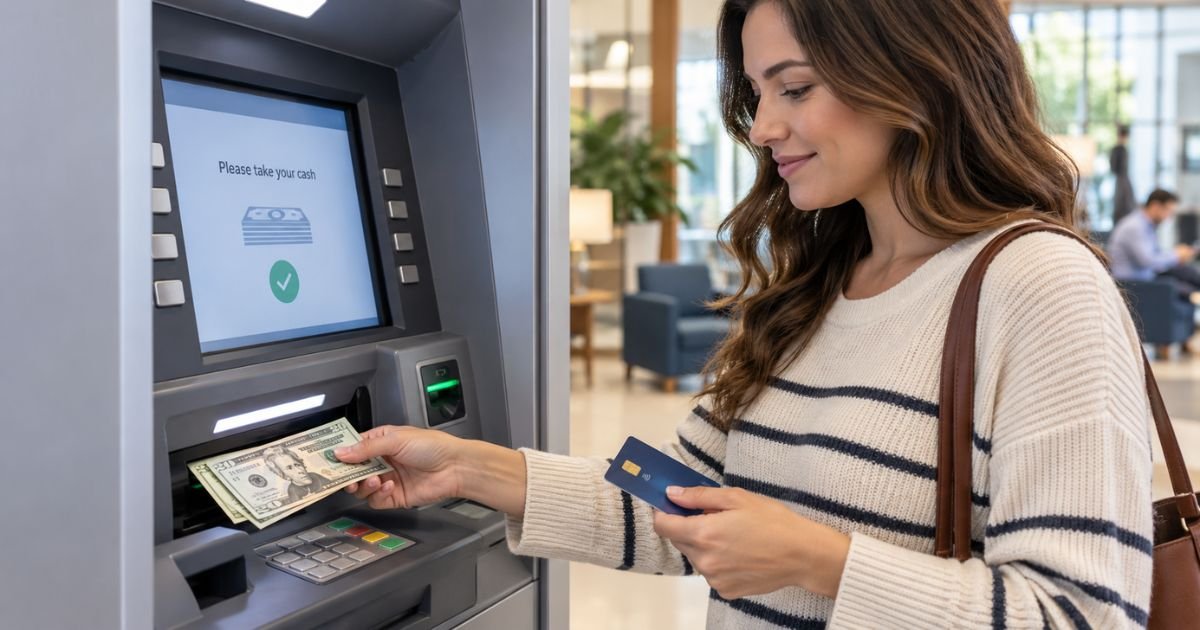
Learning how to withdraw cash from bank can feel confusing if you don’t use cash often. Unfamiliar banking steps are often simple once you know which option fits your needs.
You can usually get cash from an ATM, a bank teller, or through cash back at some stores. This guide explains each method, possible limits, fees, and what to do when you need a larger amount.
Table of Contents
What Does It Mean to Withdraw Cash from a Bank?
When you withdraw cash from a bank, you take money from your checking, savings, or another eligible deposit account. Your available balance generally drops by the amount you receive.
A bank withdrawal is different from a credit card cash advance. A debit card usually uses money you already have, while a cash advance generally borrows against your credit line and may add fees and interest.
Ways You Can Withdraw Cash
You generally have several ways to get physical cash from your bank account.
| Method | Best for | What you may need | Possible cost |
|---|---|---|---|
| ATM | Routine withdrawals | Debit or ATM card and PIN | Often free in-network |
| Bank teller | Larger withdrawals | Photo ID and account access | Usually based on bank policy |
| Store cash back | Small amounts | Debit card and PIN | May be free or carry a fee |
Your exact options may vary by bank and account type. Online-only banks may rely more heavily on ATM networks.
How to Withdraw Cash at an ATM
An ATM is generally the fastest choice for a normal withdrawal. You can often find fee-free machines through your bank’s app or website.
You can usually follow these steps:
- Insert, tap, or use your card as directed.
- Enter your PIN.
- Choose “Withdrawal.”
- Select checking or savings.
- Enter or select the amount.
- Confirm the transaction.
- Take your cash, card, and receipt.
Your bank may set a daily ATM withdrawal limit. The ATM may also have its own transaction limit or only dispense certain bill sizes.
Pro Tip: You can generally reduce ATM fees by using your bank or credit union’s network. With an out-of-network ATM, your bank and the ATM owner may each charge a fee.
How to Withdraw Cash From a Bank Teller
A teller is generally useful when you need more than your ATM allows. Visit a branch during business hours and ask to withdraw cash from your account.
You may need government-issued photo ID. Your bank may also ask you to use your debit card, enter a PIN, sign a withdrawal slip, or complete another security check.
Tell the teller how much you want and which account to use. Before leaving, you should count the cash privately and keep your receipt.
How Much Cash Can You Withdraw?
Your limit generally depends on your bank, account, card, and withdrawal method. ATM limits are often lower than teller withdrawal limits.
A teller may be able to give you a larger amount, but a branch may not keep enough cash for every request. For a large withdrawal, you should generally call ahead and ask whether advance notice is needed.
If your cash transactions total more than $10,000 in one business day, your financial institution generally must file a Currency Transaction Report under federal rules. This is routine reporting and does not by itself mean you did anything wrong.
You should not split a cash transaction into smaller amounts to avoid required reporting. Deliberately structuring transactions to evade reporting requirements may create legal problems.
Can You Withdraw Cash From a Savings Account?
You can generally withdraw cash from a savings account if your bank provides ATM or teller access. Your account may still have bank-specific transaction rules or fees.
If you recently deposited a check, some funds may not yet be available. Check your available balance rather than relying only on your total balance.
What Fees Can Apply?
Using your own bank’s ATM is often free, but policies vary. An out-of-network ATM may cost more because your bank and the ATM operator can each charge a fee.
Some stores also let you request cash back with a debit card purchase. The store may set a maximum amount, require a purchase, or charge a fee.
Credit card cash advances work differently. They generally may include a cash advance fee and can start charging interest right away.
Common Mistakes: Don’t assume every ATM has the same limit or fee. You should also avoid using a credit card when you meant to withdraw money directly from your bank account.
What to Do If Your ATM Withdrawal Is Declined
A declined ATM withdrawal does not always mean you are out of money. You may have reached your daily limit, entered the wrong PIN, requested an unsupported amount, or used a blocked card.
You can generally try these steps:
- Check your available balance.
- Confirm your daily ATM limit.
- Try a smaller amount.
- Use an in-network ATM.
- Check whether your card is locked in your banking app.
- Contact your bank using the number on the back of your card.
If the ATM gives you no cash but your account shows a withdrawal, contact your bank promptly. Keep the receipt if available and note the ATM location, amount, and time.
How to Withdraw a Large Amount Safely
If you need several thousand dollars or more, you should generally call your branch first. The branch may need time to arrange enough bills or may suggest another payment method.
Carrying a large amount of cash can also create theft or loss risk. For a major purchase, you may want to compare a cashier’s check, wire transfer, ACH transfer, or debit payment.
If you still need cash, ask whether an appointment, advance notice, or extra identification is required. You should avoid counting a large amount in a public area.
Can You Get Cash Without Visiting Your Bank?
You may still be able to get cash if your bank has no nearby branch. An in-network ATM is generally the simplest option.
For smaller amounts, store cash back may also work. If you need more than your usual ATM limit, you can ask your bank whether a temporary limit increase is available.
Approval may depend on your bank and account. You should confirm the change before making plans around it.
How to Avoid Withdrawal Problems
You should check your available balance and withdrawal limit before trying to get cash. This can help you avoid a declined transaction or an unnecessary trip.
Make sure your debit card is active and that you know your PIN. For a teller visit, bring valid ID and confirm the branch is open.
For a large request, call the branch first. That one step can help you confirm cash availability and any identification requirements.
FAQs: How to Withdraw Cash from Bank
Q. Can you withdraw money from any bank?
A. You can generally use your debit card at another bank’s ATM if it accepts your card network. Fees may apply, and a teller at another bank usually will not directly withdraw money from an account held elsewhere.
Q. How much cash can you withdraw from a bank in one day?
A. Your daily limit generally depends on your bank, account, card, and withdrawal method. ATM limits are commonly lower, while teller withdrawals may allow more if your balance and branch cash availability support the request.
Q. Do you need ID to withdraw cash from a bank?
A. You generally need valid identification for an in-person teller withdrawal. An ATM usually relies on your debit or ATM card and PIN instead.
Q. Can a bank delay a large cash withdrawal?
A. Your bank may delay a large same-day request if the branch does not have enough currency available or needs additional account verification. Calling ahead is generally the easiest way to confirm the process.
Conclusion
Knowing how to withdraw cash from bank is generally straightforward once you choose the right method. You can use an ATM for routine amounts, visit a teller for larger withdrawals, or use cash back at some stores for smaller amounts.
Before you withdraw, check your available balance, limits, and possible fees. For a large cash request, contact your branch first and consider whether a more secure payment method fits your needs.
Disclaimer: This article is for general informational purposes only and is not financial or legal advice. Bank, ATM, and account policies may vary, so you should verify account-specific questions with your financial institution.
Meet the Author
