
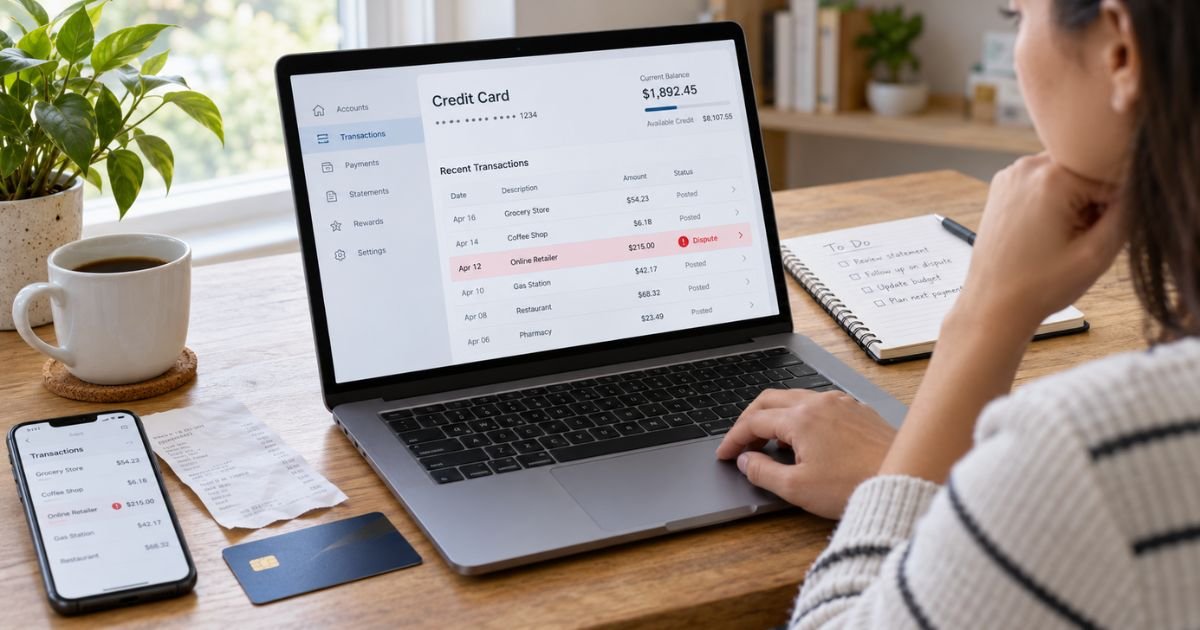
A credit card dispute can feel confusing when a charge is wrong, unfamiliar, duplicated, or tied to something you never received. Federal law gives you important protections for many billing errors.
You will usually get the best result by acting quickly, choosing the right dispute reason, and keeping clear records. This guide explains how to handle credit card disputes from your first review through a possible appeal.
Table of Contents
What Is a Credit Card Dispute?
A credit card dispute is a request for your card issuer to investigate a charge or billing error. Your issuer may remove the charge, request information from the merchant, or decide that the charge is valid.
A dispute is not always the same as a chargeback. A chargeback generally refers to reversing a card transaction through the card network.
The FTC says billing errors can include unauthorized charges, duplicate charges, incorrect amounts, missing credits, and charges for goods you did not accept or that were not delivered as agreed.
Identify the Type of Dispute First
Start by identifying exactly what went wrong. The reason you select can affect what evidence your issuer requests.
| Situation | Typical dispute category |
|---|---|
| You did not make the purchase | Unauthorized or fraudulent charge |
| You were charged twice | Duplicate charge |
| The amount is wrong | Incorrect amount |
| An order never arrived | Goods or services not received |
| A refund never appeared | Credit not processed |
| The item was not as promised | Product or service dispute |
Do not call a transaction fraud if you actually made the purchase. If you recognize the merchant but have a delivery, product, or refund problem, describe that problem accurately.
Pro Tip: Write a one-sentence summary before starting. For example, “I made one $80 purchase, but the merchant posted the same $80 charge twice.”
Review the Transaction Before Disputing It
Check the merchant descriptor, amount, date, and transaction status. A business may appear under a parent company, payment processor, or legal name you do not recognize.
Also check whether the transaction is pending. Some temporary authorizations disappear or change when the final charge posts.
Search your email for the merchant and amount. Check subscriptions, digital wallets, app-store purchases, and charges made by authorized card users.
If you still do not recognize the charge, contact your issuer promptly. It may be an unauthorized transaction.
Contact the Merchant When Appropriate
For delivery problems, defective products, cancellations, or refunds, contact the seller first when practical. The CFPB recommends asking the company to correct the problem or issue a refund before escalating a product or service issue.
Save receipts, order confirmations, shipping records, cancellation notices, refund promises, and chat transcripts. Keep photos when they support your claim.
Do not let repeated merchant conversations make you miss a dispute deadline. The FTC recommends contacting your issuer promptly even when you are also working with the seller.
File the Dispute With Your Credit Card Issuer
You can generally start by calling the number on the back of your card or using your issuer’s secure app or website. Explain the problem clearly and choose the most accurate dispute reason.
Keep the claim number and note when you filed. Upload supporting documents if your issuer allows it.
For federal billing-error protections, the CFPB says you should also send written notice within 60 calendar days after the issuer sent the statement that first showed the error. Send it to the billing-inquiries address, which may differ from the payment address.
Include your account information, disputed amount, transaction date, and a clear explanation. Send copies of supporting documents and keep the originals.
Know What Happens During the Investigation
After receiving a proper written billing-error notice, your issuer generally has 30 days to acknowledge it unless the issue has already been resolved. The investigation generally must be completed within two billing cycles, with a maximum of 90 days.
Your issuer may review receipts, delivery records, cancellation terms, and merchant evidence. It may also ask you for more information.
You might receive temporary credit while the investigation continues. Do not assume temporary credit means the dispute is permanently resolved.
Pay the Undisputed Part of Your Bill
During a qualifying billing-error investigation, you generally do not have to pay the disputed amount or related finance charges. You still need to pay the undisputed part of the bill on time.
Your issuer generally cannot treat the properly disputed amount as a late payment while the federal process applies. It may still reduce your available credit by the disputed amount.
Do not stop paying the entire bill because one transaction is disputed.
Respond Quickly to Evidence Requests
Your issuer may ask for more documents after you open the case. Respond by the stated deadline and keep proof of what you submitted.
A dated cancellation email, receipt, delivery record, or refund promise is usually more useful than a general complaint.
Common Mistakes: Do not submit screenshots without explaining them. Do not discard receipts after receiving temporary credit, and do not ignore letters from your issuer.
Understand Fraud Versus a Merchant Disagreement
If you never authorized the purchase, tell the issuer that the transaction may be fraudulent. Federal law generally limits your liability for unauthorized credit card charges to $50, while many issuers may provide stronger protections.
If you made the purchase but disagree about delivery, quality, cancellation, or a refund, use the appropriate merchant-dispute reason. Mislabeling the issue may slow the investigation.
What to Do if Your Dispute Is Denied
Read the issuer’s explanation carefully. If the merchant supplied evidence, ask whether you can obtain copies of the documents used in the decision.
If something important was missed, use the issuer’s reconsideration or appeal process.
The FTC says you may write back after an unfavorable formal billing-error decision within the period given for payment or within 10 days after receiving the explanation, whichever is later. Collection rules can change at that stage, so follow the notice carefully.
You can also submit a complaint to the Consumer Financial Protection Bureau if you believe your issuer mishandled the dispute. A complaint does not guarantee a particular outcome.
Avoid These Credit Card Dispute Mistakes
Keep your claim focused. A simple timeline can make your evidence easier to understand.
Common mistakes include:
- Waiting too long to report the charge.
- Choosing the wrong dispute reason.
- Filing fraud for a purchase you made.
- Throwing away receipts or cancellation proof.
- Ignoring requests for more information.
- Assuming temporary credit is permanent.
- Stopping payment on the entire bill.
FAQs: How to Handle Credit Card Disputes
Q. How long do you have to dispute a credit card charge?
A. To protect federal billing-error rights, you generally should send written notice within 60 calendar days after the issuer sent the first statement showing the error. Your card agreement may provide additional procedures or protections.
Q. Can you dispute a charge you already paid?
A. Yes. The CFPB says you can still dispute a charge after paying it, although you may not get the money back until the issuer decides the dispute in your favor.
Q. Does filing a dispute guarantee a refund?
A. No. Your issuer reviews the evidence and may decide that the charge was valid, partly valid, or incorrect.
Q. Will a credit card dispute hurt your credit score?
A. A properly handled billing dispute should not by itself make the disputed amount a late payment while the federal process applies. You should still pay all undisputed amounts by their due dates.
Conclusion
Knowing how to handle credit card disputes means acting quickly, choosing the correct dispute reason, and keeping evidence from the start. Review the charge, contact the merchant when appropriate, notify your issuer, and protect the applicable 60-day written-notice deadline.
Keep monitoring the claim until you receive a final decision. If the issuer denies your dispute, review its evidence and use the available reconsideration or complaint process when you have grounds to continue.
Disclaimer: This article is for informational purposes only and is not financial or legal advice. Credit card dispute rights, issuer procedures, and merchant policies can vary, so verify account-specific questions with your card issuer or a qualified professional.
Meet the Author
