
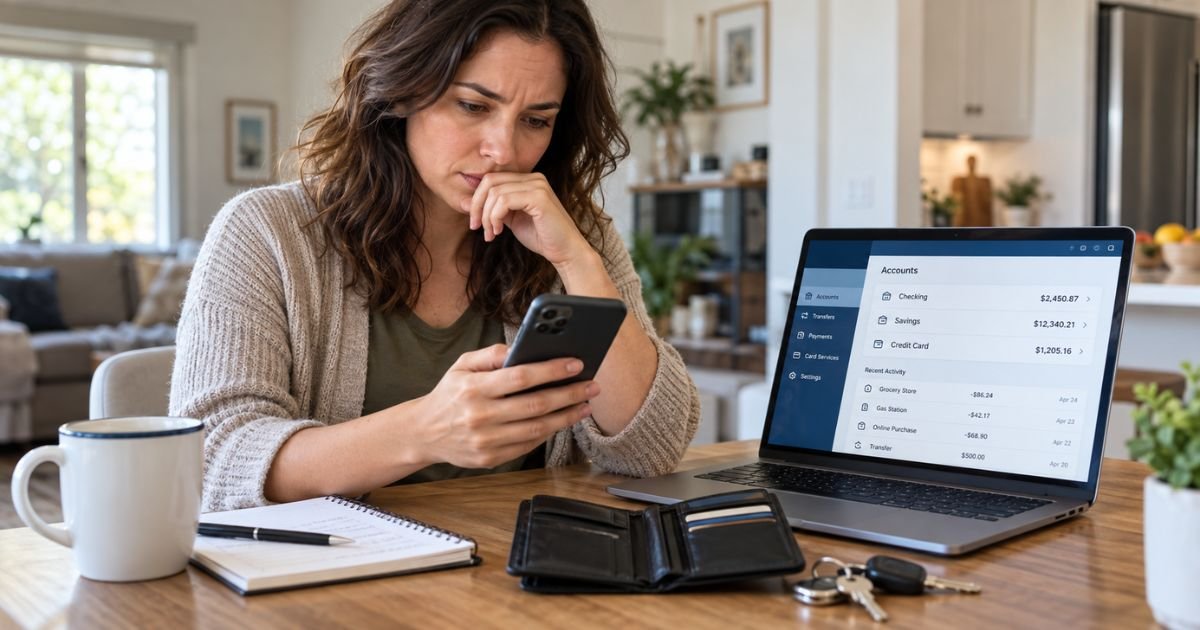
Knowing how to fix a lost debit card can protect the money in your checking account. A missing card doesn’t always mean someone has stolen it, but you should act quickly even if you think you simply misplaced it.
You can usually lock the card, report it to your bank, check for unauthorized transactions, and request a replacement. This guide explains each step and what to do if someone has already used your card.
Table of Contents
How to Fix a Lost Debit Card
To fix a lost debit card, contact the bank or credit union that issued it as soon as you notice it’s missing. Most banks generally let you lock or report a card through their mobile app, website, or customer service line.
If you’re certain the card is gone, report it as lost rather than relying only on a temporary card lock. Your bank can generally cancel the old card number and issue a replacement.
Your basic steps are:
- Lock or freeze the missing card.
- Check recent transactions.
- Report the card as lost or stolen.
- Dispute any transactions you didn’t authorize.
- Request a replacement debit card.
- Change your PIN if necessary.
- Update recurring payments after the new card arrives.
The sooner you report the loss, the better your protection may be under federal law.
Lock the Debit Card Immediately
Open your bank’s mobile app or online banking account first. Look for a feature called Lock Card, Freeze Card, Card Controls, or something similar.
A card lock can generally stop new purchases while you search for the card. This can be useful if you think the card is somewhere in your home, car, or another safe location.
However, card-lock features vary by bank. Some recurring payments, refunds, or previously authorized transactions may still process.
Pro Tip: If you’re only temporarily locking the card, keep checking your account. If you can’t find the card quickly, report it as lost and request a replacement.
Check Your Bank Account for Unauthorized Transactions
Review your checking account before and after reporting the card. Look closely at purchases, ATM withdrawals, cash-back transactions, and small charges you don’t recognize.
Fraudsters may sometimes test stolen card information with a small transaction before attempting a larger purchase. Report anything suspicious to your bank promptly.
Make a note of:
- The transaction amount
- Merchant name
- Transaction date
- Whether the payment is pending or posted
- Any ATM location shown
- When you first noticed the card was missing
Don’t assume a small unfamiliar transaction is harmless. Ask your bank about it if you can’t identify it.
Report the Lost Card to Your Bank
Contact your bank or credit union directly. Use its official mobile app, website, statement, or another verified source to find the correct customer service number.
Tell the representative when you noticed the debit card was missing. Also tell them whether you see transactions you didn’t make.
Federal rules make reporting time especially important for debit cards. If you notify your financial institution within two business days after discovering the loss or theft, your potential liability for unauthorized transfers is generally limited to $50 or the amount transferred before you reported the loss, whichever is less.
Waiting longer may increase your potential liability. Reporting after two business days can potentially expose you to losses of up to $500 in some situations.
Request a Replacement Debit Card
After canceling the missing card, ask your bank to issue a replacement. The replacement will generally have a new card number, expiration date, and security code.
Delivery times vary by financial institution. Some banks may offer expedited delivery or an instant digital debit card, but availability and fees can differ.
Ask your bank:
- When the replacement should arrive
- Whether expedited shipping is available
- Whether there is a replacement fee
- Whether you can use a digital card immediately
- Whether your PIN will stay the same
- Whether you need to activate the new card
Don’t use a replacement card until you’ve confirmed that it’s properly activated.
What If You Find the Lost Card Later?
What you should do depends on whether you only locked the card or formally reported it lost.
If you simply locked the card through your banking app, you may be able to unlock it if you find it in a secure place. Check your bank’s instructions first.
If the bank has already canceled the card and ordered a replacement, don’t try to use the old card. Destroy it securely after confirming with your bank that it has been canceled.
Common Mistakes: Don’t assume finding the old card automatically makes it usable again. Once your bank cancels a debit card, that card generally stays canceled even if you later find it.
What If Someone Used Your Lost Debit Card?
Report unauthorized purchases or withdrawals immediately. Your bank or credit union will generally open an investigation into the disputed electronic transfers.
Under federal rules, a financial institution generally has 10 business days to investigate many unauthorized electronic fund transfer claims. Different timelines can apply in certain situations, and provisional credit may be available while a longer investigation continues.
If a statement shows an unauthorized withdrawal, you generally should notify the bank no later than 60 days after the statement was sent. Waiting beyond that period may increase your responsibility for later unauthorized transfers.
Keep records of your report. Save confirmation numbers, emails, dispute forms, and notes from phone conversations.
Should You Change Your Debit Card PIN?
Consider changing your PIN if there’s any chance someone knows it. This is especially important if your wallet containing both the card and written PIN information was lost.
Never keep your PIN written on the card or stored beside it. The CFPB specifically recommends notifying your bank quickly if your PIN or other security code is lost or stolen.
You may be able to change the PIN through:
- Your bank’s mobile app
- Online banking
- An ATM
- Telephone banking
- A bank branch
The exact process depends on your financial institution.
Update Automatic Payments
Your old debit card may have been connected to subscriptions, utilities, streaming services, insurance payments, or other recurring bills.
When the replacement card arrives, review your automatic payments. Update merchants that need your new card number.
Common payments to check include:
- Streaming subscriptions
- Phone bills
- Internet service
- Insurance premiums
- Gym memberships
- Food delivery memberships
- Cloud storage
- Online shopping accounts
Some recurring merchants may continue receiving updated card information through payment-network services. Because this varies, review your transactions instead of assuming every payment will automatically stop.
What If You Lose Your Debit Card While Traveling?
Contact your bank immediately, even if you’re outside the United States. Many financial institutions provide international customer service numbers or secure in-app messaging.
Ask whether your bank can provide an emergency replacement card, digital card, or another way to access cash. Options depend on your bank and card network.
If your entire wallet was stolen, review the other items that were inside. You may also need to replace your driver’s license, credit cards, insurance cards, or other identification.
How to Protect Your New Debit Card
Turn on banking alerts after activating your replacement card. Transaction notifications can help you spot suspicious purchases quickly.
You can also reduce your risk by:
- Using a unique online banking password
- Enabling multi-factor authentication
- Keeping your PIN private
- Reviewing transactions regularly
- Avoiding suspicious ATMs
- Keeping your bank’s official contact information available
- Carrying only the cards you need
Never give your PIN or online banking password to someone who calls or texts claiming to represent your bank. Contact the bank through a verified channel instead.
FAQs: How to Fix a Lost Debit Card
Q. Can I still use my bank account if I lose my debit card?
A. Yes, generally. Losing your physical debit card usually doesn’t close your checking account.
You may still be able to use online banking, direct deposit, checks, bank transfers, or other account services. Access options vary by bank.
Q. Will my bank charge me for a replacement debit card?
A. It depends on your bank or credit union. Some institutions generally replace a lost debit card for free, while others may charge for replacement or expedited delivery.
Check your bank’s current fee schedule before requesting faster shipping.
Q. How long does it take to get a new debit card?
A. Delivery times vary by financial institution. A standard replacement may take several business days, while some banks may provide expedited shipping or a digital card sooner.
Your bank can give you the most accurate delivery estimate for your account.
Q. Can someone use my lost debit card without my PIN?
A. Possibly. A person may be able to make certain purchases without entering your PIN, depending on how the merchant processes the transaction.
That’s why you should lock or report a missing card immediately instead of assuming the PIN alone protects your account.
Conclusion
Knowing how to fix a lost debit card mainly comes down to acting quickly. Lock the card, check your transactions, report the loss to your bank, and request a replacement.
Keep monitoring your account even after the old card is canceled. If you find an unauthorized charge or withdrawal, report it immediately so you can preserve your rights and limit possible losses.
Disclaimer: This article is for general informational purposes only and isn’t financial or legal advice. Debit card protections, replacement procedures, fees, and policies may vary by issuer. Verify account-specific questions with your bank or credit union.
Meet the Author
