
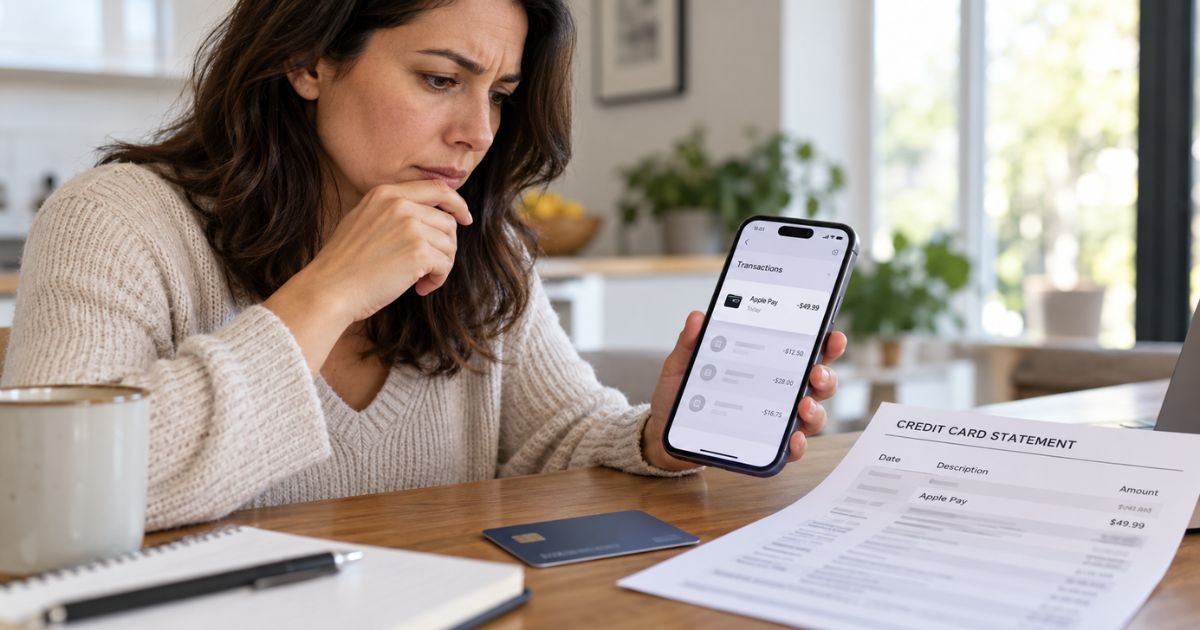
Knowing how to dispute Apple Pay transaction activity can feel confusing because Apple Pay isn’t usually the bank that actually issued your card. An unfamiliar charge may come from a merchant, your credit or debit card issuer, Apple Cash, or an Apple service.
You should first identify which card funded the transaction and whether you recognize the merchant. You can then contact the merchant, your card issuer, Apple, or Apple Cash support depending on what happened.
Table of Contents
How to Dispute Apple Pay Transaction Charges
Apple Pay is a digital wallet service. When you use a credit or debit card through Apple Pay, your underlying card issuer still handles the account and generally handles disputes involving that card.
Apple specifically says that Apple Pay is not a bank and that cards used with Apple Pay are offered by the card issuer. Apple also tells you to contact your bank or card issuer when you have questions about a charge made using Apple Pay.
That distinction is important because seeing a transaction in Apple Wallet doesn’t necessarily mean Apple sold you something.
| Type of transaction | Where you generally start |
|---|---|
| Store purchase made with Apple Pay | Merchant, then card issuer |
| Unauthorized credit card transaction | Credit card issuer |
| Unauthorized debit card transaction | Bank or credit union |
| Apple Card transaction | Report it through Wallet |
| App Store or Apple subscription charge | Apple Report a Problem |
| Apple Cash transaction | Apple Cash support through Green Dot Bank |
Check the Transaction in Apple Wallet
Start by opening the Wallet app and selecting the credit or debit card used for the transaction.
Apple says you can tap a card to review recent transactions and then tap an individual transaction for more information. However, Apple also warns that Wallet may show both Apple Pay and physical-card activity depending on the issuer.
Your card issuer’s records are generally the more reliable source. Apple specifically recommends contacting the issuer for the most accurate transaction history.
Compare:
- Merchant name
- Transaction amount
- Purchase date
- Location, if available
- Card used
- Pending or completed status
A merchant name may look different from the store name you remember. You should generally check the amount and date before reporting the payment as fraud.
Pro Tip: Don’t assume a transaction was made through Apple Pay simply because you see it in Wallet. Some issuers may show transactions made directly with the physical card in the same Wallet history.
Contact the Merchant for a Purchase Problem
If you recognize the transaction but have a problem with the purchase, contact the merchant first.
Examples include an incorrect amount, duplicate charge, missing merchandise, canceled service, or expected refund that never appeared.
Apple’s order-tracking guidance says Wallet may let you open the merchant’s website or contact the merchant directly for supported purchases. The order information displayed in Wallet generally comes from the merchant.
Keep your receipt, order confirmation, cancellation notice, and messages with the seller.
If the merchant doesn’t resolve the issue, you can generally ask your card issuer about its formal dispute process.
Report an Unauthorized Apple Pay Transaction
If you didn’t make or approve the purchase, contact the issuer of the card used with Apple Pay as soon as possible.
For a credit card, call the number on the back of your card or use the issuer’s official app. Clearly state that you didn’t authorize the transaction.
The Consumer Financial Protection Bureau says you should contact your credit card company immediately about a billing problem.
To preserve federal billing-error rights, you generally need to send the required written notice within 60 calendar days after the issuer sent the statement containing the disputed charge.
For a debit card, reporting quickly is especially important.
If your physical debit card, PIN, or related access information was lost or stolen, federal liability protections can depend on whether you report the loss within two business days.
If your card stayed in your possession, you generally should still report an unauthorized transaction immediately and no later than 60 days after the statement was sent.
Common Mistakes: Don’t wait for Apple Support to investigate a transaction funded by your normal bank card before contacting the issuer. Federal dispute deadlines can continue running while you try to identify the charge.
What If You Used Apple Card?
Apple Card has its own dispute process inside Wallet.
Apple says you can open Wallet, select Apple Card, tap the transaction, choose Report an Issue, and select the appropriate transaction problem. The process can then connect you with Goldman Sachs through Messages.
If the transaction is actually for an Apple service, such as an App Store purchase or subscription, Wallet may direct you to Apple’s Report a Problem service instead.
Apple Card and Apple Pay aren’t the same product. Apple Pay is the wallet technology, while Apple Card is a credit card account.
What If the Charge Is From Apple Itself?
If the transaction is for an app, in-app purchase, Apple subscription, music, or another Apple digital service, check your Apple purchase history.
Apple says you can sign in at its Report a Problem service and search your purchases by amount. Some eligible purchases can also be submitted for a refund.
You should also check:
- Other Apple Accounts you use
- Family Sharing purchases
- Active subscriptions
- App Store purchase history
- Apple email receipts
This process is different from disputing a restaurant, retailer, or other third-party merchant that happened to accept Apple Pay.
Apple Pay vs. Apple Cash Disputes
Apple Cash requires a different process.
Apple Cash lets you keep a balance and send money to other people. It can also be used for merchant purchases through Apple Pay.
Apple says that Apple Cash services are provided by Green Dot Bank. If you find an unrecognized Apple Cash transaction, Apple recommends securing your Apple Account and contacting an Apple Cash Specialist at Green Dot Bank.
Person-to-person Apple Cash payments can be especially important to review carefully. If a payment is still pending, Apple says you may be able to cancel it. Once the payment shows as completed, you generally can’t cancel it yourself.
Don’t confuse an Apple Cash transfer with an ordinary Apple Pay card purchase.
Stop Recurring Apple Pay Charges
Apple Pay can also be used for preauthorized transactions such as subscriptions and recurring bills.
On supported cards, you can open Wallet and review Preauthorized Payments. Apple may let you visit the merchant’s website or revoke the merchant’s Apple Pay payment authorization.
However, revoking authorization in Wallet doesn’t cancel the subscription itself. Apple says you should cancel directly with the merchant to make sure the underlying service ends.
Removing the card from Wallet may also fail to cancel a recurring agreement.
You should therefore contact the merchant if your goal is to stop future subscription billing.
Secure Apple Pay After a Lost or Stolen Device
If your iPhone or other Apple device is missing, protect the device before more transactions can occur.
Apple says putting a supported device into Lost Mode through Find My suspends the payment cards and passes stored for Apple Pay. You can also remove cards through your Apple Account or ask your card issuer to suspend them from Apple Pay.
If you believe someone has gained access to your Apple Account, change your password and review your devices.
You may also want your card issuer to replace the underlying card if it believes the account itself has been compromised.
How Long Does a Card Dispute Take?
Timelines depend on the card and dispute type.
For credit card billing errors covered by federal rules, the CFPB says the issuer generally has 30 days to acknowledge your written dispute unless it has already resolved the issue. It generally gets up to two billing cycles to investigate.
For covered unauthorized debit card transactions, the bank generally has 10 business days to investigate. If it needs more time, Regulation E may require provisional credit while the investigation continues, subject to specific rules and exceptions.
Your issuer may provide additional protections beyond federal minimums.
What Consumers Report About Apple Pay Disputes
Consumer complaints show that Apple Pay disputes can become confusing when users aren’t sure whether Apple, the merchant, or the card issuer is responsible.
BBB records for Apple include billing complaints involving unauthorized transactions and disputed digital purchases. These complaints are individual claims and don’t establish what happened in your case.
Reddit users have also reported confusion when transactions appearing in Apple Wallet were actually tied to their underlying card issuer. One useful recurring point is that Wallet can display card activity that wasn’t necessarily initiated through Apple Pay.
Trustpilot also contains complaints involving Apple billing, refunds, and payment disputes. However, those reports often mix Apple Pay, Apple Cash, App Store purchases, Apple Card, and third-party merchants, so they shouldn’t be treated as evidence about how your individual dispute will be decided.
FAQs: How to Dispute Apple Pay Transaction
Q. Can you dispute a purchase made with Apple Pay?
A. Yes. If you paid with a normal credit or debit card through Apple Pay, you generally dispute the underlying transaction with the card issuer. You may want to contact the merchant first if the issue involves a recognized purchase.
Q. Does Apple refund unauthorized Apple Pay transactions?
A. Not usually when a third-party credit or debit card funded the purchase. Apple says questions about charges made through Apple Pay should generally go to your bank or card issuer.
Q. Can you dispute an Apple Pay transaction if you still have your phone?
A. Yes. Keeping possession of your phone doesn’t automatically prove a transaction was authorized. You should report any purchase you genuinely didn’t make to the card issuer and provide accurate details about your device and account.
Q. Does removing a card from Apple Pay stop recurring payments?
A. Not necessarily. Apple says removing a card or revoking Apple Pay authorization doesn’t automatically cancel the underlying subscription or service. You should generally cancel directly with the merchant.
Conclusion
Knowing how to dispute Apple Pay transaction activity starts with identifying what actually funded the payment. For most purchases made with a regular credit or debit card, your card issuer handles the formal dispute rather than Apple.
Check Wallet and your bank records, contact the merchant when appropriate, and report genuinely unauthorized activity promptly. If the transaction involves Apple Card, Apple services, or Apple Cash, use the specific dispute process for that product.
Disclaimer: This article is for informational purposes only and isn’t financial or legal advice. Dispute rights, investigation timelines, and account policies may vary by issuer and transaction, so verify account-specific questions with Apple, the merchant, or your financial institution.
Meet the Author
