
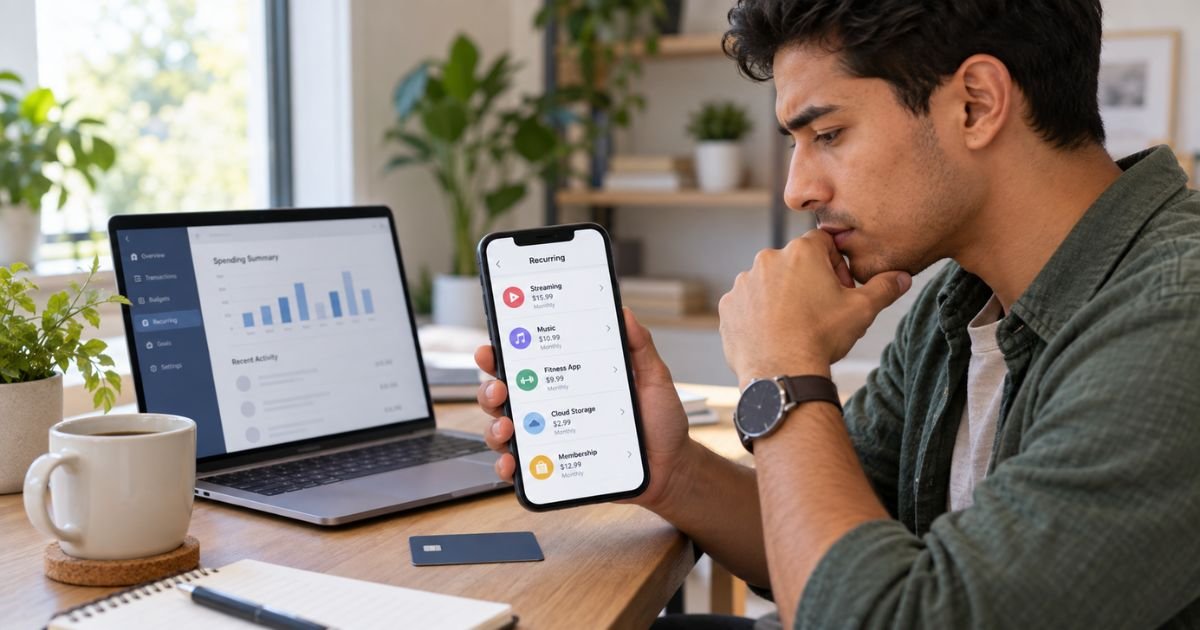
Learning how to cancel all subscriptions on your debit card can help when recurring charges have become difficult to track. The important point is that there usually isn’t one button at your bank that safely cancels every subscription at once.
You generally need to identify each recurring merchant, cancel the subscription with that company, and monitor your account afterward. If a merchant keeps charging you, your bank may also be able to block future payments or investigate the transactions.
Table of Contents
How to Cancel All Subscriptions on Your Debit Card
To cancel all subscriptions on your debit card, start by reviewing your bank statements and making a list of every recurring payment. Then cancel each subscription through the merchant, app store, or service that manages it.
Removing your debit card from a website usually isn’t enough. Replacing your card may not stop every subscription either.
A practical process is:
- Review at least several months of bank statements.
- Make a list of recurring merchants.
- Identify who actually manages each subscription.
- Cancel each subscription directly.
- Save cancellation confirmations.
- Revoke payment authorization when needed.
- Ask your bank about a stop-payment order if charges continue.
- Monitor your account for additional debits.
- Dispute unauthorized or post-cancellation transactions promptly.
This approach takes more work than simply replacing your debit card, but it gives you clearer proof that each subscription was actually canceled.
Find Every Subscription Connected to Your Debit Card
Start with your checking account transaction history. Look through several months of purchases because some subscriptions renew quarterly or annually instead of monthly.
Watch for repeated merchant names and similar amounts. Also check small transactions because low-cost subscriptions can be easy to overlook.
Common recurring charges include:
- Streaming services
- Music subscriptions
- Cloud storage
- Software
- Fitness memberships
- Dating services
- Gaming memberships
- News subscriptions
- Meal plans
- Delivery memberships
- Insurance
- Online learning platforms
- Mobile apps
Your bank may label some transactions as recurring. That can help, but don’t rely on the label alone.
Some merchants also use billing descriptors that differ from the service name you remember. Search unfamiliar merchant names before assuming the transaction is fraudulent.
Pro Tip: Create a simple list with the merchant name, amount, billing frequency, next renewal date, and cancellation status. This makes it much easier to confirm that you haven’t missed an annual subscription.
Cancel Each Subscription With the Merchant
Once you identify a subscription, cancel it through the company that provides the service. Look for options such as Subscription, Membership, Billing, Manage Plan, or Automatic Renewal.
Complete every confirmation screen. Some services first offer you a discount, pause, or cheaper plan instead of immediately canceling.
You should look for a final message confirming that automatic renewal is off. Save the confirmation email or take a screenshot.
Cancellation may stop future renewals while leaving the service active until the end of the period you already paid for. Policies vary by merchant.
Canceling payment alone also may not cancel a contract. For example, blocking a gym membership payment does not necessarily eliminate money you still owe under the membership agreement.
Check Apple, Google, PayPal, and Other Billing Platforms
Not every subscription using your debit card is managed directly by the company whose app you use.
An iPhone subscription may be billed through Apple. An Android subscription may be managed through Google Play.
Other subscriptions may run through:
- PayPal
- Amazon
- Roku
- Microsoft
- PlayStation
- Xbox
- A mobile carrier
If the service says your subscription is managed by another provider, cancel it through that provider.
This is also why deleting an app normally doesn’t cancel its subscription. The recurring billing agreement can remain active after the app is gone.
Can Your Bank Cancel All Debit Card Subscriptions?
Usually, your bank can’t simply terminate every contract you have with outside businesses. It can control whether certain payments are allowed to debit your account.
U.S. federal rules generally give you the right to stop preauthorized electronic payments from your bank account. You can also revoke a company’s authorization to take automatic payments.
A useful order is:
- Tell the merchant that you are revoking permission for automatic payments.
- Cancel the underlying subscription or contract when appropriate.
- Tell your bank that you revoked authorization.
- Ask what additional documentation the bank requires.
Keep written records of every request.
Your bank may have its own form for stopping recurring payments. Fees and procedures may vary.
How a Stop-Payment Order Works
If another automatic debit is coming soon, you may be able to give your bank a stop-payment order.
For covered preauthorized electronic fund transfers, you generally need to notify your bank at least three business days before the scheduled payment.
The bank may accept your request orally or in writing. If you make an oral request, the bank may require written confirmation within 14 days.
Ask whether the stop-payment order covers:
- One specific transaction
- All future payments from that merchant
- Debit card recurring transactions
- ACH withdrawals from your bank account
Banks commonly charge stop-payment fees, although policies vary.
A stop-payment order blocks the payment. It does not automatically cancel a valid contract or erase money you legally owe the merchant.
Common Mistakes: Don’t assume blocking a payment ends the subscription agreement. Cancel with the merchant too, especially for gyms, insurance, loans, and other services that may continue creating an amount due.
Will Replacing Your Debit Card Stop All Subscriptions?
Not necessarily.
Getting a new debit card number may stop some merchants from charging your old card. However, payment networks offer account-updater services designed to keep recurring payments working when card numbers or expiration dates change.
For example, Visa Account Updater can provide participating merchants with updated card information after certain card replacements, including some lost or stolen card replacements.
This feature is useful when you want legitimate subscriptions to continue. It also means replacing your card should not be treated as a reliable way to cancel unwanted subscriptions.
Some recurring payments may also be tied directly to your checking account through ACH rather than to your debit card number. A replacement debit card would not change the bank account information used for those payments.
Cancel each subscription directly whenever possible.
What If a Merchant Keeps Charging After Cancellation?
Start by checking your cancellation confirmation. Make sure the transaction occurred after the subscription was supposed to end.
Then contact the merchant and request a refund. Give the company your cancellation date and confirmation number.
If the merchant refuses or continues charging you, contact your bank. Explain that you revoked authorization or canceled the subscription before the transaction.
The FTC recommends keeping records of cancellation attempts and disputing charges when a company continues billing after cancellation.
BBB complaints across many subscription businesses also show recurring consumer problems involving automatic renewals, hard-to-find cancellation controls, and charges after attempted cancellation.
Because this topic covers many unrelated merchants, BBB and Trustpilot ratings aren’t useful as a single measure of subscription billing practices. Reddit discussions are also anecdotal, although users frequently describe replacing cards only to find that certain recurring charges continued.
Your own cancellation records provide much stronger evidence than online reviews.
How to Dispute an Unauthorized Debit Card Subscription
If you never agreed to the subscription, contact your bank promptly. Tell the representative that you want to report an unauthorized electronic transaction.
Federal Regulation E generally protects consumers from unauthorized electronic fund transfers, but reporting deadlines matter.
If your physical debit card was lost or stolen, notifying your bank within two business days can generally limit your potential liability to $50 or the unauthorized amount, whichever is less. Waiting longer may increase your potential liability.
If your card is still in your possession but an unauthorized transaction appears on your statement, report it immediately. You generally should notify your financial institution no later than 60 days after it sends the statement showing the unauthorized transfer.
Banks generally have 10 business days to investigate many qualifying debit-card errors. Longer investigations may be allowed when the bank provides provisional credit, and specific timelines can vary.
Should You Close Your Bank Account?
Closing a checking account should generally be a last resort rather than your first cancellation method.
It may create problems with:
- Direct deposits
- Rent payments
- Utility bills
- Loan payments
- Checks
- Legitimate subscriptions
- Automatic transfers
You could also create unpaid obligations if you close the account without canceling contracts.
If repeated unauthorized withdrawals continue despite cancellation, revocation, and bank intervention, ask your bank whether closing the account and opening a new one is appropriate.
Do not close it until you understand how outstanding transactions will be handled.
How to Prevent Subscription Problems in the Future
Turn on debit-card transaction alerts. Immediate notifications can help you notice an unexpected renewal before several months of charges accumulate.
Review your bank statement every month and keep records of subscription start dates.
For free trials, note the conversion date when you sign up. Cancel before the trial ends if you don’t want the paid plan.
You may also consider using a credit card instead of a debit card for some subscriptions. A debit card pulls money directly from your bank account, so an unexpected charge can immediately reduce funds available for other expenses.
FAQs: How to Cancel All Subscriptions on Your Debit Card
Q. Is there one button to cancel every subscription on my debit card?
A. Usually not. You generally need to identify and cancel each subscription with the merchant or platform managing it.
Your bank may help block individual recurring payments when necessary.
Q. Does getting a new debit card stop subscriptions?
A. Not always. Card-network account updater services may provide eligible recurring merchants with your updated card details.
Cancel subscriptions directly instead of relying only on a replacement card.
Q. Can my bank block a company from charging my debit card?
A. In many situations, yes. You can generally revoke authorization for preauthorized payments and ask your bank about blocking future payments or placing a stop-payment order.
Procedures and fees may vary by financial institution.
Q. Can I dispute subscription charges after I cancel?
A. You may generally dispute transactions that were unauthorized or processed after valid authorization was revoked. Contact your bank promptly and provide your cancellation confirmation and other supporting records.
Your bank will determine whether the transaction qualifies under its dispute process and applicable federal rules.
Conclusion
The safest way to cancel all subscriptions on your debit card is to identify each recurring payment and cancel it directly with the merchant or billing platform. Keep written confirmation and monitor your account afterward.
If a merchant continues billing after you revoke authorization, contact your bank about stopping future payments and disputing unauthorized transactions. Don’t rely only on replacing your debit card because some recurring merchants may receive updated card information automatically.
Disclaimer: This article is for general informational purposes only and isn’t financial or legal advice. Subscription agreements, stop-payment fees, dispute procedures, and debit-card protections may vary by merchant and financial institution. Verify account-specific questions with the company or your bank.
Meet the Author
