
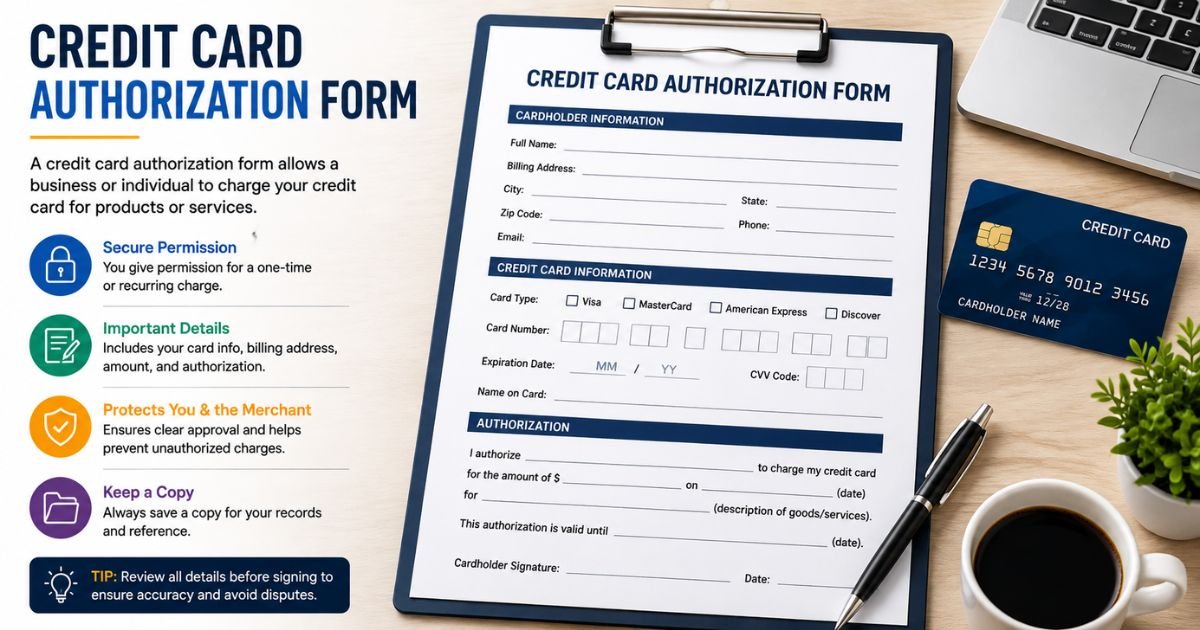
A credit card authorization form can appear when a business asks to charge your card later or keep it on file. It often shows up for hotels, services, or recurring bills. Understanding the form helps you avoid surprises on your statement and keep control of your card.
Table of Contents
What Is a Credit Card Authorization Form?
A credit card authorization form is a written or electronic document you sign. It gives a merchant permission to charge your credit card under specific terms. The form acts as proof that you agreed to the charge.
Businesses use it mainly when your card is not present. Common examples include phone orders, future services, hotel incidentals, equipment rentals, or recurring monthly payments.
The form typically lists your name, billing address, card details, the amount or limit allowed, a description of the goods or services, and your signature with the date.
It can cover a one-time charge or ongoing billing. The merchant keeps a copy as evidence of your consent. This helps them if a dispute arises later.
Why Businesses Ask for One
Merchants request the form for card-not-present transactions. A signed form shows you approved the charge. It reduces the risk of chargebacks for them. It also clarifies the exact amount, frequency, and purpose of the billing.
You might see it for:
- Hotel stays (for incidentals or deposits)
- Contractor or service work
- Medical or dental offices keeping a card on file
- Subscriptions or memberships billed later
- Rentals of equipment or vehicles
Without the form, some businesses may refuse to process certain payments. The document protects both sides when handled correctly.
What Information Goes on the Form
Most forms collect standard details. Expect fields for:
- Your full name as it appears on the card
- Billing address and contact information
- Card type, number, and expiration date
- Authorized amount or maximum limit
- Description of the product or service
- Whether the charge is one-time or recurring
- Your signature and the date
Some forms also ask for a customer ID or invoice number. Be cautious if a form requests the CVV code and plans to store it long-term. Secure practices generally avoid keeping the CVV after the initial authorization.
Always read the full language before signing. Note any limits on the amount, time period, or type of charges allowed.
How the Form Relates to Charges on Your Statement
Once you sign, the merchant can process charges that match the authorization. These may appear under the business name or a related descriptor. A temporary hold can show first. The final amount posts later when the merchant captures the payment.
If the form allows recurring billing, expect regular charges until you cancel. Monitor your statement closely after signing. Match every charge to the terms you approved.
Risks and What to Watch For
The form is generally safe when the business follows proper security rules. Risks rise if the company handles your details carelessly.
Watch for these issues:
- Sending the completed form by unencrypted email or fax
- Vague language that allows unlimited or undefined charges
- Requests for more information than needed
- No clear way to cancel or revoke the authorization
- Storage of full card numbers without proper protection
A poorly written form can make disputes harder. You remain responsible for reviewing every charge that appears. Contact the merchant right away if a charge exceeds what you authorized.
How to Fill Out and Protect Yourself
Review every line carefully. Confirm the amount or maximum limit matches what you discussed. Make sure the description of services is specific. Keep a copy of the signed form for your records.
Prefer secure electronic methods when available, such as encrypted portals or reputable e-signature tools. Avoid sending full card details over regular email if possible. Ask the business how they store and protect the information.
Limit the authorization when you can. Set a clear end date or maximum total amount. Ask for written confirmation that the form will be destroyed or updated after the final charge.
How to Revoke or Cancel the Authorization
You can usually revoke a credit card authorization form. Send written notice to the merchant. Include your name, the last four digits of the card, the date of the original form, and a clear statement that you revoke the authorization effective immediately.
Keep proof of the notice, such as a dated email or certified mail receipt. Follow up to confirm they received it and stopped using the card. After revocation, monitor your statement for any further charges.
If charges continue after you revoke, contact your card issuer. Report the activity and provide copies of the original form and your cancellation notice. Most issuers have processes for unauthorized or disputed transactions.
Common Problems and How to Solve Them
Sometimes charges appear that do not match the form. Contact the merchant first and reference the authorization details. Ask for a full explanation and any refunds due.
If the merchant does not respond or the charge feels wrong, open a dispute with your credit card issuer. Provide the form, your cancellation notice if applicable, and transaction records. Act promptly because time limits often apply.
Another issue is difficulty locating the original form years later. Keep digital or paper copies in a safe place. Ask the merchant for a copy if you need one for a dispute.
Prevention Tips
- Read the entire form before signing and ask questions about unclear terms.
- Limit the authorized amount and duration whenever possible.
- Use a virtual card number or temporary card for one-time authorizations if your issuer offers them.
- Set up real-time alerts for every credit card transaction.
- Review statements weekly and match charges to known authorizations.
- Keep copies of every signed form and related emails.
- Prefer businesses that use secure digital authorization systems instead of paper or email.
FAQs: Credit Card Authorization Form
Q. Is a credit card authorization form legally required?
A. It is not always required by law, but many businesses use it as a best practice for card-not-present or future charges. It provides documented consent for both parties.
Q. Can a merchant charge more than the amount on the form?
A. Generally no. The form should specify the amount or a clear maximum. Charges beyond what you authorized can often be disputed. Review the exact language carefully before signing.
Q. How long does a credit card authorization form stay valid?
A. It remains valid according to the terms you signed. Some forms cover a single charge. Others stay active until you cancel them in writing or until a stated end date. Check the document for details.
Q. What should I do if I never signed a form but see related charges?
A. Contact the merchant and your card issuer right away. Request details of any authorization on file. If none exists or the charge is unauthorized, dispute it with your issuer and ask for supporting records.
Conclusion
A credit card authorization form gives a merchant written permission to charge your card under agreed terms. It is common for hotels, services, and recurring billing. Understanding the form helps you control what appears on your statement and reduces the chance of surprises.
Always read the details, limit the scope when possible, keep a copy, and know how to revoke it in writing. Monitor your account after signing. Clear records and prompt action protect you if questions arise later.
Disclaimer: This article is for informational purposes only and is not financial or legal advice. Authorization forms, merchant practices, and dispute rules can vary. Verify the specific terms of any form you sign and contact the merchant or your card issuer with account-specific questions.
Meet the Author
