
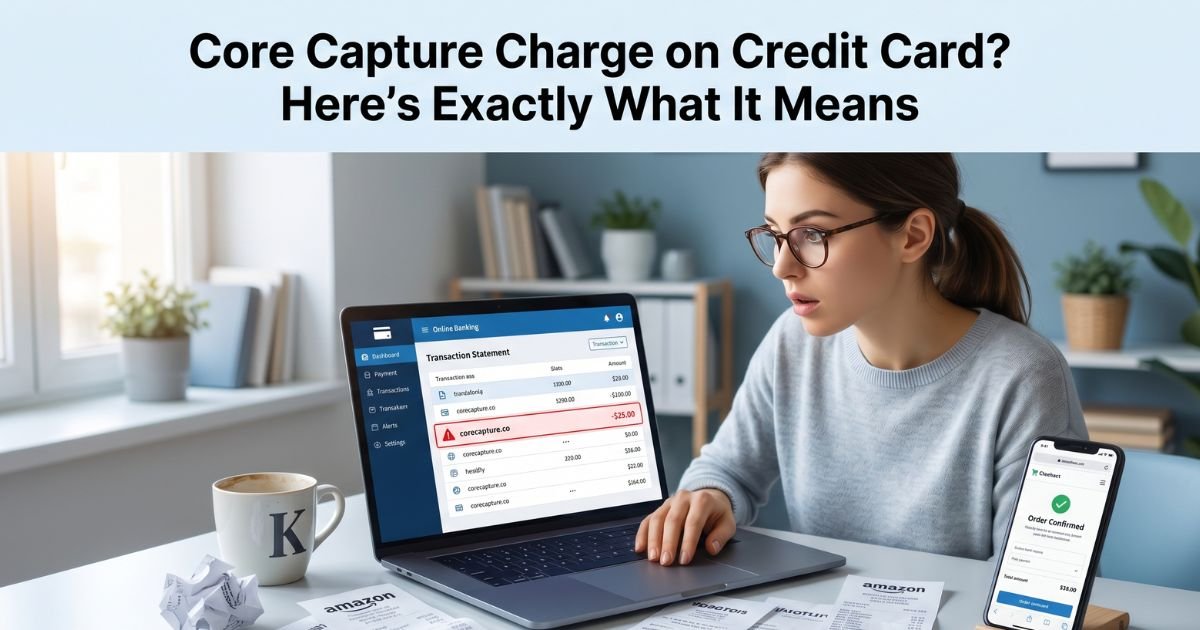
Hey there. If you just spotted a “corecapture.co” or similar “Core Capture” charge on credit card statement, you are probably wondering what on earth it is. It pops up out of nowhere, often for a small amount, and leaves you scratching your head. You are not alone. Many online shoppers have seen the exact same thing and felt that same mix of confusion and concern.
It usually ties back to a recent online purchase you tried to make. Maybe the payment declined at first, but then it went through later without you realizing. We will explain why this charge appears, whether it is legitimate, and the exact steps to take if it does not add up.
Table of Contents
Why a Core Capture Charge Shows Up on Your Credit Card Statement
Core Capture, or corecapture.co, is a behind-the-scenes service that online stores use to recover failed payments. Think of it this way. You add items to your cart, enter your card details, and hit purchase. But sometimes the transaction fails because of insufficient funds, a temporary bank hold, or a simple glitch. Most people walk away and never try again.
That is where Core Capture steps in. Merchants partner with this platform to automatically retry those failed payments in the background. They use secure tokenized card data so you do not have to re-enter anything.
When the retry succeeds, the charge posts to your statement under “corecapture.co” instead of the original store name. It is all silent, no extra clicks or pop-ups for you.
This explains why the charge feels mysterious. You might not remember the original attempt, or the email landed in spam. But it is usually a real purchase you intended to complete.
Common Reasons You See a Core Capture Charge
These charges often surprise people because they do not match the store you shopped at. Here are the top situations where they pop up:
- You tried to buy something online, the card declined once, and Core Capture retried it later.
- A subscription or one-time purchase you started but did not finish because of a payment hiccup.
- Family members or shared card users made an attempt you did not know about.
- An old pending transaction finally cleared through the recovery process.
The amounts are usually the exact price of the item or service you selected. No surprise fees in most cases.
Is the Core Capture Charge Legitimate or Fraud?
In the vast majority of cases, it is completely legitimate. Core Capture runs a transparent service that thousands of online merchants rely on to stop losing sales from failed checkouts.
They even send an email notification from corecapture.co with details about the merchant and what you bought.
That said, always verify. If you never shopped at any online store around the charge date and no one else uses your card, treat it like any unknown transaction.
Credit card fraud does happen, and quick action protects you. Check your email inbox and spam folder first. That single step solves the mystery for most people.
How to Handle a Core Capture Charge
You do not need to be a tech expert to fix this. Just follow these simple steps, and you will feel in control again.
- Search your email for “corecapture.co”. Check the spam folder too. The message usually lists the original merchant and purchase details.
- Contact the merchant directly. Use the info from the email or visit their website. Ask about the charge or request a refund if you changed your mind.
- Reach out to Core Capture if needed. Fill out their contact form at corecapture.co if you cannot find the email or still have questions. Their team helps identify the merchant.
- Call your credit card issuer. Explain the charge and share any details you have. Many banks can pull extra merchant info or start a dispute right away.
- Monitor your statement. Set up alerts for every transaction so nothing slips by in the future.
Most people clear this up in under 10 minutes once they check their email.
Quick Comparison Table: Legit Core Capture Charge vs. Potential Issue
| Aspect | Legit Core Capture Charge | Potential Red Flag |
|---|---|---|
| Email Notification | Arrives from corecapture.co with merchant details | No email at all, even in spam |
| Amount | Matches an item you tried to buy | Random amount with no purchase history |
| Original Attempt | You remember starting a checkout | No recent online shopping |
| Merchant Link | Ties back to a real store | No way to identify any seller |
This table helps you decide your next move fast.
How to Dispute a Core Capture Charge If It Is Not Yours
If the charge truly does not belong to you or anyone on your card, act quickly. Credit card companies usually give you 60 days from the statement date to file a dispute.
Gather your evidence first. Take screenshots of the statement and any emails. Then call the number on the back of your card. Tell them it is an unrecognized charge and request a chargeback. They often credit your account right away while they investigate.
In many situations, the bank sides with you, especially if no email or merchant link exists. You keep the provisional credit if fraud is confirmed.
Tips to Protect Yourself from Future Mystery Charges
Once you handle this one, let us make sure it does not happen again. Online shopping is convenient, but a few smart habits keep everything clear.
- Check your email spam folder regularly after any online purchase.
- Use virtual card numbers for one-time buys so failed retries stay isolated.
- Enable transaction alerts on your banking app for instant notifications.
- Review statements weekly instead of waiting until the end of the month.
- Report any suspicious activity to the FTC at ReportFraud.ftc.gov to help others avoid the same confusion.
These small changes take almost no time but save you big headaches later.
Real Stories from People Who Faced the Same Core Capture Charge
You might be thinking, does this really happen to regular folks? Absolutely. One busy mom in Texas tried to buy kids clothes online late at night. The payment failed, she forgot about it, and two days later a Core Capture charge appeared. A quick email check showed the store name, and she confirmed the purchase.
Another person in California spotted a $29 charge after attempting a gym membership signup. The retry went through while he slept. Both cases cleared up fast once they followed the email steps. These everyday examples show it is usually just a helpful recovery tool, not something shady.
How Core Capture Works for Online Shoppers in 2026
Merchants love this service because 83 percent of customers never retry a failed payment themselves. Core Capture handles the retry automatically using smart logic that improves approval rates without bothering you.
For you, the shopper, it means fewer abandoned carts and smoother experiences overall. Just remember to watch your inbox so the charge never catches you off guard again.
FAQs: Core Capture Charge on Credit Card
Q. What Should I Do If I See a Core Capture Charge I Don’t Recognize?
A. Start by searching your email for a message from corecapture.co, including the spam folder. The email will show the original merchant and what you bought. If you still have questions, contact the merchant or fill out the form on corecapture.co for help.
Q. Can I Get a Refund for a Core Capture Charge?
A. Yes, in many cases. Reach out to the original merchant first since they handle refunds for their products or services. If the charge was unauthorized or a mistake, your credit card company can also step in with a dispute or chargeback while they investigate.
Q. How Do I Prevent Core Capture or Similar Mystery Charges in the Future?
A. Always check your email after online checkouts, use virtual cards for new sites, and turn on real-time alerts. These habits let you spot and resolve any retry charges immediately before they become surprises.
Conclusion
A Core Capture charge on credit card is usually just the quiet recovery of a failed online payment you probably wanted to complete anyway. By checking your email and following the simple steps above, you can verify it fast and decide if you want to keep or dispute the purchase.
You have the power to keep your finances clear and stress-free. Take that quick action now, review your statements regularly, and enjoy shopping online with confidence.
Disclaimer: This article provides general information based on publicly reported consumer experiences and is not legal or financial advice. Always contact your credit card issuer or a professional advisor for your specific situation.
Meet the Author
