
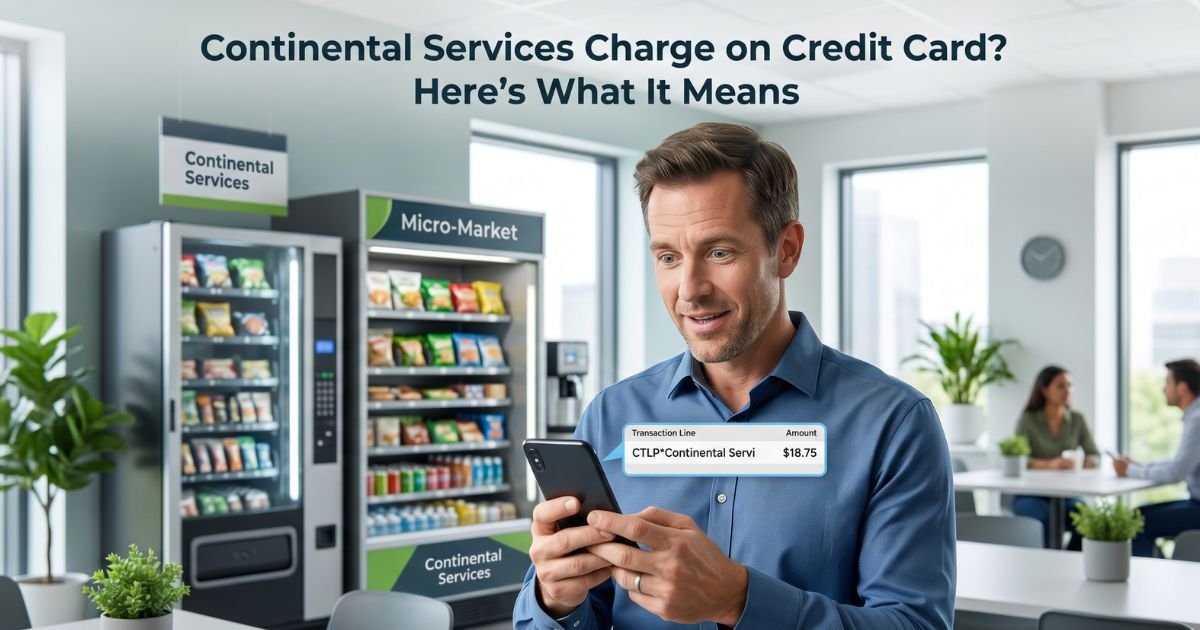
A Continental Services Charge on Credit Card can feel confusing if you don’t remember shopping at a business with that name.
In many cases, the charge is generally connected to food, drinks, or snacks purchased from a workplace vending machine or self-service micro-market.
The strongest match is Continental, a Great Lakes workplace food and beverage company. You may also see wording such as CTLP*CONTINENTAL SERVI, which can make a small vending purchase look unfamiliar.
Table of Contents
What Is a Continental Services Charge on Credit Card?
A Continental Services Charge on Credit Card typically points to Continental, a company that provides vending machines, workplace micro-markets, cafés, meal delivery, coffee, and other food services.
The company generally serves workplaces and other facilities across Michigan, Ohio, Indiana, Pennsylvania, and New York.
You may have made the purchase at work without seeing the Continental name. The vending machine, café, or self-checkout market may have displayed your employer’s branding or another name instead.
Continental confirms that its vending machines accept major credit cards and contactless payments. Its micro-markets also use self-service kiosks where you can buy food and beverages throughout the day.
| Statement wording | What it may generally mean |
|---|---|
| CONTINENTAL SERVICES | Continental food or beverage purchase |
| CTLP*CONTINENTAL SERVI | Continental purchase processed through unattended-payment technology |
| CONTINENTAL SERVI | Shortened merchant descriptor |
| CTLP CONTINENTAL | Possible vending or micro-market transaction |
| Continental plus a Michigan location | May relate to Continental’s food-service operations |
What Does CTLP Continental Services Mean?
If your statement says CTLP*CONTINENTAL SERVI, the CTLP portion typically relates to payment technology used for unattended retail. These systems are commonly found on vending machines and self-checkout kiosks.
The Continental portion generally identifies the food-service operator. Your card issuer may shorten “Services” to “Servi” because statement descriptors have limited space.
This type of transaction can therefore come from something as simple as buying a soda, sandwich, coffee, or snack during your workday.
Pro Tip: Think about where you worked, visited, studied, or received medical care on the transaction date. Continental operates food services in settings such as offices, manufacturing facilities, hospitals, colleges, and other large workplaces.
Why Don’t You Remember Buying From Continental Services?
You may not have seen the Continental name when you paid. A vending machine or employee micro-market can look like part of your workplace rather than a separate business.
You may remember buying a drink from “the break room” but not know which company operated the machine. Your credit card statement generally uses merchant-processing information rather than the name you associate with the physical location.
Small purchases are also easy to forget. A $2 snack or $8 lunch can appear several days later under a name that does not immediately look familiar.
What Purchases Can Cause the Charge?
Continental provides several workplace food and beverage services. Your transaction may therefore come from more than a traditional vending machine.
Possible purchases include:
- Bottled drinks
- Soda or energy drinks
- Coffee
- Candy
- Chips and snacks
- Sandwiches
- Salads
- Prepared meals
- Breakfast items
- Food from a workplace café
- Micro-market purchases
- Employee meal orders
Continental also operates grab-and-go markets with self-checkout kiosks. You can typically scan your food, pay by card or contactless wallet, and leave without interacting with a cashier.
Why Is the Charge Showing a Michigan Location?
Continental was founded in the Detroit area and maintains significant operations in Michigan. Its current Michigan facilities include locations in Troy, Sterling Heights, Belleville, Jackson, and Hillsdale.
A Michigan city on your card statement does not necessarily mean you physically made the purchase in that city. The location may reflect merchant registration or payment-processing information.
You should therefore focus on the transaction amount and date. Compare those details with vending, café, and workplace purchases you made that day.
Is Continental Services a Subscription?
A normal Continental vending or micro-market purchase is typically a one-time transaction. It generally is not a recurring monthly subscription.
Multiple Continental charges may simply mean you made several separate purchases. For example, you might buy coffee in the morning and lunch from the same workplace market later in the day.
Check each amount separately. If the amounts are small and appear on days you were at work, school, or another Continental-served location, they may correspond to individual food purchases.
Common Mistakes: Don’t automatically cancel your credit card because you see several Continental charges. First compare each transaction with your workplace vending, café, or micro-market activity.
Could a Pending Continental Charge Be Higher Than Your Purchase?
Some unattended payment systems may temporarily authorize an amount before the final purchase posts. Your bank may display that authorization as pending.
The final transaction can later replace the temporary amount. The exact process and timing may vary by machine, payment processor, and card issuer.
If the charge is still pending, give your issuer time to complete normal processing. Contact the merchant or your bank if the posted amount is still different from what you purchased.
Is Continental Services Legitimate?
Continental is an established U.S. workplace food-service company. It says it was founded in Detroit in 1989 and currently provides food and beverage services throughout parts of the Great Lakes region.
BBB records also show Continental businesses connected with vending and food-service management in Michigan. The records identify Continental Services as an alternate business name associated with established vending operations.
However, a legitimate merchant name does not prove that every charge is authorized. Someone who obtained your card details could potentially use them at a legitimate vending machine.
Consumer-review evidence specific to unfamiliar Continental card charges is limited. Trustpilot and Reddit do not appear to have a large body of reliable reports specifically about this descriptor, so you should rely more heavily on your own transaction history.
How to Verify a Continental Services Charge
Start with the date and amount shown on your credit card statement. Try to remember whether you used a vending machine or self-service food market that day.
You should also check purchases at:
- Your workplace
- A hospital or medical center
- A manufacturing facility
- A college campus
- An employee café
- A warehouse break room
- A vending machine
- A self-checkout micro-market
Ask coworkers whether the vending or market operator at your location is Continental. Your employer’s facilities or human resources team may also know which company runs the food service.
If your bank shows CTLP*CONTINENTAL SERVI, that wording is particularly consistent with an unattended food or beverage purchase.
How to Contact Continental About the Charge
Continental’s official website currently lists its main Innovation Center in Troy, Michigan. Its published main contact number is 248-414-1700.
Before contacting the company, collect the transaction date, exact amount, statement descriptor, and location where you believe you made the purchase. This information can help narrow down the transaction.
Do not send your full credit card number through ordinary email. If payment information is needed, use only a verified secure channel and provide the minimum information required.
What If You Don’t Recognize the Charge?
Ask other authorized card users first. A spouse, partner, or family member may have made a vending purchase using your physical card or a mobile wallet connected to it.
Next, open the full transaction details in your banking app. Look for extra wording, a city, merchant phone number, or the CTLP prefix.
You can also ask your issuer for the complete merchant descriptor. Banks sometimes receive more merchant information than they display on the short transaction screen.
If the charge is small, don’t automatically ignore it. A genuinely unauthorized small transaction can sometimes indicate that your payment information has been used without permission.
How to Dispute a Continental Services Charge
If you have checked your recent purchases and still cannot recognize the payment, contact your card issuer. Use the phone number on the back of your card or your bank’s official mobile app.
Explain that you do not recognize the Continental Services transaction. Give your bank the exact date and amount and mention any steps you took to identify it.
Your issuer may open a dispute or recommend replacing your card if it believes your account information has been compromised. The exact process generally depends on whether you used a credit card or debit card.
For U.S. credit cards, certain billing-error protections have notice deadlines. You should generally report an unexplained transaction promptly rather than waiting several billing cycles.
FAQs: Continental Services Charge on Credit Card
Q. What is Continental Services on your credit card?
A. It typically refers to Continental, a workplace food and beverage company. The charge may come from a vending machine, workplace café, snack market, or self-service food kiosk.
Q. What does CTLP*CONTINENTAL SERVI mean?
A. It generally points to a Continental food or beverage transaction processed through unattended-payment technology. You may have used your card at a vending machine or workplace micro-market.
Q. Why do you have several Continental Services charges?
A. Each charge may represent a separate purchase. Buying coffee, snacks, drinks, and lunch from the same workplace food provider can create multiple transactions.
Q. Can you dispute a Continental Services charge?
A. Yes. If you cannot identify the transaction after checking your purchases and contacting the merchant, you can generally ask your card issuer to investigate it under its dispute procedures.
Conclusion
A Continental Services Charge on Credit Card typically comes from a workplace vending machine, self-service micro-market, café, or other food-service location operated by Continental. A descriptor such as CTLP*CONTINENTAL SERVI makes that explanation even more likely.
Check where you were on the transaction date and compare the amount with recent food or drink purchases. If the charge remains unexplained, contact Continental and your card issuer promptly.
Disclaimer: This article is for informational purposes only and is not financial or legal advice. Merchant descriptors and dispute policies may vary by payment processor and card issuer. Verify account-specific questions with Continental Services or your bank.
Meet the Author
