
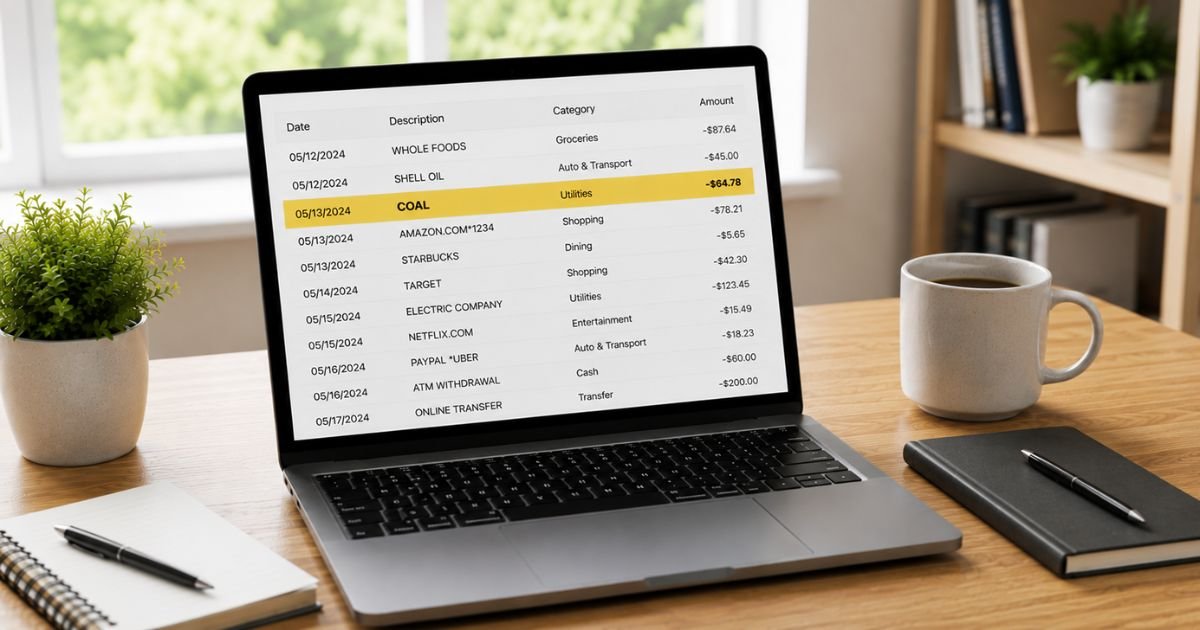
Seeing a Coal charge on bank statement (often shown as COAL, NAS COAL, or similar) can be alarming. You’re not alone. Many people notice this entry and want a clear explanation right away.
This guide explains what the charge means, why it appears, how to verify it, and the practical steps you should take.
Table of Contents
What Is a Coal Charge?
COAL on a bank statement frequently stands for Court Ordered Action/Levy. It signals that the bank has received and processed a legal order.
Such as a bank levy, garnishment, or similar court-authorized action, to remove or freeze funds from the account.
Related descriptors sometimes include NAS COAL or similar variations. These entries are generated by the bank’s internal systems when they comply with a legal demand from a creditor, tax authority, or court.
This is different from an everyday merchant charge. It is a legal collection action against the account.
Why Did This Charge Appear?
Common reasons include:
- A creditor obtained a court judgment and levied the bank account.
- A tax authority (federal, state, or local) issued a levy for unpaid taxes.
- A child-support or other court-ordered obligation triggered a garnishment.
- The bank received a writ of execution or similar legal document requiring it to hold or remit funds.
- In some cases the entry appears alongside an account freeze or hold while the bank processes the order.
Banks are generally required to comply with valid legal orders. The amount taken (or frozen) depends on the terms of the order and any applicable exemptions.
How to Verify the Charge
Use this checklist right away:
- Note the exact amount, date, and full descriptor on your statement.
- Log into online banking or call your bank and ask for details on the COAL or levy transaction.
- Request the name of the creditor, case number, or issuing authority if available.
- Check your mail and email for any recent notices about a lawsuit, judgment, tax bill, or levy.
- Review recent legal or collection correspondence you may have received.
- Ask the bank’s legal or levies department for a copy of the order they received, if they can provide it.
Do not delay. Time limits often apply if you need to claim exemptions or challenge the action.
Is It Legitimate or Fraud?
Legitimate scenarios
Most COAL entries reflect a real legal process. Banks process these orders as required by law. The descriptor simply identifies the type of transaction on your statement.
Warning signs that need immediate attention
- You received no prior notice of a lawsuit, judgment, or tax debt.
- The amount or timing does not match any known obligation.
- Your account is frozen and you cannot access funds for essential expenses.
- You believe the order was issued in error or against the wrong person.
Even when the levy is legally valid, you may have rights to claim exempt funds or negotiate with the creditor. Contact your bank and, if needed, a qualified attorney promptly.
How to Respond or Resolve the Charge
Because this is a legal action, “cancellation” works differently than with a merchant charge:
- Contact your bank’s customer service or legal/levies department immediately and request full details on the order.
- Ask whether any funds are exempt (for example, certain Social Security, veterans’ benefits, or other protected income) and how to claim those exemptions.
- Contact the creditor or agency named in the order to discuss payment arrangements, release of the levy, or settlement.
- If you believe the levy is incorrect, consult a consumer attorney or legal-aid organization about possible challenges or claims of exemption.
- Keep detailed records of every conversation, including dates, names, and reference numbers.
- Monitor the account closely for additional holds or withdrawals.
Act quickly, many jurisdictions give only a short window to claim exemptions after you receive notice.
Can You Get Funds Returned?
Recovery depends on the situation:
- If the levy was issued in error or against the wrong account, the bank or creditor may reverse it once the mistake is documented.
- Exempt funds can often be released if you file a timely claim of exemption.
- Negotiating with the creditor or resolving the underlying debt may lead to a release of the remaining levy.
- Tax levies sometimes have specific procedures for release once the tax is paid or an installment agreement is accepted.
Your bank can explain their process, but legal questions are best handled with professional advice.
What to Do If the Charge Appears Unauthorized or Incorrect
- Call your bank immediately and ask to speak with the department that handles levies or legal orders.
- Request written details of the order, including the creditor and case information.
- Gather any proof that funds are exempt or that the order is mistaken.
- Contact the creditor or issuing agency to address the underlying claim.
- Consider speaking with a consumer-law attorney or legal-aid service, especially if essential funds are frozen.
- Document everything and keep copies of all notices and correspondence.
- If identity theft or a fraudulent judgment is involved, report it to the appropriate authorities and consider filing at IdentityTheft.gov.
Prevention Tips
- Open and read all mail from courts, creditors, and tax agencies promptly.
- Respond to collection notices and tax bills before they escalate to levies.
- Keep records of payments made on debts or tax obligations.
- Consider setting up payment plans early if you fall behind.
- Monitor your credit reports for judgments or collection accounts.
- If you receive a lawsuit, do not ignore it—respond by the deadline.
- Maintain clear records of protected income sources that may be exempt from levy.
- Speak with a nonprofit credit counselor or attorney if debt problems are growing.
Common Related Descriptors
| Descriptor Seen | Typical Meaning |
|---|---|
| COAL | Court Ordered Action/Levy |
| NAS COAL / NAS-COAL | Similar legal order or levy processing |
| Levy / Garnishment | Direct collection from the account |
| Legal Order | Bank processing a court or agency demand |
Typical Next Steps Timeline
| Action | Usual Urgency |
|---|---|
| Contact bank for levy details | Immediately |
| Claim exemptions (if available) | Often within days of notice |
| Contact creditor or agency | As soon as possible |
| Seek legal advice if needed | Promptly, especially if funds are frozen |
FAQs: Coal Charge on Bank Statement
Q. Why does the charge say COAL instead of the creditor’s name?
A. Banks often use internal codes such as COAL to identify the type of legal transaction. The full creditor or case details are usually available from the bank’s legal department upon request.
Q. Is a COAL charge the same as a regular purchase?
A. No. It is a legal collection action, not a merchant or subscription charge. The bank is complying with a court or agency order.
Q. Can the bank refuse to process a COAL levy?
A. Generally no. Banks are required to comply with valid legal orders. They can, however, explain the process and help you understand any available exemptions.
Q. What if I never received notice of a lawsuit or tax debt?
A. Contact your bank for the details of the order, then reach out to the creditor or agency. You may still have options to claim exemptions or challenge the action. Consider professional legal advice.
Conclusion
A Coal charge on bank statement most often indicates a Court Ordered Action/Levy, a legal process in which funds are frozen or removed to satisfy a judgment, tax debt, or similar obligation.
Contact your bank’s legal or levies department immediately for details, check for any notices you may have received, and take steps to claim exemptions or resolve the underlying issue as quickly as possible.
Understanding the nature of the charge helps you respond effectively and protect essential funds.
Disclaimer: This article is for informational purposes only and is not financial, legal, or tax advice. Levy and garnishment rules vary by jurisdiction and situation. Always verify details directly with your bank and consult a qualified attorney or tax professional for guidance specific to your circumstances.
Meet the Author
