
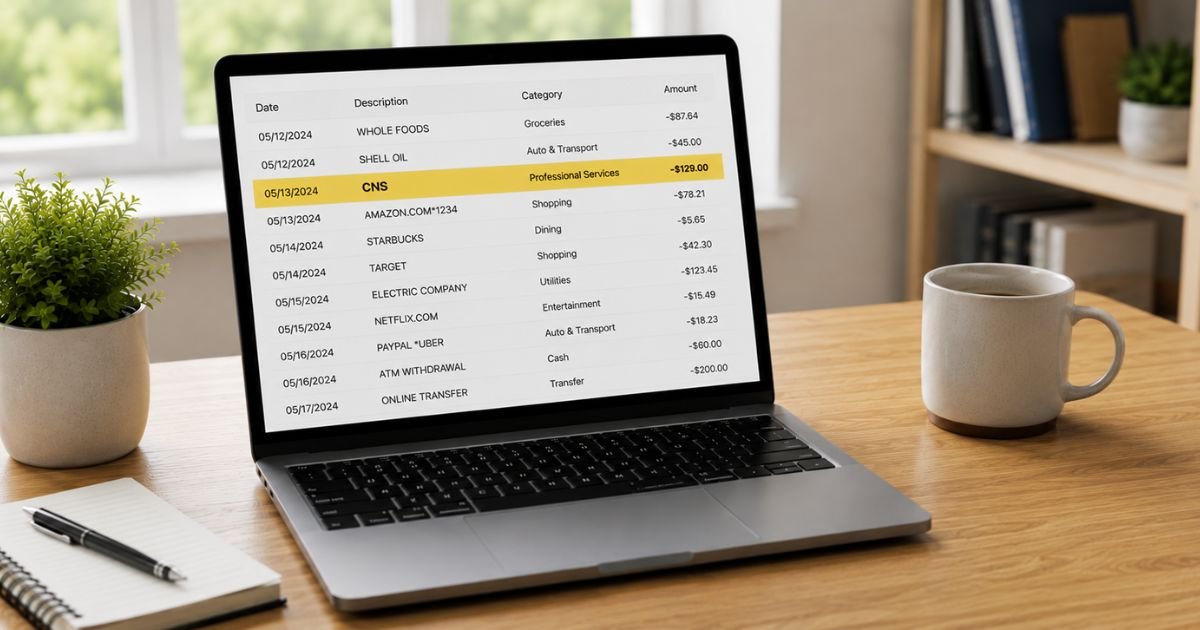
Seeing a CNS charge on bank statement can be confusing if you don’t recognize the name. You’re not alone. Many people notice this entry and want a clear explanation right away.
This guide explains the most common reasons the charge appears, how to verify it, and practical steps if you need to stop it or dispute it.
Table of Contents
What Is a CNS Charge?
CNS is an abbreviated billing name that has appeared on credit card and bank statements.
One of the more commonly reported consumer charges involves CNS Interactive, which has shown up as a recurring monthly amount (often around $4.99) that some cardholders do not immediately recognize.
Other legitimate uses of the CNS abbreviation include:
- Brokerage or securities-related activity (for example, City National Securities or continuous net settlement processes used by clearing firms).
- Online purchases from merchants that use CNS in their billing descriptor (such as certain specialty retailers).
- Membership or professional organization dues in limited cases.
Because the same three letters can point to different companies, the exact amount, frequency, and any additional text on the statement are important clues.
Why Did This Charge Appear?
Possible reasons include:
- A recurring subscription or membership you or someone with access to the card authorized (including free trials that converted to paid).
- A one-time online purchase from a merchant that bills under the CNS name.
- Brokerage or investment-account activity if you have a related securities account.
- A family member or joint account holder who made a purchase or signed up for a service.
- In some consumer reports, charges from CNS Interactive that the cardholder did not recall authorizing.
Small recurring amounts are more typical of subscription-style billing, while larger or irregular amounts may point to a purchase or account-related fee.
How to Verify the Charge
Use this checklist:
- Note the exact amount, date, and full descriptor (including any extra words such as “Interactive”).
- Search your email (including spam) for confirmations, receipts, or login details that mention CNS.
- Review recent free trials, memberships, or online purchases you may have started.
- Check whether anyone else with access to the card made a related transaction.
- Log into any brokerage, membership, or shopping accounts you hold and look for matching activity.
- Compare the amount and timing against known subscriptions or one-time orders.
Matching records usually confirm the charge is expected. If nothing matches, treat it as potentially unauthorized.
Is It Legitimate or Fraud?
Legitimate scenarios
Many CNS charges are authorized subscriptions, purchases, or account activity. The descriptor simply identifies the company or service that processed the payment.
Warning signs
- You have no memory of signing up for any related service.
- The charge is recurring and you never received login credentials or product access.
- Multiple small charges appear without explanation.
- Clear customer-service contact information is difficult to find.
If the charge feels unfamiliar, contact your bank or card issuer promptly while also searching your records.
How to Cancel
Cancellation steps depend on the specific source:
- Search your email for any membership, trial, or order confirmation linked to CNS and follow the cancellation instructions provided.
- If the charge is from a subscription, look for an account login or “manage subscription” link in related emails.
- Contact your bank or card issuer and ask them to note the merchant and, if appropriate, block future charges from that descriptor.
- Document every cancellation attempt with screenshots, dates, and reference numbers.
- Monitor your statement for the next one to two billing cycles to confirm the charges have stopped.
Because public support details for some CNS-related descriptors are limited, your bank is often the most reliable starting point for unrecognized recurring charges.
Can You Get a Refund?
Refund options vary:
- Authorized purchases or subscriptions follow the merchant’s refund policy. Contact the company if you have working contact details.
- Unauthorized charges can be disputed with your bank or card issuer under Regulation E (debit) or the Fair Credit Billing Act (credit cards).
- Report the charge promptly. Banks often provide provisional credit within 10 business days while they investigate. Full resolution typically takes 45–90 days.
Keep records of the statement, any cancellation attempts, and your dispute filing.
What to Do If the Charge Is Unauthorized
- Contact your bank or card issuer immediately and report the transaction as unauthorized.
- Request a freeze or replacement card if needed.
- Cancel any related automatic payments or subscriptions you can locate.
- Change passwords on email accounts that may have been used for signups and enable two-factor authentication.
- Document every step with dates and reference numbers.
- Monitor your accounts and credit reports for 60–90 days.
- Consider filing a report at IdentityTheft.gov if you believe your information was misused.
Acting quickly improves your chances of recovery and limits further activity.
Prevention Tips
- Review every bank and credit-card statement within a few days of posting.
- Set up transaction alerts for any amount or for unfamiliar merchants.
- Use virtual or single-use card numbers for free trials and unfamiliar websites when available.
- Keep a simple list of every active subscription and the exact billing name it uses.
- Cancel unused trials promptly and save the confirmation.
- Regularly check for small recurring charges that may signal a new subscription.
- Avoid entering real card details on sites reached through ads or pop-ups.
- Consider freezing cards you do not actively use.
Possible Sources of a CNS Charge
| Possible Source | Typical Pattern | What to Check |
|---|---|---|
| CNS Interactive | Small recurring (often ~$4.99) | Email confirmations, trial signups |
| Brokerage / securities | Larger or irregular amounts | Investment account statements |
| Online merchant purchase | One-time amount | Order receipts and shipping emails |
| Membership or dues | Periodic fixed amount | Organization account or renewal notices |
Typical Dispute Timeline
| Action | Usual Timeframe |
|---|---|
| Bank provisional credit | Within 10 business days |
| Full bank investigation | 45–90 days |
| Confirmation of stopped billing | 1–2 billing cycles |
FAQs: CNS Charge on Bank Statement
Q. Why does the charge only say CNS instead of a full company name?
A. Banks limit the number of characters in descriptors. Short abbreviations like CNS are common and can belong to more than one business.
Q. Is a CNS charge always a subscription?
A. No. It can be a one-time purchase, brokerage activity, or other authorized transaction. Recurring small amounts are more typical of subscriptions.
Q. How do I stop future CNS charges?
A. Locate any related account or confirmation email and cancel through the service if possible. Also ask your bank to block future transactions from that merchant descriptor and monitor your next statements.
Q. What if I never signed up for anything related to CNS?
A. Treat the charge as potentially unauthorized. Contact your bank right away, file a dispute, and consider freezing the card. Document everything.
Conclusion
A CNS charge on bank statement can come from more than one source, including reported subscriptions such as CNS Interactive, brokerage activity, or online purchases.
Match the amount and date to your records, cancel any related service you no longer want, and dispute unfamiliar charges promptly with your bank.
Checking statements regularly and using strong card protections will help you stay ahead of unexpected entries.
Disclaimer: This article is for informational purposes only and is not financial or legal advice. The CNS descriptor can belong to different companies, and details may change. Always verify information directly with your bank, the merchant if identifiable, or a qualified professional before taking action.
Meet the Author
