
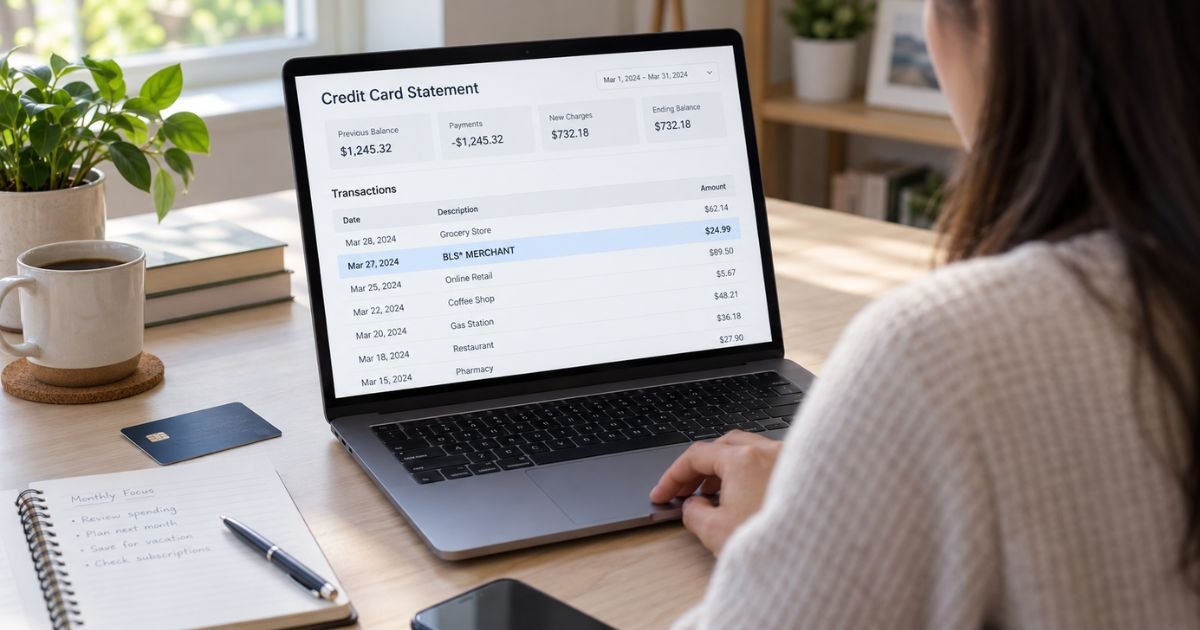
A BlueSnap charge on your credit card statement can feel confusing if you don’t recall signing up for anything with that name. In many cases, the charge is legitimate because BlueSnap processes payments for another company you actually bought from.
The important step is to identify the underlying merchant before you assume fraud. This guide explains what the descriptor means, how to trace the purchase, cancel recurring billing, and respond to an unauthorized charge.
Table of Contents
What Is a BlueSnap Charge on Credit Card Statement?
A BlueSnap charge on credit card statement usually means a merchant used BlueSnap to process your payment. BlueSnap is a payment platform that handles online payments for businesses, so the name on your statement may not match the store, software company, or subscription service you remember.
BlueSnap’s shopper support says a statement entry containing “BLUESNAP” or “BLS” means BlueSnap processed the transaction. That does not necessarily mean BlueSnap sold you the product or service itself.
What Does a BlueSnap Charge Look Like?
The exact wording may vary by merchant and card issuer. BlueSnap says merchants can use a statement descriptor, which is the short business name or description sent to your bank.
Its documentation says the default merchant descriptor may use a BLS* prefix. Pending authorizations may also show BlueSnap information before the transaction settles.
| Statement entry you may see | What it generally means |
|---|---|
| BLS*MERCHANTNAME | BlueSnap processed a payment for the named merchant |
| BLUESNAP | The processor name is showing instead of the merchant name |
| BLS plus a phone number | A merchant descriptor with support information |
| Payment Processed by BlueSnap | BlueSnap handled the transaction |
| Online Payment | A generic description may appear on some pending transactions |
A pending transaction can look different from the final posted transaction. Once it settles, your bank may display the merchant’s chosen descriptor instead.
Why Did BlueSnap Charge Your Card?
The most common reason is that you paid a company that uses BlueSnap behind the scenes. You may never have visited BlueSnap’s website or opened a BlueSnap account.
Possible causes include:
- An online purchase from a BlueSnap merchant.
- A software, app, or digital-service subscription.
- A recurring membership renewal.
- A trial that converted into a paid subscription.
- A purchase made by another authorized cardholder.
- A pending transaction showing the processor name.
- An unauthorized purchase using your card details.
Do not rely on the posting date alone. Card transactions can appear later than the day you placed the order.
Pro Tip: Search your email for “BlueSnap,” “BLS,” the exact charge amount, and the transaction date. A receipt or renewal notice may reveal the merchant faster than your banking app.
How to Identify the Merchant Behind a BlueSnap Charge
Start with the full statement descriptor. Your bank’s app may shorten it, while a downloadable statement or transaction-details screen may show extra text or a phone number.
Then check your email, including spam and junk folders. BlueSnap says merchant contact information may appear on your order invoice, which can often be opened from the original receipt email.
Use this order to investigate:
- Copy the full statement descriptor.
- Search email for BlueSnap, BLS, the amount, and date.
- Check recent orders and subscription accounts.
- Ask authorized card users whether they recognize it.
- Use BlueSnap Shopper Support if you still cannot identify the merchant.
- Contact your card issuer if the transaction remains unfamiliar.
BlueSnap says product questions and most refund questions should generally go to the merchant that sold the item.
Common Mistakes: Do not assume BlueSnap itself is the seller because its name appears on your statement. Never share your full card number in public reviews, forums, or social media while investigating.
Is the BlueSnap Charge a Subscription?
It can be. BlueSnap supports recurring billing, so a merchant can use the platform to process monthly, annual, or other repeat payments.
If you have a BlueSnap Shopper Account, you may be able to view subscription details and use the “Change” option beside the subscription status. If that option is unavailable, BlueSnap directs shoppers to contact the merchant.
Look for these clues:
- The amount appears on a regular schedule.
- You previously joined a trial, membership, or software plan.
- An old receipt mentions recurring billing or auto-renewal.
- The amount matches a service you no longer use.
Canceling future billing does not automatically mean a past charge will be refunded. Refund rules are generally controlled by the merchant and may vary.
How to Cancel a BlueSnap-Processed Subscription
First identify the merchant because it usually controls the subscription terms and account access.
Then:
- Sign in to the merchant’s website or app.
- Open Billing, Subscription, Membership, or Account settings.
- Look for a cancel or disable auto-renew option.
- Save the cancellation confirmation.
- Check your next statement to confirm billing stopped.
BlueSnap also says some shoppers can manage subscriptions through a BlueSnap Shopper Account. If the option is unavailable, contact the merchant using the details on your invoice or receipt.
If the merchant does not resolve the issue, BlueSnap says you can use its Shopper Support form. Keep copies of receipts, cancellation screens, and support messages.
What to Do If You Do Not Recognize the Charge
First check that the transaction is not a pending authorization, forgotten subscription, household purchase, or unfamiliar merchant descriptor.
If you still believe the charge is unauthorized, contact your credit card issuer promptly. Use the phone number on the back of your card or the secure dispute feature in your banking app.
Your issuer may block or replace the card, investigate the charge, or open a billing dispute. The exact process may vary by bank and card network.
Do not use contact information from a suspicious email or text about the charge. Go directly to your bank, the merchant’s official site, or BlueSnap’s official support page.
Is BlueSnap Legitimate?
BlueSnap is an established payment-processing company. Its official site describes its payment services for businesses, and its BBB profile lists it as an accredited payment-processing business.
Consumer feedback is mixed. As of September 2026, BBB showed 10 complaints in the prior three years, while Trustpilot displayed 140 reviews and an overall score of 2.3 out of 5.
Some reports describe difficulty identifying merchants, recurring charges, or frustration resolving billing issues. These reports do not show that every BlueSnap charge is improper, and review sites may not represent all shoppers.
Reddit evidence is more limited for ordinary cardholders. Much of the discussion concerns merchants using BlueSnap, rather than consumers identifying statement charges.
The practical takeaway is to verify the merchant behind the transaction. A legitimate processor can still appear on a charge you personally do not recognize.
FAQs: BlueSnap Charge on Credit Card Statement
Q. Why does my statement say BLS instead of the company I bought from?
A. BlueSnap says “BLS” can appear when it processes a merchant’s payment. The final wording depends on the merchant’s descriptor and your card issuer.
Q. Can BlueSnap tell me which merchant charged me?
A. BlueSnap provides Shopper Support for people who see BlueSnap or BLS on their statement. Your receipt or invoice may also show the merchant’s contact information.
Q. Can I get a refund directly from BlueSnap?
A. Usually, refund questions should go to the merchant first. BlueSnap says merchants generally set their own refund policies, though support may assist with payment-related issues.
Q. Should I dispute a BlueSnap charge with my bank?
A. If you cannot identify the transaction after checking receipts, subscriptions, household purchases, and BlueSnap support, contact your card issuer promptly. Your issuer can explain its dispute process and security steps.
Conclusion
A BlueSnap charge on credit card statement usually means BlueSnap processed a purchase for another merchant. It may come from an online purchase, recurring subscription, or pending authorization that displays the processor name.
Check the full descriptor, search your email, review subscriptions, and contact the merchant or BlueSnap Shopper Support. If the transaction still appears unauthorized, contact your card issuer promptly.
Disclaimer: This article is for general informational purposes only and is not financial or legal advice. Billing, dispute, refund, and card-security policies vary by issuer and merchant, so verify account-specific questions with the company involved or your bank.
Meet the Author
