
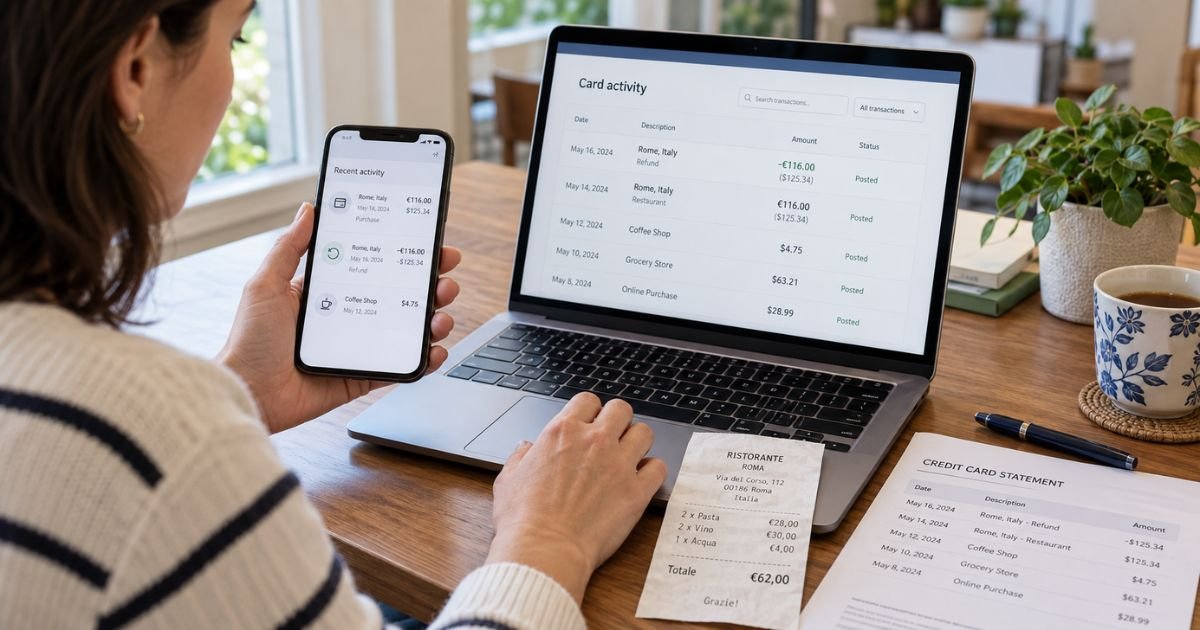
Bank foreign transaction fee refunds can feel confusing when a merchant returns your purchase price but your card statement still shows an international fee. In many cases, the merchant refund and the bank’s foreign transaction fee are handled separately.
Whether you receive the fee back generally depends on your card agreement and why the original transaction was reversed. This guide explains ordinary refunds, billing errors, unauthorized charges, exchange-rate differences, and what to do when a fee remains.
Table of Contents
What Are Bank Foreign Transaction Fee Refunds?
Bank foreign transaction fee refunds are credits that reverse a fee charged because a card transaction involved a foreign currency, foreign merchant, or international processing. The fee is generally set by your card issuer and may appear as a separate line on your statement.
A merchant refund does not automatically guarantee that the bank will refund its foreign transaction fee. Chase notes that you may still incur a foreign transaction fee when an international purchase is returned, while American Express says these fees may not be refunded after a foreign purchase is refunded.
When a Foreign Transaction Fee May Be Refunded
The outcome generally depends on why the transaction was reversed.
| Situation | Fee refund outcome | Best next step |
|---|---|---|
| Normal product return | May or may not be refunded | Check card terms |
| Merchant cancellation | Policy varies | Review the posted refund |
| Duplicate or incorrect charge | May qualify for correction | Dispute the error |
| Unauthorized transaction | Related fee may be reversed | Report it promptly |
| Exchange-rate difference | Usually not a fee issue | Compare currencies |
If you simply return an authorized purchase, your issuer may treat the foreign transaction fee as a service already provided. Another issuer may reverse it automatically or offer a courtesy credit.
Why the Purchase Can Be Refunded but the Fee Remains
A foreign transaction fee is generally charged by your card issuer, not by the merchant. The merchant can usually return the purchase amount but generally cannot directly reverse a separate bank fee.
That is why you may see a full merchant credit and still be short by the fee amount. Some issuers may also treat the refund as a separate foreign-currency transaction, so policies can vary.
Check Whether It Is Really a Foreign Transaction Fee
A smaller refund does not always mean your bank kept a fee. Exchange rates can change between the original purchase and the refund date.
For example, you may buy an item for €500 and later receive the same €500 back. If the exchange rate changed, the U.S. dollar credit may differ from the original dollar charge.
Dynamic currency conversion can also cause a difference. A merchant may convert the purchase into U.S. dollars using its own rate or markup.
Pro Tip: Compare the original foreign-currency amount with the merchant’s refund amount first. If those amounts match, exchange-rate movement may explain part of the dollar difference.
How to Ask Your Bank for a Fee Refund
Wait until the merchant refund fully posts. A pending credit may not yet show how your issuer will handle the related fee.
Then review your statement for a separate fee reversal. If none appears, contact the number on the back of your card or use your bank’s secure message feature.
Have these details ready:
- Original purchase date and amount.
- Foreign transaction fee amount.
- Merchant refund date.
- Refund confirmation.
- Reason for the reversal.
Ask whether your card agreement provides for a foreign transaction fee refund. If not, you can ask whether a one-time courtesy credit is available, but approval is generally discretionary.
What If the Fee Was Charged in Error?
A fee caused by a billing error is different from a fee attached to a valid purchase you later returned. Federal credit card billing-error rules may provide stronger protections when the charge or fee itself was incorrect.
The CFPB generally advises you to contact your card issuer promptly and send a written billing-error notice within 60 days after the statement containing the error was sent. If the issuer determines that a billing error occurred, the disputed amount and applicable related charges generally must be corrected.
For debit cards and other covered electronic transfers, Regulation E generally requires a bank to correct confirmed errors and, where applicable, refund fees the bank imposed because of the error.
Common Mistakes: Do not report a normal return as an unauthorized transaction. A fraud claim generally means you did not make or approve the transaction.
What If the Foreign Purchase Was Unauthorized?
Report an unauthorized foreign card or debit transaction as soon as you notice it. The dispute should generally include both the underlying charge and any related foreign transaction fee.
For debit cards and other electronic transfers, federal protections can depend on how quickly you report the problem. The CFPB says banks generally investigate covered unauthorized transactions and must correct an error after determining that one occurred.
For credit cards, call the issuer promptly and follow its billing-error instructions. If the bank reverses the unauthorized purchase but leaves the related fee, contact it again and identify the fee as part of the disputed transaction.
Merchant Refund vs. Chargeback
A merchant refund is generally initiated by the seller. A chargeback or billing dispute generally starts through your card issuer when there is a qualifying problem.
The CFPB generally recommends contacting the seller first for many purchase problems. If the issue is not resolved, you can ask your issuer whether the transaction qualifies for a dispute.
A successful dispute may receive different fee treatment than an ordinary return. Keep the issuer’s final decision so you can check whether related fees were corrected.
What Consumer Reports Show
BBB complaints include consumers who received purchase corrections but still had to separately request a foreign transaction fee credit. One 2026 complaint involving a duplicate foreign charge described a separate request to reverse the second related fee.
Recent Reddit discussions also show mixed experiences, with some users reporting fee reversals and others saying foreign exchange or transaction charges remained after the merchant refund. These are individual reports and do not establish an issuer-wide policy.
Trustpilot evidence is more limited because many reviews discuss merchant or payment-provider charges rather than a U.S. card issuer’s specific refund policy. Some consumers nevertheless report receiving the purchase refund while remaining out of pocket for a foreign exchange fee.
How to Reduce Foreign Transaction Fee Problems
The simplest way to avoid this issue is generally to use a card with no foreign transaction fee for international purchases. Many U.S. travel-focused cards currently waive the fee.
You should also check the currency selected at checkout. A merchant’s U.S. dollar conversion may include a separate markup that is not the same as your bank’s foreign transaction fee.
Keep purchase and refund receipts until the final credit posts. These records can help if the amount or currency appears wrong.
FAQs: Bank Foreign Transaction Fee Refunds
Q. Do banks automatically refund foreign transaction fees when a purchase is refunded?
A. Not always. Some issuers may reverse the fee, while others may keep it because the original foreign transaction was processed. Your card agreement generally controls the result.
Q. Can you ask for a foreign transaction fee refund?
A. Yes. You can generally contact your issuer after the merchant refund posts and ask whether the fee can be reversed. A courtesy credit may be possible but is not guaranteed.
Q. Why is your foreign purchase refund smaller than the original charge?
A. The difference may come from a foreign transaction fee, a changed exchange rate, or merchant currency conversion. Compare the original and refunded foreign-currency amounts first.
Q. Should a foreign transaction fee be refunded after an unauthorized charge?
A. If the underlying transaction is confirmed as an error or unauthorized transaction, related bank-imposed fees may generally need to be corrected under applicable rules. Report both the transaction and fee to your issuer.
Conclusion
Bank foreign transaction fee refunds generally depend on why the original purchase was reversed and what your card agreement says. A normal merchant refund may return the purchase amount without automatically reversing the bank’s international transaction fee.
If the fee resulted from a billing error or unauthorized transaction, stronger dispute protections may apply. Check the posted refund, compare the currencies, save your records, and contact your issuer promptly if a foreign transaction fee remains.
Disclaimer: This article is for general informational purposes only and is not financial or legal advice. Foreign transaction fee, refund, dispute, and exchange-rate policies may vary by issuer, so verify account-specific questions with your bank or card company.
Meet the Author
