
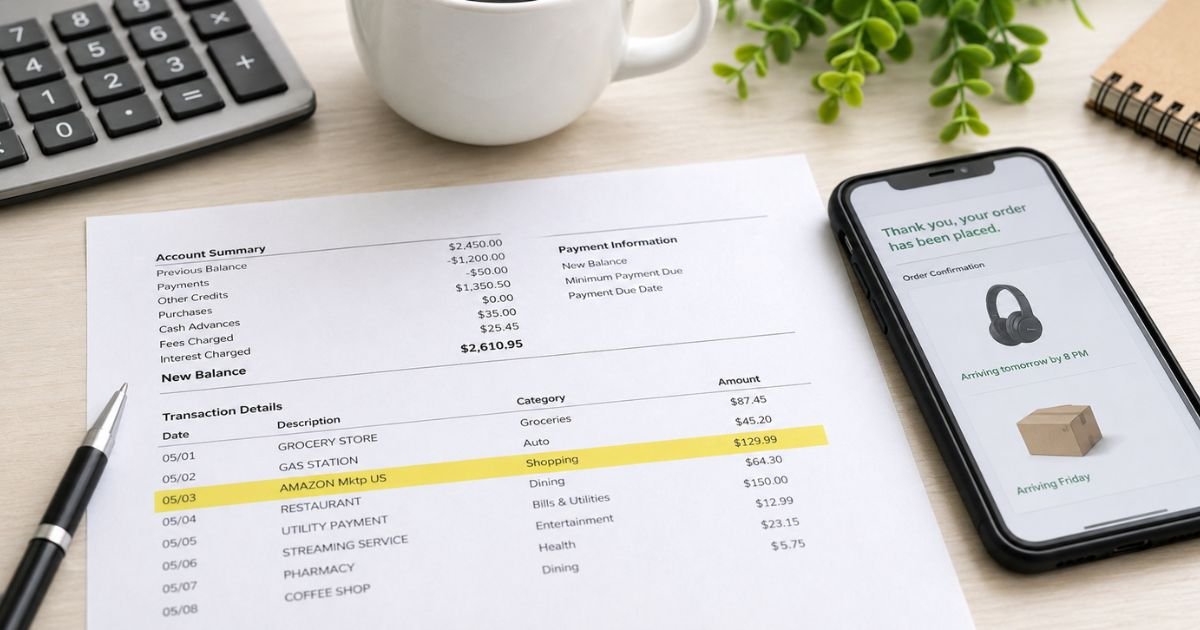
An Amazon Marketplace charge on credit card can feel confusing if the name does not match a specific product you remember. Short billing descriptors are normal for Amazon transactions.
This guide explains what the charge usually means, how to match it to your account, and the simple steps to take next.
Table of Contents
What Is an Amazon Marketplace Charge on Your Credit Card?
An Amazon Marketplace charge (often shown as AMZN Mktp US, AMAZON MKTPLACE PMTS, Amazon Marketplace, or similar variations) typically reflects a purchase made through Amazon.com.
This can include items sold by Amazon itself or by third-party sellers who list products on Amazon’s Marketplace platform.
Amazon processes the payment even when a third-party seller fulfills the order.
That is why the statement shows an Amazon-related name instead of the individual seller’s name. The charge is generally legitimate when it matches activity in your Amazon account.
Amazon’s own help pages list descriptors such as AMAZON MKTPLACE PMTS and AMZN Mktp US under charges related to Amazon.com purchases.
Other common Amazon labels (such as Amazon Prime or Amazon Digital Svcs) point to different services.
Why Does This Charge Appear?
You (or someone with access to your account or card) placed an order on Amazon. Amazon usually charges your card when the item ships rather than when you click “buy.” This timing difference can make the charge feel unexpected if days or weeks have passed.
A single order can create multiple charges if items ship separately or come from different sellers. Pre-orders, backordered items, Subscribe & Save renewals, or digital purchases can also appear under Marketplace-style descriptors in some cases.
Here is a quick reference of common Amazon-related descriptors:
| Statement Text | Typical Meaning |
|---|---|
| AMZN Mktp US / Amazon Marketplace | Purchase on Amazon.com (often Marketplace or general) |
| AMAZON MKTPLACE PMTS | Marketplace payments processed by Amazon |
| Amazon.com or AMZN.COM/BILL | Direct Amazon retail purchase |
| Amazon Prime / AMZ*Prime | Prime membership fee |
| Amazon Digital Svcs | Kindle, video, music, apps, or other digital content |
How to Verify the Amazon Marketplace Charge
Log into your Amazon account on a computer or the Amazon app. Go to Your Orders (or Account & Lists → Orders). Look for the date and total that match the charge on your statement.
Also check Your Transactions (under Payments or Account settings) for a full list of charges linked to your Amazon account. Review Memberships & Subscriptions for any recurring plans that might have renewed.
Match the exact amount. Remember that shipping costs, taxes, or multi-item orders can split across lines. Email order confirmations or shipment notifications often provide the same details.
Pro Tip: Use the search bar in Your Orders and filter by date range around the statement charge. This quickly surfaces matching purchases, including those fulfilled by third-party sellers.
Is the Amazon Marketplace Charge Legitimate or a Potential Problem?
In the large majority of cases the charge is legitimate and tied to real Amazon account activity. The shortened “Marketplace” wording simply reflects how Amazon’s payment system labels many transactions for banks and card networks.
Unauthorized charges can still happen if someone else accessed your account or card details. Shared household accounts, saved payment methods, or forgotten gift orders sometimes explain charges that look unfamiliar at first glance.
Always verify against your order history before assuming fraud.
What to Do If You Do Not Recognize the Charge
First contact Amazon customer service while signed into the account. Use the Help section or chat to ask them to identify the specific order or transaction. Provide the exact amount, date, and any reference codes from your statement.
If Amazon confirms no matching order or the charge still looks wrong, contact your credit card issuer right away.
Report it as unrecognized and open a dispute if needed. Most issuers follow federal rules that limit your liability for unauthorized credit card charges when you report promptly.
Request a new card if account compromise is suspected and monitor for further activity.
Also check whether a family member or authorized user on the Amazon account or card made the purchase. Review recent account login activity and enable two-factor authentication if it is not already on.
Common Mistakes: Assuming every “Marketplace” label means a third-party seller only (Amazon often uses similar descriptors more broadly). Ignoring the charge because the amount is small. Waiting past the typical dispute window before contacting the issuer.
How to Avoid Future Confusion
Review Your Orders and Your Transactions regularly, especially after placing multi-item or pre-order purchases.
Turn on order and shipment notifications in your Amazon account settings. Set credit card transaction alerts for amounts above a certain threshold.
Remove unused payment methods from your Amazon account and review who has access to shared profiles.
Keep email confirmations until the related charges post and match.
FAQs: Amazon Marketplace Charge on Credit Card
Q. What does Amazon Marketplace or AMZN Mktp US mean on my statement?
A. It typically means a purchase processed through Amazon.com. This can include items sold by Amazon or by third-party sellers on the Amazon Marketplace. The exact wording is how Amazon’s payment system appears on many bank and card statements.
Q. Why did the charge post days after I ordered?
A. Amazon generally charges your card when the item ships, not when you place the order. Separate shipments or delayed items can create multiple charges at different times for one order.
Q. How do I find the exact order that matches the charge?
A. Log into Amazon, go to Your Orders, and compare dates and totals. Also check Your Transactions under account payments for a complete list of charges linked to your account.
Q. What should I do if Amazon and I cannot find a matching order?
A. Contact your credit card issuer to dispute the charge as unauthorized. Provide the statement date, amount, and descriptor. Act within the usual dispute time frames your issuer requires, and consider updating passwords and enabling extra account security.
Conclusion
An Amazon Marketplace charge on credit card is typically a normal Amazon.com purchase, often labeled that way because of how Amazon processes payments for Marketplace and related transactions.
The charge is usually easy to match once you check Your Orders and Your Transactions. Start there, then contact Amazon support if needed, and reach out to your card issuer only if the activity remains unexplained.
Keeping an eye on order history and account alerts helps you stay on top of these common descriptors and catch any real issues early.
Disclaimer: This article is for informational purposes only and is not financial, legal, or professional advice. Merchant descriptors, billing timing, and dispute processes can vary by issuer and account. Always verify details directly with Amazon or your bank or card issuer for questions specific to your situation.
Meet the Author
