
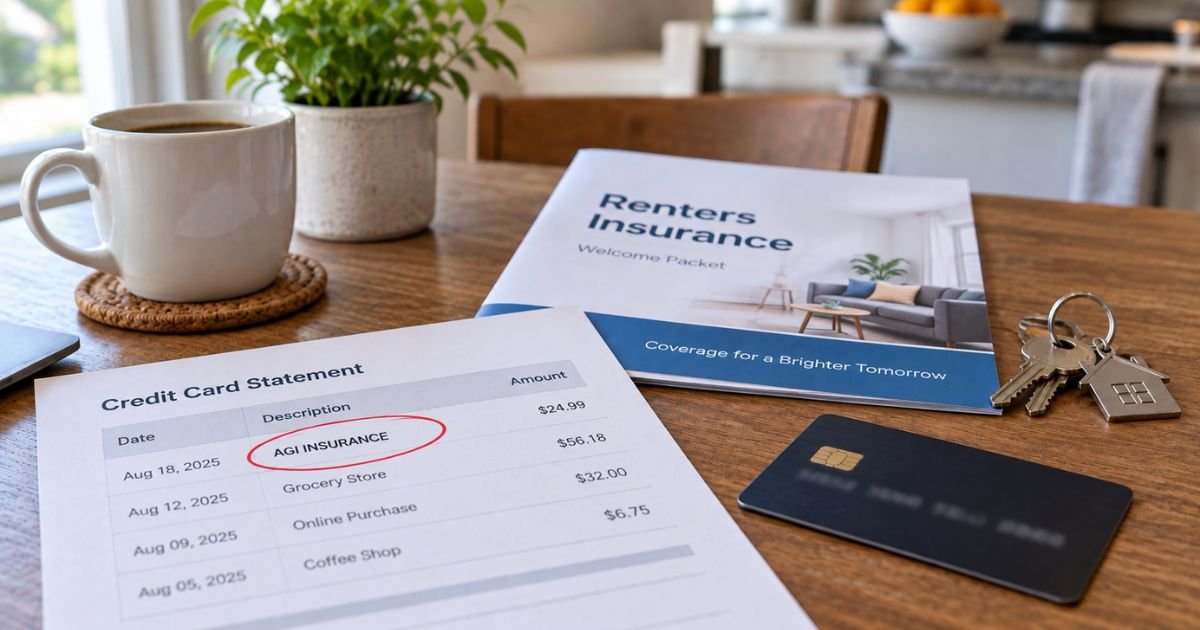
An AGI liability insurance charge on a credit card can feel confusing if you don’t recall signing up for anything. The letters AGI do not point to one storefront the way a grocery name does.
Unfamiliar insurance lines are often legitimate premiums or plan fees. They can also belong to more than one company that uses “AGI.”
This guide shows the usual meanings, how to match the bill, and how to stop a plan you no longer need.
Table of Contents
What Is an AGI Liability Insurance Charge on a Credit Card?
An AGI liability insurance charge on credit card is typically a payment for insurance or a protection plan, not a random store purchase.
Liability coverage is the part of a policy that may help if you legally owe someone for injury or property damage. Many renters and condo policies bundle that coverage with coverage for your stuff.
“AGI” is not a unique official brand on its own. Banks shorten long company names. The same letters can point to different businesses.
The most common consumer pattern in U.S. charge reports is billing tied to Assurant-group products. Assurant is a Fortune 500 protection company.
It sells renters and condo insurance, often through apartment managers. It also administers many store and phone protection plans.
Consumer charge sites often list lines such as AGI*RENTERS/CONDO INS, AGI*PROTECTIONPLAN, or AGI TMO.
Assurant has not published a full public glossary that confirms every exact string, so treat those examples as commonly reported, not official word-for-word labels.
Two other matches are less common for a nationwide mystery card line:
- AGI Insurance in Pennsylvania and New Jersey (agi.insure) is a local independent agency. It sells business general liability and personal policies. Its site says it does not offer renters insurance and is not affiliated with GEICO or AIG.
- American General Life (now under Corebridge Financial) sells life insurance. Its legal name can look like “AGI,” but those bills are usually life premiums, not liability insurance.
This charge is generally not “artificial general intelligence” liability insurance. That product is a specialty business policy. It is not a typical household card descriptor.
How the charge usually appears
Your issuer may add PURCHASE, CHKCARD, PENDING, or a phone number after the name. Read the full line.
| Statement text (commonly reported) | Typical meaning (verify in your records) |
|---|---|
| AGI LIABILITY INSURANCE | Insurance premium; company not unique from the letters alone |
| AGI*RENTERS/CONDO INS | Often a renters or condo policy that includes liability |
| AGI*PROTECTIONPLAN | Often a store or appliance protection plan |
| AGI*BESTBUY or similar partner text | Protection plan billed through a retailer partner |
| AGI*LOWES PROTECT PLAN | Protection plan tied to a Lowe’s purchase, per consumer reports |
| AGI TMO or AGI TMO INS DEDUCTIBLE | Often T-Mobile device protection or a claim deductible |
| AGI INSURANCE or AGI INSURANCE GROUP | Could be an agency premium or another AGI-named firm |
If a phone number sits on the same line, call that number and also confirm it on the company’s official site. Scam sites copy real insurer names.
Why you might see this charge
A lease required renters insurance
Many apartments require personal liability coverage. Some properties partner with Assurant programs such as Cover360. You may have enrolled online after signing a lease, or insurance may have been offered with rent. The card on file can keep billing after you stop thinking about move-in paperwork.
You bought a protection plan at checkout
A washer, phone, or TV plan can bill monthly under an AGI or Assurant-style name. The store brand you remember may not be the name on the statement.
A policy renewed
Insurance often renews unless you cancel. A yearly policy can post as one larger charge. A monthly policy can look like a subscription.
A claim deductible or service fee
Device plans sometimes bill a deductible when you file a claim. That amount can differ from your usual premium.
A business or event policy
If you hired a vendor, booked a venue, or run a small business, a local AGI agency may have billed general liability. Check invoices and certificates of insurance.
How to match the charge
Do this before you dispute it.
- Search your email for Assurant, renters, condo, protection plan, Cover360, and your apartment name.
- Check property-management portals and move-in packets. Look for “interested party” or insurance-tracking language.
- Log in at assurant.com if you have an Assurant renters or claims account.
- Check retailer accounts (Best Buy, Lowe’s, a phone carrier) for an active protection plan.
- Compare the charge date with your lease start, a store purchase, or a phone claim.
- Ask roommates or a partner who shares the card.
If you still cannot match it, look up the company on the NAIC Consumer Information Source. Licensed U.S. insurers appear there. A name that cannot be found as a licensed insurer deserves extra caution.
Official Assurant renters support lists (888) 260-7736, Monday through Friday, 8 a.m. to 8 p.m. Eastern. Assurant’s claims page lists (866) 602-4424 for many other policies.
For T-Mobile device plans administered with Assurant, Assurant’s phone directory lists 1-866-866-6285. Have the last four digits of the card, the date, and the amount ready.
Pro Tip: Save the full statement line, including any phone number. Then search that exact text plus the dollar amount in your email. Lease-required policies often hide in messages from the property, not from a brand you would recognize.
How to cancel or stop future billing
Cancel only after you know what the policy is. If your lease requires liability coverage, dropping it can put you in breach. Ask the property how to swap carriers and still upload proof.
If it is Assurant renters or condo insurance
- Sign in to your Assurant policy portal if you have one.
- Call the renters number on Assurant’s official claims and support page.
- Ask for the policy number, the next draft date, and written cancel confirmation.
- Request any unused-premium refund in writing. Refund rules vary by state and product. Do not assume a full refund.
Partner help pages have also listed 800-432-8612 and renterscancel@assurant.com for some Assurant-underwritten renters policies. Confirm the current path on Assurant’s site or with the number on your policy documents.
If it is a store or phone protection plan
- Cancel through the retailer or carrier account first.
- Then call the administrator number on the statement or on Assurant’s official phone directory for that brand.
If it is a local AGI agency policy
- Use the agency and carrier names on your declarations page.
- AGI Insurance in Warminster, Pennsylvania, lists client service through agi.insure/service. That path only helps if you are actually their customer.
If you moved out
- Canceling the lease does not always cancel the insurance card on file.
- Give the insurer a move-out date and a forwarding email.
- Watch one more statement cycle.
Common Mistakes: People dispute first and only later learn the apartment required the policy. That can leave a coverage gap and a lease problem. Others cancel the property portal alert and leave the card on auto-pay. Turn off the premium draft and replace required coverage the same day if your lease still demands it.
If the charge is not yours
Work the list before you assume fraud.
- Confirm nobody used your card for a roommate’s lease insurance.
- Search old retailer protection plans.
- Call the official insurer or administrator, not a number from a pop-up ad.
- If the company cannot find a policy on your name or card, tell your issuer.
For U.S. credit cards, the Fair Credit Billing Act generally gives you 60 days from the statement date to send a written billing-error notice.
Many issuers also let you start a dispute in the app. Issuer timelines vary. Unauthorized-use rules are different from “I forgot I bought insurance.”
Watch for look-alike sites. Real insurers do not need remote access to your computer to “verify a policy.”
FAQs: AGI Liability Insurance Charge on Credit Card
Q. Is an AGI liability insurance charge a scam?
A. Often it is a real premium or protection-plan bill, especially if you rent or bought a store plan. AGI is not one unique company, so you still need to match a policy. If no insurer or administrator can find your name, treat it as unauthorized and contact your card issuer.
Q. Does this mean I bought artificial intelligence insurance?
A. Almost certainly not for a typical household card. AI liability insurance is a specialty product sold to businesses. Consumer AGI lines more often relate to Assurant-style renters, condo, or device and appliance plans, or to a local agency named AGI.
Q. Why does the name say liability if I thought I bought renters insurance?
A. Renters and condo policies usually include personal liability plus coverage for belongings. Some lease programs sell a liability-focused policy to meet the landlord’s minimum. The billing name may highlight liability even when you remember “renters insurance.”
Q. Will I get a refund if I cancel?
A. It depends on the product and your state. Many insurance premiums are earned day by day, so unused time may be returned after cancel. Protection plans and claim deductibles follow different rules. Ask for the refund method and timing in writing. Do not rely on a promised amount until you see it post.
Conclusion
An AGI liability insurance charge on a credit card is usually an insurance or protection-plan payment, not a one-off retail sale. The letters AGI can point to Assurant-group renters or plan billing, a local AGI agency, or another similarly named firm.
Match the date to a lease, store plan, or policy email, cancel only after you replace any coverage your lease requires, and use official Assurant or carrier contacts when the records line up.
Disclaimer: This article is for general information only. It is not financial, legal, or insurance advice. Company names, descriptors, phones, and refund rules can change and may vary by state, issuer, and product. Confirm your policy and any cancel or dispute steps with the insurer, administrator, property manager, or your bank before you act.
Meet the Author
