
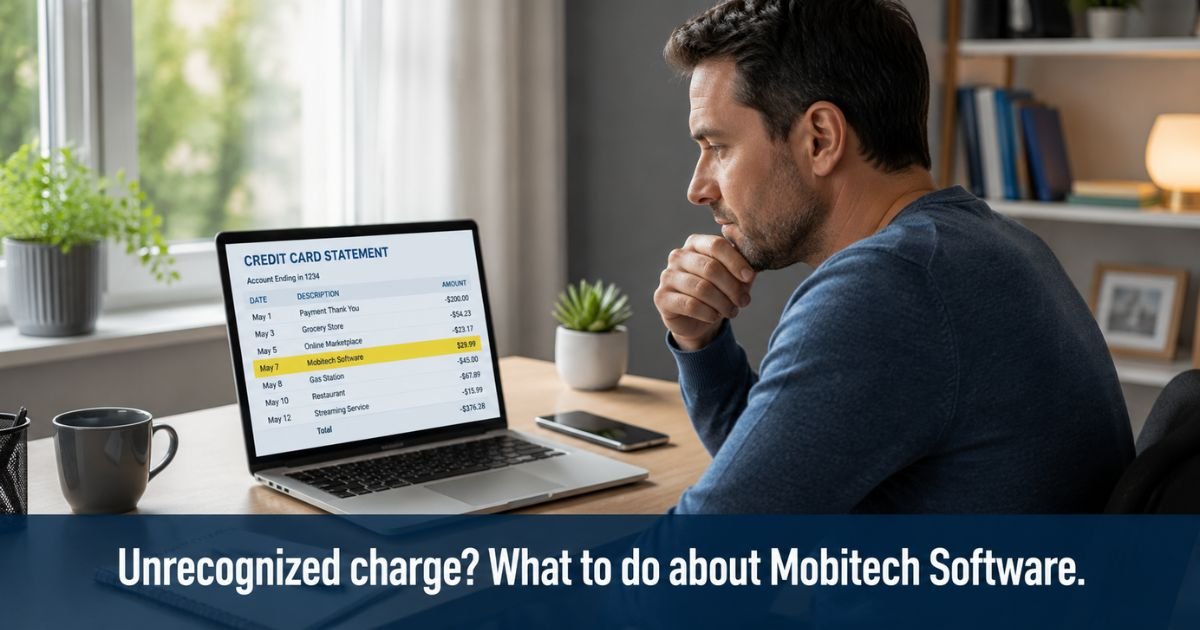
You open your monthly credit card statement and spot a charge from Mobitech Software. The name does not sound familiar, and you cannot recall downloading or buying anything by that name.
This kind of mysterious charge appears on statements more often than most people expect. It usually connects to a mobile app, software trial, or digital subscription that started with a free period and then began billing automatically.
We explain what a Mobitech Software charge on credit card typically represents, walk you through the most common causes, and give you clear steps to identify the source and stop future billing.
Table of Contents
What Does a Mobitech Software Charge Usually Mean?
A Mobitech Software charge on credit card is the billing descriptor used by certain software providers and mobile apps. The actual service behind the charge is often a subscription or membership that renews automatically.
Common sources include:
- Mobile apps that offer a short free trial and then convert to paid plans
- Software tools or productivity apps with recurring monthly or weekly fees
- Digital services that bill through third-party processors using this merchant name
The key point is that many apps and software companies use billing names that do not match the brand you remember. That mismatch is the main reason the charge looks unfamiliar.
Common Reasons You Might See This Charge
Most people notice a Mobitech Software charge because of an auto-renewing subscription they started during a trial or promotional period.
Here is a real-world example. Maria Lopez, a graphic designer in Texas, downloaded a photo editing app during a free trial. She tried the app a few times, decided it was not what she needed, and deleted it from her phone. She assumed that was the end of it.
A month later she saw a $29.99 charge labeled Mobitech Software on her statement. After checking her email she found the original trial confirmation and realized the subscription had continued even though she no longer used the app.
Stories like Maria’s are common. Many apps make it easy to start a trial but harder to fully cancel before the first paid charge hits. Deleting the app alone does not always stop the billing.
Bottom line: A Mobitech Software charge on credit card almost always traces back to a software or app subscription that auto-renewed.
How to Find Out Exactly Where the Charge Came From
Start with these quick checks. Most people can identify the source in just a few minutes.
- Open your phone’s subscription settings. On iPhone go to Settings > Apple ID > Subscriptions. On Android open the Google Play Store, tap your profile, and go to Payments & subscriptions.
- Search your email (including spam and promotions) for “Mobitech,” the name of any recent app you downloaded, or words like “trial,” “subscription,” or “receipt.”
- Check your recent app downloads and in-app purchases in your phone’s app store history.
- Log into your credit card account online or in the app and look for extra merchant details or a contact phone number next to the charge.
- If you still cannot match it, call the number on the back of your credit card and ask for the full merchant information they have on file.
These steps usually reveal whether the charge came from a specific app or software service.
Steps to Cancel or Stop Mobitech Software Charges
Once you know the source, move quickly. The sooner you cancel, the fewer charges you will face.
If the charge comes from a mobile app subscription
Go into your phone’s subscription settings and turn off auto-renew for that app. If you do not see the option there, open the app itself and look for account or billing settings. Some apps require you to cancel through their website instead. Always save a screenshot or confirmation email of your cancellation.
If it is software or a digital service
Check the original welcome or trial email for a cancellation link or support contact. Many services let you cancel online through your account dashboard. Send a written request by email if you cannot find an online option, and keep a copy of every message you send.
If you cannot reach the company or the charges continue
Contact your credit card issuer right away. Ask them to block future charges from that merchant while you finish canceling. This step often stops the billing immediately.
Pro Tip: Review your app and subscription lists on your phone once a month. Set a recurring reminder on your calendar. Catching unwanted subscriptions early prevents small charges from adding up over time.
What If the Charge Looks Unauthorized?
If you never downloaded any app or signed up for any trial connected to Mobitech Software, treat the charge as potentially unauthorized.
Call your credit card issuer the same day you notice it. Explain that you do not recognize the charge and have no record of any related purchase or subscription.
Most issuers allow you to dispute the transaction online or over the phone. Provide screenshots of your statement and notes from your investigation. In many cases they will issue a temporary credit while they review the claim.
You can also ask the issuer to block that specific merchant going forward.
Common Mistake: Some people see a recurring charge and hope it will stop on its own. Ignoring it usually leads to more charges and makes it harder to win a dispute later. Address every unfamiliar charge within a week or two of noticing it.
Quick Comparison of Common Mobitech Software Charge Scenarios
| Scenario | Typical Amount | How It Usually Starts | Best First Action |
|---|---|---|---|
| Photo or video editing app trial | $9.99–$29.99 per month or week | Free trial that auto-renews | Cancel in phone subscription settings |
| Productivity or utility software | $19.99–$49.99 per month | Downloaded app or signed up online | Check account dashboard or email for cancel link |
| Unrecognized recurring billing | Varies | No clear memory of signing up | Dispute with credit card issuer immediately |
| Older or one-time software purchase | One-time fee | Past download or license renewal | Contact issuer for more merchant details |
FAQs: Mobitech Software Charge on Credit Card
Q. How do I cancel a Mobitech Software subscription on my credit card?
A. Open your phone’s subscription settings and turn off auto-renew for any related app. If you do not see it there, search your email for the original receipt and follow the cancellation instructions or contact support listed in the email. Save confirmation of your cancellation.
Q. Is the Mobitech Software charge legitimate or a scam?
A. Most Mobitech Software charges come from real app or software subscriptions, even if the merchant name looks unfamiliar. However, some people report difficulty canceling or charges they never knowingly authorized. Always investigate the source first and dispute the charge if you have no record of signing up.
Q. Can I get a refund for past Mobitech Software charges?
A. Yes, in many cases. Contact your credit card issuer and open a dispute. Provide any evidence you have, such as screenshots showing you canceled or never used the service. Refunds are more likely when you act quickly and document your steps.
Conclusion
A Mobitech Software charge on credit card almost always comes from a software or mobile app subscription that started with a trial and then began billing automatically.
The fastest way to resolve it is to check your phone’s subscription list and recent downloads first, then cancel directly or through your card issuer.
Make it a habit to review your statements and app subscriptions every month. Acting quickly on any charge you do not recognize keeps small recurring fees from becoming bigger problems and helps you stay in control of your spending.
Disclaimer: The content on ExplainCharges.com is for informational and educational purposes only and does not constitute financial, legal, or professional advice. We are not affiliated with any companies or services mentioned. The information provided may not apply to your specific situation. If you suspect unauthorized charges or fraud, contact your bank or credit card issuer immediately. Always verify details directly with the source and consult a qualified professional if needed.
Meet the Author
