
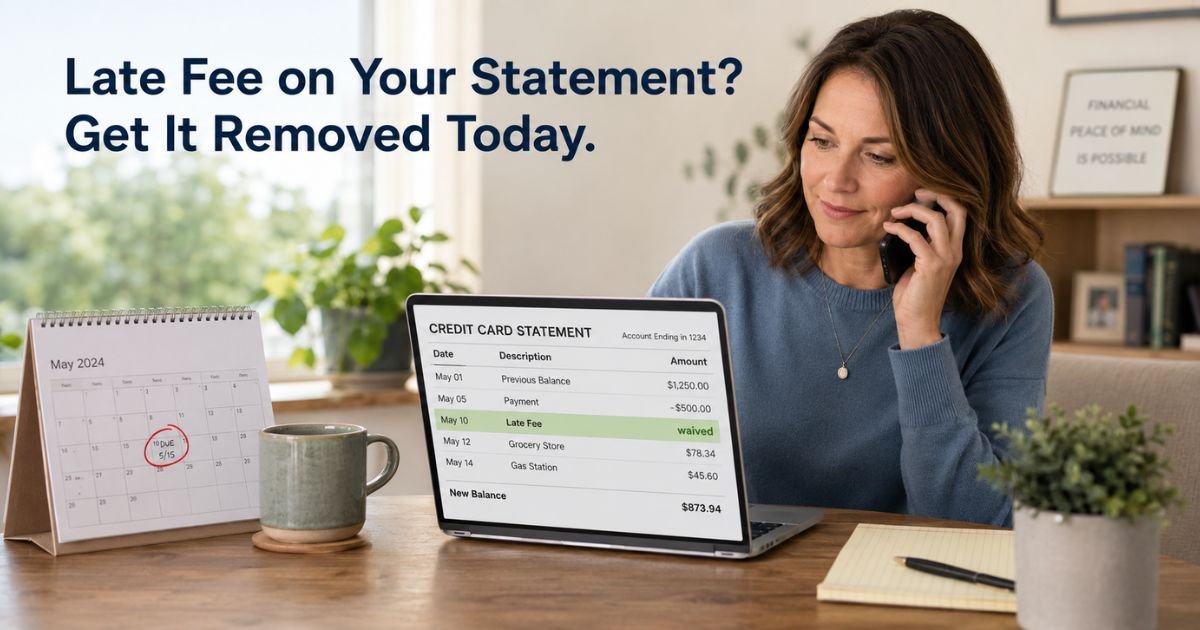
You open your credit card statement and see a late charge added to your balance. It happens even to people who usually pay on time, whether because of travel, a busy week, or a simple mix-up with the due date.
The good news is that you can often waive late charges on credit card accounts without much hassle. This guide shows you exactly how to request the removal, what works best when you call, and simple steps to keep future charges from appearing.
Table of Contents
Why Late Charges Show Up on Credit Card Statements
Credit card issuers add a late charge when your payment does not arrive by the due date listed on your statement. The fee usually ranges from about $8 to $40 depending on your card and the issuer’s current policy.
Along with the fee, you may also see a higher penalty interest rate applied to your balance going forward. These charges protect the issuer from the cost of chasing late payments, yet most companies treat the first one as a courtesy they can remove.
You do not have to accept the charge as final. A quick conversation with customer service often reverses it.
How to Waive Late Charges on Credit Card
The most effective method is a direct phone call to the number on the back of your card. Issuers train representatives to offer one-time waivers, especially when you have a strong payment history or this is your first late payment.
Here is the simple process that works for most people:
- Pay at least the minimum due or the full past-due amount first. Showing good faith makes the request stronger.
- Call the customer service number on the back of your card during normal business hours.
- Explain the situation briefly and honestly. Mention any on-time payments you have made in the past.
- Ask directly: “Can you waive the late charge as a one-time courtesy?”
- If the first representative says no, politely ask to speak with a supervisor.
- Once approved, request written confirmation by email or secure message.
Many issuers allow at least one waiver per year without much pushback. The whole call often takes less than ten minutes.
Take a 42-year-old sales manager who missed his due date while traveling for work. He paid the balance as soon as he returned and called the same day. He explained it was his first late payment in three years of on-time history. The representative waived the $35 charge immediately and noted the account for future reference.
What Helps Your Request Succeed
A few details increase your chances of success. Good payment history carries weight. So does a clear, calm explanation rather than excuses.
Issuers also respond well when you show you are fixing the problem, such as setting up autopay right after the call.
Pro Tip: Before you dial, have your recent statement open and a short note of your payment history ready. Being prepared keeps the conversation short and professional, which representatives appreciate.
Late Fee Waiver Request: Phone vs. Written
| Method | Speed of Response | Personal Connection | Best Documentation | Best Used When |
|---|---|---|---|---|
| Phone Call | Immediate during the call | High | Ask for email confirmation | First-time or simple situations |
| Secure Message | 1–3 business days | Medium | Automatic written record | You want everything in writing |
| Formal Letter | 7–14 business days | Low | Strong paper trail | Multiple fees or complex issues |
Bottom line: A phone call remains the fastest and most effective way to waive late charges on credit card accounts in most cases.
Common Mistake: Waiting several weeks or getting frustrated on the call. The sooner you reach out after the charge posts, the more likely the issuer will remove it without extra questions.
What to Do After the Waiver
Once the fee is removed, confirm it appears on your next statement. Then take two quick steps to avoid repeats. Set up automatic payments for at least the minimum due every month. Review your statement the same day it arrives so nothing surprises you later.
These small habits protect you from future late charges and keep your credit score strong.
FAQs: How to Waive Late Charges on Credit Card
Q. How do I politely ask my credit card company to waive a late fee over the phone?
A. Call the number on the back of your card and say something like: “I noticed a late charge on my recent statement. I usually pay on time and this was an honest mistake. Could you please waive it as a one-time courtesy?” Keep your tone calm and factual.
Q. Will calling customer service really get my credit card late charge removed?
A. Yes, in most cases. Major issuers routinely waive the first late fee when you ask politely and have a history of on-time payments. Many representatives have the authority to remove it on the spot without escalation.
Q. What should I do if the customer service rep refuses to waive my credit card late fee?
A. Stay polite and ask to speak with a supervisor. Supervisors often have more flexibility. If that does not work, send a brief written request through your online account’s secure messaging system and mention your good payment record.
Conclusion
You now know that a late charge on credit card does not have to stay there. Most issuers will waive it with one calm phone call, especially when this is your first time or you have paid on time for years.
The key actions are simple: pay what you owe right away, call customer service, ask directly for the waiver, and set up autopay so it never happens again. These steps save you money and give you peace of mind every month.
Pick up the phone or log into your account today. A few minutes of effort now keeps your statements clean and your budget on track.
Disclaimer: The content on ExplainCharges.com is for informational and educational purposes only and does not constitute financial, legal, or professional advice. We are not affiliated with any companies or services mentioned. The information provided may not apply to your specific situation. If you suspect unauthorized charges or fraud, contact your bank or credit card issuer immediately. Always verify details directly with the source and consult a qualified professional if needed.
Meet the Author
