
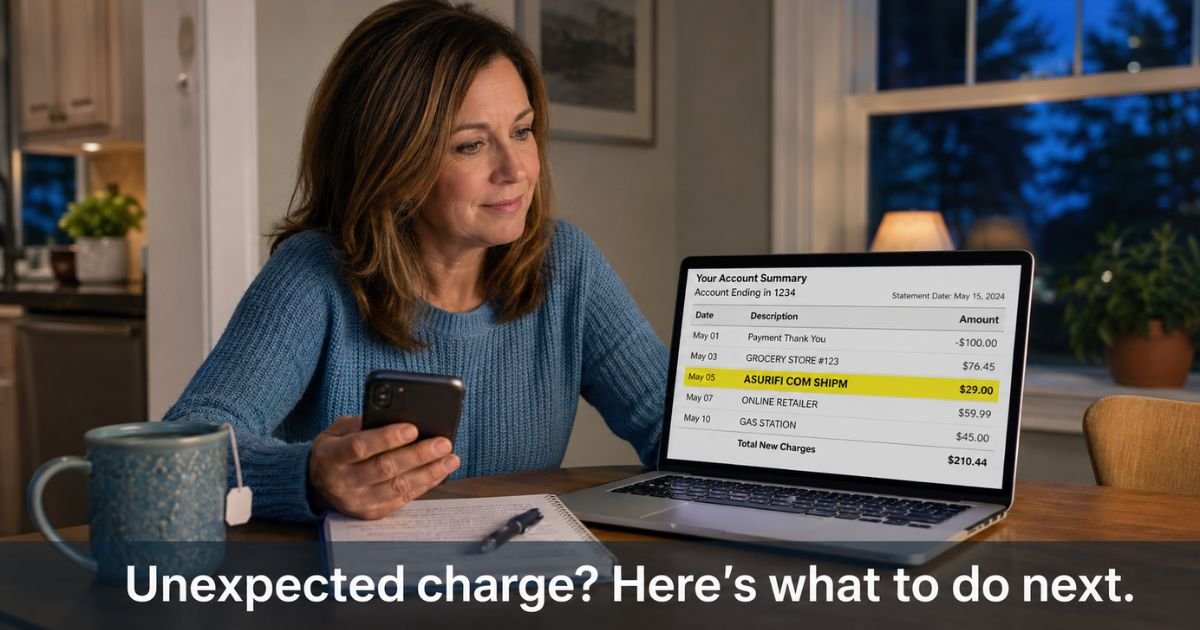
You open your credit card statement and notice a charge labeled “Shipment Protect” or “ShipmentProtect” for roughly thirty dollars. It does not match any recent purchase you remember making, and the name feels unfamiliar.
Many people experience this exact moment and immediately wonder whether the charge will keep showing up month after month.
The Shipment Protect charge on credit card statements comes from a subscription service, not a one-time shipping fee.
Table of Contents
What Exactly Is the Shipment Protect Charge?
ShipmentProtect is a monthly membership service offered by Asurifi Inc. It promises to help customers resolve issues with lost, stolen, or damaged packages from any online retailer.
Instead of dealing directly with stores or carriers yourself, the company contacts them on your behalf to request refunds, replacements, or store credit.
If ShipmentProtect cannot secure a resolution, they offer a guarantee of up to $500 per case, subject to yearly limits and membership terms. The service is designed as ongoing protection for all your online shopping rather than insurance tied to a single shipment.
Charges typically appear as “ShipmentProtect,” “ASURIFI COM SHIPM,” or a similar variation on your statement. The monthly fee usually falls in the $29 to $29.95 range, though the exact amount is disclosed at the time of enrollment.
How Do People End Up With This Charge on Their Statement?
Most people do not set out to sign up for a monthly membership. Instead, the charge often begins during an online checkout. Retailers sometimes present “package protection,” “shipment protection,” or “free shipping protection” as an optional add-on.
Selecting it can enroll you in the full ShipmentProtect subscription, which then converts to recurring monthly billing after any trial period ends.
Take a 38-year-old teacher. She ordered holiday gifts from a popular online store and clicked what looked like a one-time protection option at checkout. She assumed it applied only to that order.
Two weeks later she noticed the first Shipment Protect charge on her credit card. When she checked her email, she found a welcome message from ShipmentProtect confirming her new membership.
This pattern appears frequently in consumer reports. The enrollment can feel quick and optional at the time, yet it creates an ongoing subscription.
ShipmentProtect Subscription at a Glance
| Detail | Information |
|---|---|
| Provider | Asurifi Inc. (operating as ShipmentProtect) |
| Typical Monthly Fee | $29.00 – $29.95 |
| What the Service Covers | Assistance contacting retailers and carriers for lost, stolen, or damaged packages; up to $500 guarantee per case if unresolved |
| Coverage Limits | $500 per order/merchant; $2,000 aggregate per 12-month period |
| How Charges Appear | “ShipmentProtect,” “ASURIFI COM SHIPM,” or similar |
| Cancellation Methods | Account portal at shipmentprotect.com, email support@shipmentprotect.com, or call (866) 506-3587 |
| Common Enrollment Trigger | Selecting “package protection” or similar option during online retailer checkout |
Bottom line: The Shipment Protect charge on credit card statements reflects an active monthly membership rather than a single shipping fee or one-time insurance purchase.
Is ShipmentProtect a Legitimate Service?
ShipmentProtect operates as a real company that provides a hands-off resolution service for package problems. Some customers value the convenience of having someone else handle the calls and paperwork, especially with higher-value or complicated orders.
At the same time, the company has received a large volume of complaints on the Better Business Bureau and other platforms.
Many center on unexpected recurring charges and difficulty recognizing the enrollment at checkout. The service itself is legitimate, yet the way it is sometimes presented can lead to confusion.
You have every right to cancel if the membership no longer fits your needs or if you did not intend to enroll in ongoing billing.
How to Cancel Your ShipmentProtect Subscription
Canceling stops future charges. Here are the most direct steps:
- Visit shipmentprotect.com and log into your account using the email address tied to your online purchases.
- Navigate to the “Membership” section and look for the option to cancel or manage your subscription.
- Follow the prompts to confirm cancellation. You should receive an email confirmation.
- If you cannot access the account or prefer not to log in, email support@shipmentprotect.com or call (866) 506-3587. Have your account details or recent charge information ready.
- Keep a record of your cancellation request, including the date and any confirmation number.
Benefits usually continue until the end of the current billing period. Refunds are considered case by case and typically limited to recent charges within the last three months.
Pro Tip: Screenshot your cancellation confirmation and note the date. This documentation helps if you later need to dispute any final charges with your card issuer.
What to Do If You Believe the Charge Was Unauthorized
If you have no memory of signing up and cannot locate an account, treat the situation seriously. Start by contacting ShipmentProtect using the email or phone number above to request immediate cancellation and ask about any recent charges.
Next, reach out to your credit card issuer. Explain that you did not authorize a recurring subscription and provide any evidence you have, such as a lack of welcome emails or checkout records. Most issuers can investigate and may reverse recent charges while blocking future ones.
Common Mistake: Ignoring a small recurring charge because it seems minor or assuming it must belong to a familiar service. These fees add up quickly, and waiting too long can limit your options for refunds or disputes.
FAQs: Shipment Protect Charge on Credit Card
Q. How do I cancel my Shipment Protect subscription if I do not remember signing up for it?
A. Visit shipmentprotect.com and try logging in with emails you use for shopping. If an account exists, cancel directly in the membership settings. Otherwise email support@shipmentprotect.com or call (866) 506-3587 right away. Request written confirmation of cancellation and ask about recent charges.
Q. Why am I seeing a monthly Shipment Protect charge on my credit card even though I never use the service?
A. Many people enroll unintentionally when they select a “package protection” option during an online checkout. The service then begins a recurring monthly subscription. Review your recent orders for any protection add-ons and cancel the membership using the steps above to stop future billing.
Q. Can I get a refund for Shipment Protect charges I did not knowingly authorize?
A. Contact ShipmentProtect first to cancel and request a refund review. Then call your credit card issuer to dispute the charges as unauthorized. Provide any supporting details. Refunds are not guaranteed but are more likely when you act quickly on recent charges.
Conclusion
You now have a clear picture of the Shipment Protect charge on credit card statements and the actions that resolve it. The key steps are verifying whether you have an active membership, canceling promptly if the service does not fit your needs, and reviewing your statements regularly so small recurring fees never catch you off guard again.
Many people successfully stop these charges by following the provider’s cancellation process and staying in touch with their card issuer when needed.
A few minutes of attention each month keeps your finances organized and gives you greater confidence every time you open a statement.
Disclaimer: The content on ExplainCharges.com is for informational and educational purposes only and does not constitute financial, legal, or professional advice. We are not affiliated with any companies or services mentioned. The information provided may not apply to your specific situation. If you suspect unauthorized charges or fraud, contact your bank or credit card issuer immediately. Always verify details directly with the source and consult a qualified professional if needed.
Meet the Author
