
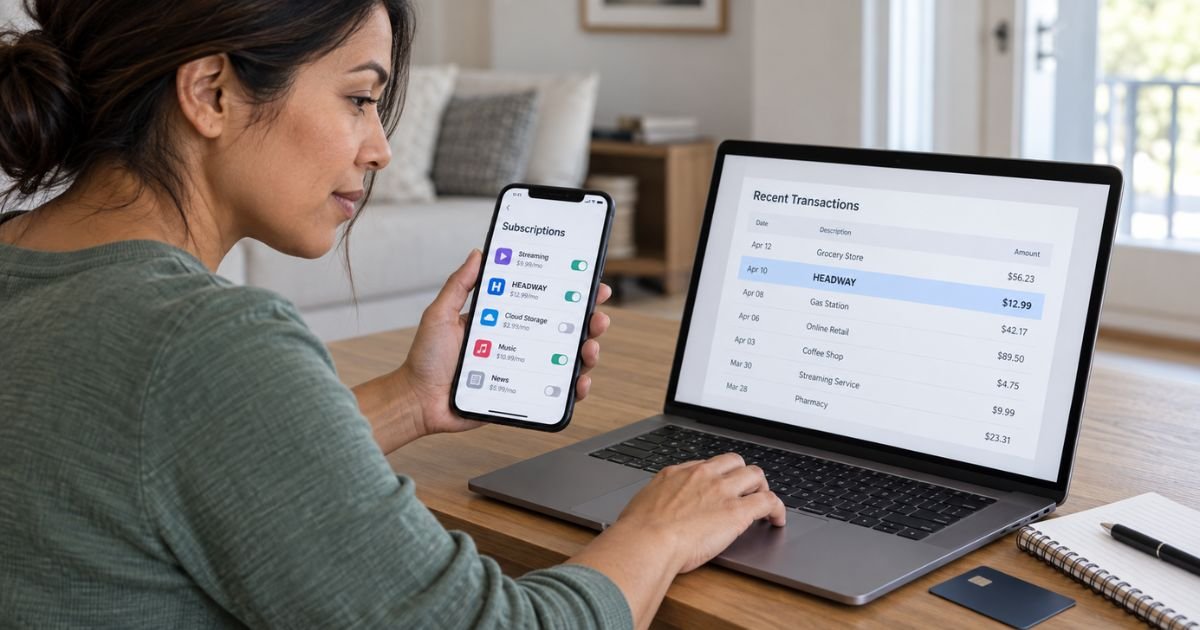
A Headway Charge On Credit Card can feel confusing if you don’t remember signing up for anything. The charge is often legitimate, but “Headway” can refer to more than one company.
The most direct match is typically the Headway book-summary app. A separate company called Headway also handles billing for some mental health appointments.
This guide explains how to identify the charge, cancel recurring billing, request a refund, and dispute an unknown payment.
Table of Contents
What Is a Headway Charge On Credit Card?
A Headway charge typically comes from one of two unrelated services. The Headway app at MakeHeadway.com sells subscriptions for short text and audio summaries of nonfiction books.
Another possibility is Headway at Headway.co, a separate mental health platform. It generally connects you with therapists and other providers who accept insurance, and it may charge your saved payment method for your share of a session.
The companies are separate businesses. That means you should first determine which Headway service matches your recent activity before trying to cancel or dispute the charge.
| If you recognize this activity | Likely source |
|---|---|
| Book summaries or growth app | Headway app subscription |
| App free trial | Headway Premium renewal |
| Therapy or psychiatry visit | Headway mental health billing |
| Copay or deductible | Headway mental health platform |
| No Headway activity | Needs further verification |
Why Did Headway Charge Your Card?
For the Headway book-summary app, a charge typically follows a paid subscription or the end of a free trial. A trial may convert into a paid plan unless you cancel before the renewal date.
The exact price may vary. Pricing can generally depend on your plan, region, currency, app store, website purchase, and any promotion you received.
For the therapy platform, a charge may represent a copay, deductible, coinsurance, cancellation fee, or another patient responsibility. Your final cost may sometimes change after your insurance company processes the claim.
Pro Tip: Search your email for “Headway,” “Make Headway,” “subscription,” “trial,” “appointment,” or “invoice.” A receipt may quickly show which Headway company billed you.
How to Tell Which Headway Charged You
Start with the date and amount. If the transaction appeared near the end of a Headway app trial or subscription period, it may be the book-summary service.
Then review your recent medical appointments. If you used Headway to find or pay a therapist or psychiatrist, the charge may instead relate to that care.
You can also check where your subscription appears. An iPhone purchase may be managed through Apple Subscriptions, while an Android purchase may appear in Google Play.
A subscription purchased directly from the Headway website generally needs to be managed through your Headway account. The billing route matters because it can also affect where you request a refund.
How to Cancel a Headway App Subscription
Your cancellation method generally depends on where you subscribed. Deleting the Headway app does not typically cancel an active subscription.
If you subscribed on an iPhone or iPad:
- Open Settings.
- Tap your name.
- Tap Subscriptions.
- Choose Headway.
- Tap Cancel Subscription.
If you subscribed through Android, open Google Play. Go to Payments & subscriptions, select Subscriptions, choose Headway, and follow the cancellation instructions.
If you subscribed directly through Headway’s website, sign in to your account and look for your subscription or automatic renewal settings. You may generally keep access until your paid period expires.
Common Mistakes: Don’t assume uninstalling the app ends your billing. Always verify that the subscription itself shows as canceled or set to expire.
Can You Get a Refund From Headway?
Refund handling typically depends on where you paid. If you subscribed through Apple, you generally need to request an eligible refund from Apple.
If you paid through Google Play, your refund request may need to go through Google. Purchases made directly through the Headway website are generally handled under Headway’s own refund terms.
A refund is not guaranteed. Eligibility may depend on the transaction, purchase platform, timing, and applicable policy.
For the Headway mental health platform, billing questions generally need to go through its secure support system. You may also need to speak with your insurance company if the issue involves a deductible, coinsurance amount, or claim adjustment.
What If the Headway Charge Is for Therapy?
Headway.co generally estimates your session cost using your insurance information. After your provider confirms the session, your saved payment method may be charged for your expected share.
Your initial estimate may not always equal the final amount. Your insurer can process the claim differently and determine that you owe more or less than originally estimated.
If the amount seems wrong, compare the Headway invoice with your insurer’s Explanation of Benefits, commonly called an EOB. The EOB generally shows the provider charge, insurer adjustment, insurance payment, and your responsibility.
If the numbers do not match, contact Headway support and your insurer. Keep the invoice and EOB available when explaining the issue.
Is a Headway Charge a Scam?
Headway is associated with legitimate businesses, but that does not mean every Headway transaction on your card is automatically authorized. A genuine merchant can still appear on a transaction made with stolen payment information.
Consumer review sites contain mixed feedback about the book-summary app. Some customers describe unexpected renewals, cancellation difficulties, refund problems, or confusion about subscriptions.
Other consumers report positive experiences with the app and its content. Online reviews therefore provide context but cannot prove whether your specific charge is valid.
The Headway mental health platform also receives individual billing complaints. These can involve insurance estimates, session costs, support, or payment timing.
Reddit discussions show similar mixed experiences. These reports are anecdotal, so you should rely primarily on your own account history, receipts, invoices, and bank records.
What to Do If You Don’t Recognize the Charge
Start by checking your email and Headway accounts. Also review your Apple or Google Play subscriptions if you use the book-summary app.
Ask other authorized card users whether they started a Headway trial or made a purchase. A family member may have used the card without realizing the merchant name would appear as Headway.
Next, compare the transaction amount and date with:
- Headway subscription receipts
- Apple subscription history
- Google Play purchase history
- Therapy appointments
- Headway invoices
- Insurance EOB statements
- Free-trial start dates
If you still cannot identify the transaction, contact the relevant Headway company. Explain the charge date, amount, and the last four digits of the card if requested through a secure support channel.
Avoid sending your complete card number by normal email. Legitimate support generally should not require you to send your full card details through an unsecured message.
When Should You Contact Your Bank?
If the transaction remains unexplained or you believe someone used your card without permission, contact your card issuer promptly. Use the number printed on the back of your card or your bank’s official app.
For U.S. credit cards, federal billing-error protections generally involve important notice deadlines. You should report the issue promptly rather than waiting for several billing cycles.
Debit-card protections can work differently. How quickly you notify your bank may affect your potential responsibility for unauthorized transactions.
Tell your bank exactly what happened. Do not label a valid subscription as fraud simply because you forgot to cancel it.
If the charge came from an unwanted renewal that you originally authorized, explain that clearly. Your issuer can tell you whether the transaction qualifies for its dispute process.
What Evidence Should You Save?
Good records can make it easier to resolve the problem. Save information before closing support chats or deleting emails.
Useful evidence includes:
- Credit card statement
- Headway receipt
- Subscription start date
- Free-trial information
- Cancellation confirmation
- Refund request
- Apple or Google Play receipt
- Therapy invoice
- Insurance EOB
- Support emails or chat messages
Screenshots may also help. Make sure they show the relevant date, amount, and subscription status without unnecessarily sharing sensitive card information.
How to Avoid Another Headway Charge
After canceling, verify that the subscription shows an expiration date or inactive status. Simply removing the app from your phone may not stop recurring payments.
You can also set a calendar reminder before future free trials end. This gives you time to decide whether you want to keep the service before it renews.
Review your card statement regularly. Finding an unwanted recurring charge quickly generally gives you more options for resolving it.
If the charge relates to therapy, review your estimated cost before each appointment. You may also want to check your deductible status with your insurer because your responsibility can change during the year.
FAQs: Headway Charge On Credit Card
Q. What does Headway mean on your credit card statement?
A. A Headway charge may relate to the Headway book-summary app, especially if you started a trial or paid subscription. It can also come from the unrelated Headway mental health platform if you received care through a provider who uses it.
Q. Why did Headway charge you after a free trial?
A. A Headway app trial may generally renew into a paid subscription unless you cancel before the renewal date. Your exact renewal price may vary depending on the plan, purchase platform, location, and promotion.
Q. How do you stop Headway from charging your card?
A. You should generally cancel through the same place where you subscribed. That may be Apple Subscriptions, Google Play, or your Headway website account, and deleting the app alone typically does not cancel billing.
Q. Can you dispute a Headway charge with your bank?
A. Yes, you may generally ask your card issuer about a dispute if the charge is unauthorized or remains unresolved after you contact the merchant. Your protections and deadlines may vary depending on whether you used a credit or debit card.
Conclusion
A Headway Charge On Credit Card typically comes from either the Headway book-summary subscription service or the separate Headway mental health platform. Checking your app subscriptions, email receipts, therapy invoices, and insurance records can usually show which company billed you.
If the transaction still does not make sense, contact the correct Headway support team and keep copies of your records. If you believe the payment was unauthorized, notify your card issuer promptly and follow its dispute process.
Disclaimer: This article is for informational purposes only and is not financial or legal advice. Billing, refund, subscription, and dispute policies may vary by company and card issuer. Verify account-specific questions with Headway or your bank.
Meet the Author
