
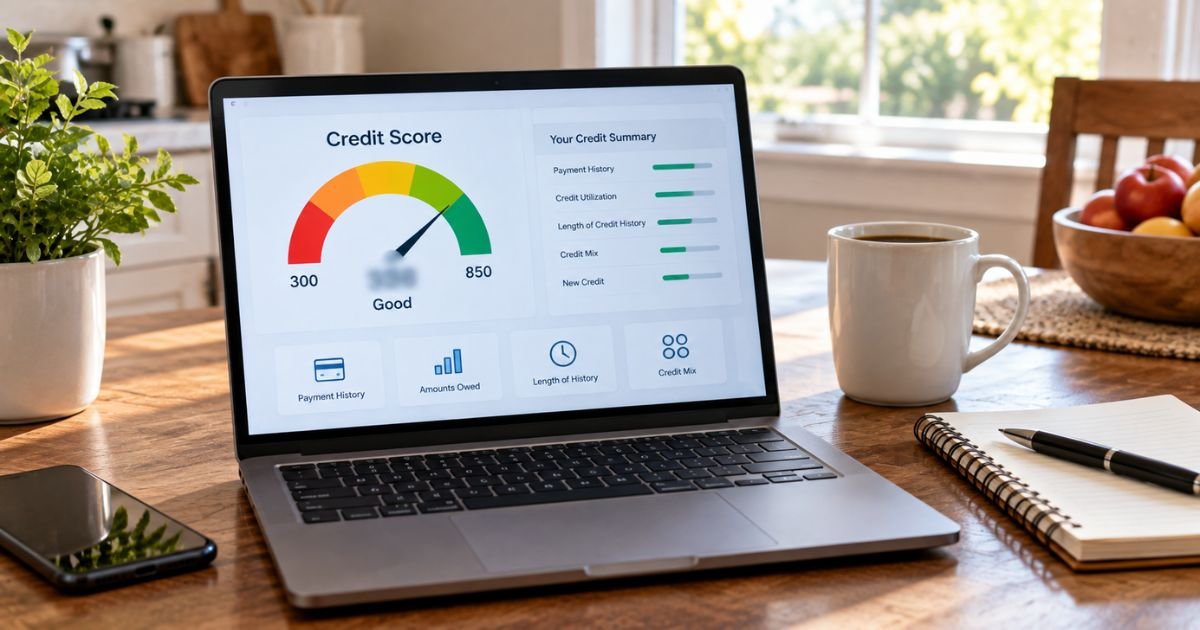
The highest credit score possible on the FICO and VantageScore models most consumers see is 850. That number is often called perfect credit. It is rare, and lenders almost never require it.
As of June 2026, Experian reported that 1.71% of U.S. consumers with a credit file had an 850 FICO Score. About 23% scored 800 or higher, which FICO already labels exceptional.
This article explains what an 850 looks like on a credit report, which habits support it, and why chasing the last 20 points is often less useful than staying in the 800s.
Table of Contents
What Is the Highest Credit Score Possible?
Most consumer FICO Scores and modern VantageScores use a 300 to 850 range. On that scale, 850 is the ceiling.
FICO’s common labels are:
- Poor: 300–579
- Fair: 580–669
- Good: 670–739
- Very good: 740–799
- Exceptional: 800–850
Some industry-specific FICO scores used for auto loans or bank cards run from 250 to 900. Those are not the scores in most free apps. If a lender shows a number above 850, it is likely one of those industry versions, not proof that consumer FICO goes higher.
You also do not have one score. Equifax, Experian, and TransUnion each hold a file. FICO Score 8, FICO Score 9, older mortgage FICO models, and VantageScore 3.0 or 4.0 can all print different numbers from the same person. An 850 with one model can be an 820 with another.
What People With an 850 Score Usually Look Like
Experian’s June 2026 snapshot compared 850 FICO consumers with all scored consumers:
- Average FICO Score: 850 vs. 713
- Credit cards: 5.6 vs. 3.9
- Credit card balance: $3,305 vs. $6,501
- Credit utilization: 4% vs. 29%
- Auto loan balance: $21,261 vs. $25,208
- Mortgage balance: about the same as the national average
- Tradelines ever delinquent: 0 vs. 1.63
The pattern is not “zero debt.” Many 850 files include a mortgage or auto loan. The pattern is no late payments on the report, low revolving utilization, and enough aged accounts to show a long, clean history.
myFICO has described a similar profile in its own research: spotless payment history, revolving utilization around 4%, several open cards, and a mix that can include installment debt. Those are averages, not a checklist that guarantees 850.
Time helps. Older files have more room to show decades of on-time payments. Younger borrowers can still reach the exceptional range. Hitting the exact cap is harder when the oldest account is only a few years old.
You Cannot Force an 850, but You Can Copy the File
There is no public formula that turns any report into 850 on demand. Scoring models are proprietary. Two people with similar habits can land on different numbers because of account age, mix, limits, and which bureau a lender pulls.
What you can control is the raw material the models read.
1. Keep a perfect on-time record going forward
Payment history is about 35% of a typical FICO Score. People at 850 generally show zero delinquencies. One 30-day late payment can stay on a report for seven years and cap how high the score can climb.
Autopay the minimum on every account. Then pay the rest on your own schedule. If a payment error appears, dispute it and ask the furnisher to correct the report.
2. Drive revolving utilization into the single digits
Amounts owed are about 30% of a typical FICO Score. Utilization is reported balances divided by reported limits.
Under 30% is a common coaching target. It is not a FICO cutoff. Consumers at 850 average about 4% utilization. That usually means paying cards before the statement closing date so the reported balance stays small, even if you spend during the month.
A $400 balance on a $10,000 limit is 4%. The same $400 on a $1,000 limit is 40%. Limit increases can help if the issuer uses a soft pull and you do not spend the extra room.
Utilization has little memory in common FICO models. When a lower balance reports, that factor can improve in one cycle. That is why people see scores bounce when a big purchase posts, then recover after they pay it.
3. Leave old accounts open
Length of history is about 15%. Closing your first card can shorten average age and cut available credit, which can raise utilization on the cards you keep.
If an old card has no annual fee, a small recurring charge that you pay off can keep it active. Do not close a card just to “simplify” unless the fee is not worth it.
4. Add mix slowly, not all at once
Credit mix is about 10%. Files at the top often include revolving credit and at least one installment loan. That does not mean you should open an auto loan you do not need.
A mortgage or student loan you already have counts. A new personal loan taken only to game mix can add an inquiry and a payment you might miss.
5. Treat new credit as a scarce resource
New credit is about 10%. Hard inquiries and brand-new accounts can nudge a high score down for a while. Rate-shop mortgages and auto loans inside a short window so models can group those inquiries.
Do not open five store cards in a month to “raise available credit.” The inquiries and young accounts work against the last stretch to 850.
6. Clean the reports the models actually use
Pull Equifax, Experian, and TransUnion at AnnualCreditReport.com. Dispute accounts that are not yours, wrong limits, and paid medical collections that should no longer appear. Accurate late payments will not come off early just because you want an 850.
Why 800 Already Does Most of the Work
FICO calls 800 to 850 exceptional. Experian’s 2026 data found nearly one in four consumers already sit in that band.
Lenders price risk in tiers. An 812 and an 850 often receive the same mortgage pricing band, the same auto-loan tier, and the same premium-card approval odds, as long as income, debt-to-income, and the rest of the application match. myFICO has long said creditors rarely require 850.
The extra points can matter at a cutoff. If a card or loan program stops at 780, an 782 that drops after an inquiry can miss. An 840 that drops to 820 may still clear. That is a stability argument, not a promise of a lower interest rate than every 800 borrower.
Chasing 850 by opening extra cards, carrying a tiny balance on purpose, or refusing every useful loan can cost more than the last points are worth.
A Practical Path by Starting Point
If you are rebuilding – Get current. Pay high-utilization cards before they report. Fix report errors. Do not expect 850 this year if late payments are still on the file.
If you are in the 700s – Utilization and new inquiries are usually the fastest levers. Pay before closing dates. Pause extra applications. Let accounts age.
If you are already 800-plus – Protect the file. Keep utilization low on the report date. Do not close seasoned cards. Apply only when the product is worth a short dip.
If you have a thin file – Time has to pass. A secured card or authorized-user account on a clean, low-utilization card can start a score. Perfect numbers usually wait until the history is longer.
Habits That Look Helpful but Rarely Create 850
- Closing paid-off cards to “show you are debt-free”
- Carrying a small balance because someone said scores need interest
- Checking your own score constantly (soft pulls do not hurt, but the number will bounce)
- Paying a company that promises an 850
- Ignoring installment loans you already have while obsessing over one retail card
Paying cards in full is still the right money move. Interest is not a scoring requirement. The model cares about the reported balance and whether you paid as agreed.
FAQs: How to Achieve Perfect Credit Score
Q. Is 850 the highest credit score possible on every model?
A. It is the top of the 300–850 consumer FICO and VantageScore scales most people mean. Some industry FICO scores go to 900. Older VantageScore versions used a different range.
Q. How long does it take to reach an 850 credit score?
A. There is no set timeline. Clean files with long history get there more often. A recent late payment or a thin file can block the cap for years even when current habits are excellent.
Q. Do I need an 850 to get the best mortgage rate?
A. Usually no. Conventional pricing looks at score bands and the rest of the loan file. Ask the lender which model and bureau it uses. That number may not match the score in your banking app.
Q. Can utilization of 0% hurt a perfect score?
A. Very low utilization is typical at 850. Paying in full is fine. What hurts is a high balance that reports, or so little activity that accounts look inactive. A small reported charge that you pay off is enough activity for most cards.
Conclusion
The highest credit score possible on standard FICO and VantageScore models is 850. Perfect credit in that sense is uncommon. People who reach it tend to have no delinquencies, single-digit card utilization, several aged accounts, and a mix that can include installment debt.
Copy those habits if you want the number. Treat 800 as the practical goal for rates and approvals. An 850 is a clean file at the top of the scale, not a separate product lenders reserve for a tiny club.
Disclaimer: This article is general educational information about U.S. consumer credit scores. Score models, lender cutoffs, and individual results vary. No habit in this article guarantees an 850. Review your own reports and consider a qualified advisor before you open, close, or refinance accounts.
Meet the Author
