
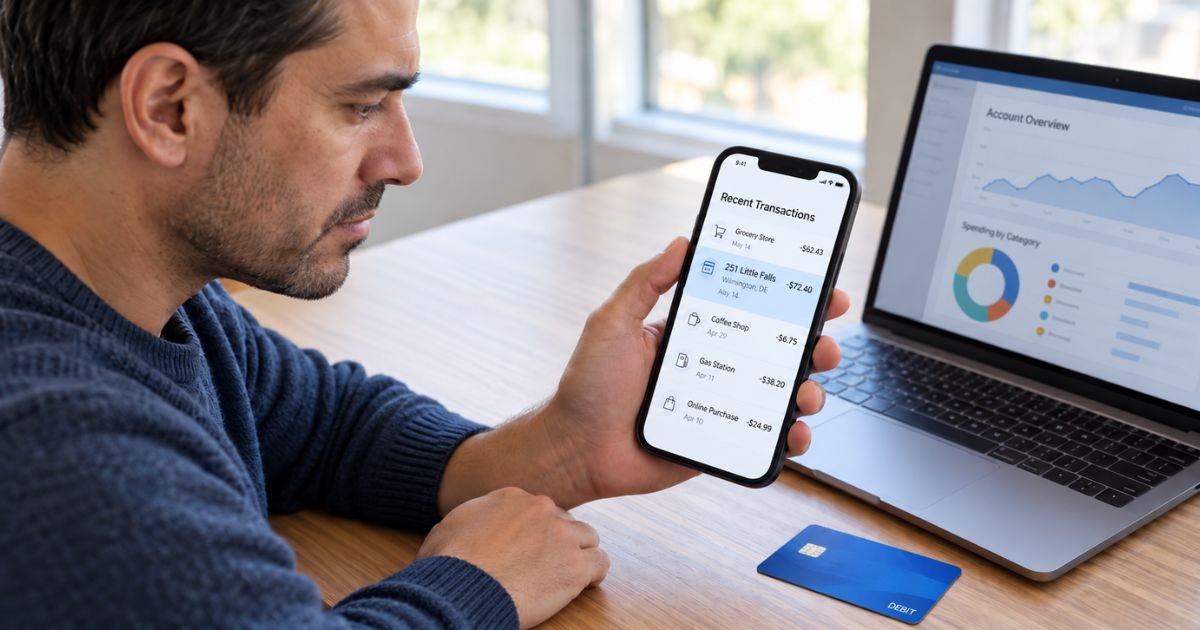
A 251 Little Falls charge on your debit card can feel confusing if you don’t recognize the address or remember shopping in Wilmington, Delaware. The address may relate to a company’s Delaware registration rather than a purchase you made at that physical location.
The address is strongly associated with Corporation Service Company, or CSC, which serves as a registered agent for many businesses. This guide explains what the address generally means, how to trace the merchant, and what to do if you didn’t authorize the charge.
Table of Contents
What Is a 251 Little Falls Charge on Debit Card?
A 251 Little Falls charge on debit card activity generally refers to a transaction showing 251 Little Falls Drive, Wilmington, DE 19808. That is the Delaware headquarters and registered-agent office of Corporation Service Company.
CSC provides registered-agent, compliance, filing, and other business services. Delaware state records also list CSC at this address.
However, you should not assume CSC itself charged your card. Many unrelated companies use CSC as their registered agent and list the same address in corporate records.
A bank or payment system may show part of a merchant’s legal address in your transaction details. That can make a familiar online purchase appear under an unfamiliar Delaware address.
Why Do So Many Companies Use 251 Little Falls Drive?
Delaware is a common state for forming corporations and LLCs. A Delaware business generally needs a registered agent with a physical address in the state.
CSC provides that service to many businesses. As a result, 251 Little Falls Drive may appear in records for companies that operate somewhere else.
The address alone generally does not identify what you purchased.
Pro Tip: Check the complete merchant descriptor, not just “251 Little Falls.” A company name, phone number, transaction category, or website fragment may reveal the real seller.
Is the Charge From Corporation Service Company?
It may be, but the address alone cannot confirm that.
If you own a business, you may have paid CSC directly for registered-agent services, filings, compliance work, UCC services, or another corporate service. CSC currently lists 800-927-9800 as a corporate contact number.
If you are a consumer with no CSC relationship, another merchant may be responsible. That merchant may simply use CSC’s Delaware address for registration purposes.
What Can a 251 Little Falls Descriptor Mean?
There is no reliable single company behind every charge showing this address. Your full statement wording matters.
| Statement clue | What it may mean |
|---|---|
| CSC or Corporation Service Company | Possible direct CSC service |
| 251 Little Falls only | Address-based merchant information |
| Company name plus 251 Little Falls | Merchant may use CSC as registered agent |
| Subscription name plus address | Possible online service renewal |
| Unknown name and address | More investigation is generally needed |
Could It Be an Online Purchase or Subscription?
Yes. A company selling software, memberships, digital products, financial services, or physical goods may have a Delaware entity tied to this address.
Your bank may show legal merchant information instead of the brand you remember. You may therefore recognize the amount even if you do not recognize Wilmington or Little Falls Drive.
Search your email for the exact amount and transaction date. Also check your PayPal, Apple Pay, Google Pay, Shop Pay, or other wallet history if you use those services.
A subscription may also renew under a legal company name that differs from its public brand.
Is a 251 Little Falls Charge Legitimate?
The address itself is legitimate. CSC’s official website and Delaware state records confirm Corporation Service Company at 251 Little Falls Drive.
BBB currently lists CSC as an accredited business with an A+ rating. BBB also shows consumer complaints, including billing and service complaints.
Trustpilot currently gives CSC a much lower consumer rating. Those reviews apply to CSC itself and do not establish whether an unrelated company using CSC’s address is trustworthy.
Public consumer reports about this exact descriptor are limited. You should verify your own charge instead of treating the address as proof of fraud or legitimacy.
How to Identify the Real Merchant
Open the transaction details in your banking app. Look for more than the address.
Check:
- Full merchant name
- Phone number
- Transaction amount
- Purchase and posting dates
- Merchant category
- Website or merchant ID
- Pending or posted status
Compare the amount with recent purchases and subscriptions. Ask another authorized user if they recognize it.
You can also call your bank and request the complete merchant descriptor. Your bank may see information that your mobile app does not display.
Common Mistakes: Don’t assume the first company you find at 251 Little Falls made the charge. Many businesses can share this registered-agent address, so you generally need another merchant clue.
What If You Own a Business?
If you operate an LLC or corporation, check your business records first. You may have paid for registered-agent services, corporate filings, compliance support, or another annual service.
Ask your accountant, attorney, business partner, or authorized employee whether they made the payment.
Search old invoices for CSC, Corporation Service Company, The Company Corporation, Incorporate.com, or any other formation provider you use. Do not assume a Delaware filing fee and a private service fee are the same charge.
What If You Don’t Recognize the Charge?
If nobody authorized to use your debit card recognizes the transaction, contact your bank promptly. Give the bank the exact descriptor, amount, and posting date.
Ask whether the bank can provide a merchant phone number, merchant ID, or additional location information. These details may identify the actual company.
If you believe your debit card information was stolen, ask whether your card should be locked or replaced. Continue watching your account for other unfamiliar transactions.
Can You Dispute a 251 Little Falls Debit Card Charge?
You can generally report an unauthorized debit card transaction to your bank. The outcome may depend on the facts, your account agreement, and how quickly you report it.
Debit card protections can have reporting deadlines. You should generally contact your bank as soon as you reasonably can when you notice an unfamiliar withdrawal.
If you recognize the merchant but believe the amount is wrong, you may need to contact the merchant first. Your bank can explain which dispute process applies.
How to Avoid Similar Mystery Charges
Turn on transaction alerts for your checking account. An immediate alert may help you connect an unfamiliar descriptor with a purchase you just made.
Keep receipts for subscriptions and online orders. If you run a business, maintain a list of registered-agent, compliance, and filing services with their renewal dates.
FAQs: 251 Little Falls Charge on Debit Card
Q. What is 251 Little Falls Drive in Wilmington, Delaware?
A. It is the headquarters and Delaware registered-agent address of Corporation Service Company. Many businesses may also use the address because CSC acts as their registered agent.
Q. Does a 251 Little Falls charge mean CSC charged me?
A. Not necessarily. CSC may have billed you if you purchased its services, but another company may use the same address in its corporate or merchant information.
Q. Why would an online purchase show a Delaware address?
A. The company may be incorporated in Delaware or use a Delaware registered agent. Your bank may show legal merchant information instead of the brand name you recognize.
Q. What should I do if I cannot identify the charge?
A. Ask your bank for the complete merchant descriptor and compare it with your receipts, subscriptions, and wallet history. If nobody authorized the transaction, report it promptly.
Conclusion
A 251 Little Falls charge on debit card activity generally points to merchant information connected with 251 Little Falls Drive, Wilmington, Delaware, the headquarters of Corporation Service Company. Because CSC serves as a registered agent for many businesses, the address does not identify one specific merchant.
Check the complete descriptor, transaction amount, subscriptions, receipts, and authorized users before drawing a conclusion. If you still cannot identify the charge, contact your bank promptly and ask for additional merchant details and dispute options.
Disclaimer: This article is for informational purposes only and is not financial or legal advice. Merchant descriptors, dispute rules, liability protections, and bank procedures may vary by issuer, so verify account-specific questions with the company involved or your bank.
Meet the Author
