
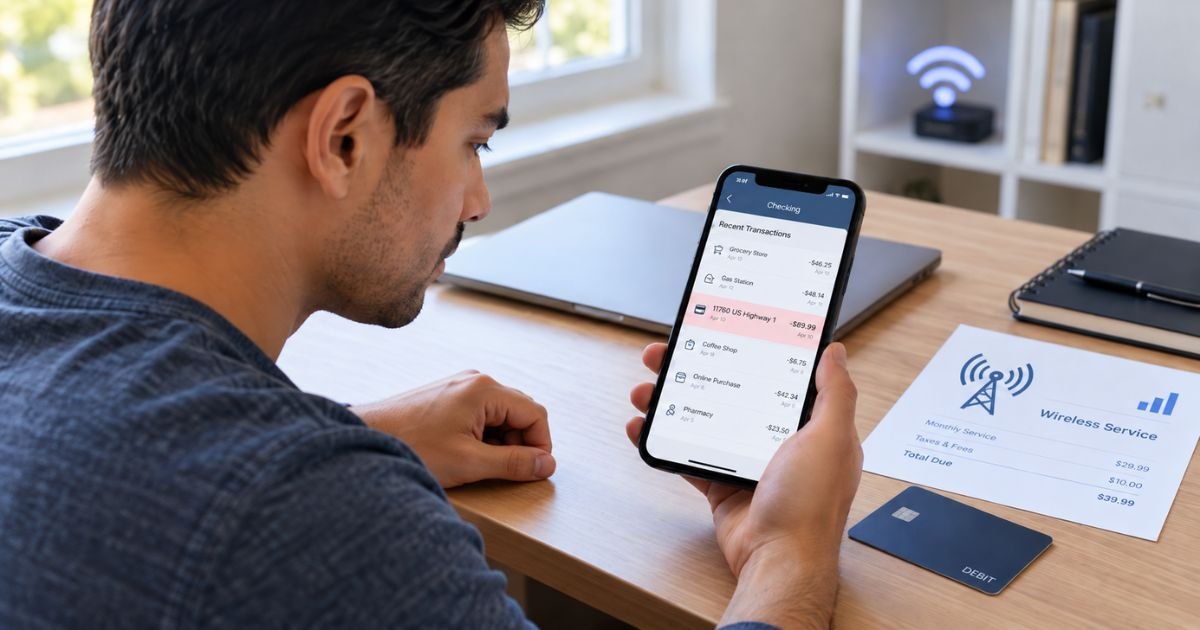
A 11760 US Highway 1 charge on your debit card can feel confusing if you do not remember buying anything in North Palm Beach, Florida. In many cases, the address may be connected to a Cricket Wireless payment or another AT&T wireless transaction.
The address has documented links to AT&T wireless operations. This guide explains the likely connection, other possibilities, and what to do if the transaction does not belong to you.
Table of Contents
What Is a 11760 US Highway 1 Charge on Debit Card?
A 11760 US Highway 1 charge on debit card activity may be a Cricket Wireless payment. Older records identify 11760 US Highway 1, Suite 600, North Palm Beach, Florida, as an AT&T wireless compliance location.
Cricket Wireless is an AT&T subsidiary. A publicly available debit card statement also shows CRICKET WIRELESS 11760 US Highway 1, which supports the connection between this address and Cricket billing descriptors.
However, the address alone does not prove that Cricket made your specific charge. The building has also been used by other businesses.
Why May Cricket Wireless Show This Address?
Card statements do not always display the name you remember. Your bank may receive a merchant address, legal business information, or payment-routing data.
That can make a normal phone payment look unfamiliar. Instead of seeing only “Cricket Wireless,” you may see the North Palm Beach address or a mixture of the company name and address.
The exact wording may vary by bank, card network, and payment method.
What Is the Connection Between Cricket and AT&T?
Cricket Wireless LLC is a subsidiary of AT&T. Current AT&T corporate filings continue to list Cricket Wireless LLC among AT&T’s principal subsidiaries.
Cricket sells prepaid wireless plans, phones, mobile hotspot service, and optional account features. If you use Cricket, compare the transaction amount with your normal monthly payment.
Common Reasons for the Charge
A Cricket-related transaction may come from:
- Your regular wireless plan
- Cricket Auto Pay
- A multi-month plan renewal
- A new line or device purchase
- A plan or feature change
- Cricket Protect or another feature
- A Quick Pay payment
- A payment for another person’s Cricket account
Cricket’s official payment page says Auto Pay can automatically charge the payment method tied to your account. Billing may occur monthly or on a multi-month schedule.
Pro Tip: Sign in to your Cricket account and compare the charge with your billing history. Match both the amount and date because the bank descriptor may look different from the name inside your Cricket account.
Why Did the Charge Appear Before Your Due Date?
Cricket states that Auto Pay transactions are generally charged before the payment due date. Its current disclosure says payments may be charged two days before the plan’s due date.
The earlier date does not necessarily mean you were billed incorrectly. Check your billing history and whether the bank transaction is pending or posted.
Could It Be From Something Other Than Cricket?
Yes. This is an important limitation of using a street address to identify a transaction.
11760 US Highway 1 is a commercial property in North Palm Beach. Public records show that unrelated organizations have also used suites at this address, including Bankrate in earlier years and other business entities.
| Statement clue | What it may suggest |
|---|---|
| Cricket Wireless + address | Strong Cricket connection |
| AT&T + address | Possible AT&T wireless transaction |
| Address only | Merchant is not confirmed |
| Recurring monthly amount | Check phone bills and subscriptions |
| Unknown one-time amount | Ask your bank for full merchant details |
Do not identify the merchant from the address alone if no Cricket or AT&T wording appears.
Is the Charge Legitimate?
The transaction may be legitimate if you have Cricket service or paid another person’s account. The address itself is not evidence of fraud.
However, a legitimate company name can also appear when someone uses your card without permission. If you have never used Cricket or AT&T, investigate the charge promptly.
BBB currently shows many Cricket Wireless complaints, including billing complaints. Trustpilot reviews also mention payment, fee, Auto Pay, and customer service issues.
Reddit users have reported both Auto Pay problems and Cricket charges they did not recognize. These are individual reports and cannot prove what happened on your account.
How to Verify the Charge
Open the full transaction details in your banking app. Look for the merchant name, amount, date, phone number, location, and whether the transaction is pending.
Then check your Cricket account if you have one. Also review:
- Email and text confirmations
- myCricket billing history
- PayPal activity
- Digital wallet history
- Family members’ Cricket accounts
- Recent phone or SIM purchases
If the amount matches a Cricket payment, that is a strong clue.
Common Mistakes: Do not assume every charge showing 11760 US Highway 1 is Cricket Wireless. Several organizations have used the address, so confirm the merchant name and payment details first.
How to Contact Cricket About the Charge
Cricket’s official support pages currently list 1-800-274-2538 for customer service. You can also use Cricket’s official website or myCricket app for billing support.
If Auto Pay is involved, review the Auto Pay settings on your account. Cricket says Auto Pay can be managed through its website, app, or customer support.
Do not provide your full debit card number to someone who contacts you unexpectedly.
How to Stop Future Auto Pay Charges
If you enrolled in Auto Pay but no longer want it, turn it off through your Cricket account. Cricket’s current disclosure says you should cancel Auto Pay at least five days before the payment due date to avoid another scheduled charge.
Stopping Auto Pay does not automatically cancel your wireless service. It only changes how future bills are paid.
What If You Never Had Cricket Wireless?
If you have never used Cricket and nobody authorized to use your card recognizes the payment, contact your bank.
Ask for the complete merchant descriptor. Your bank may see information that is not displayed in your app.
If the payment was not authorized, report it as an unauthorized transaction. Your bank may recommend blocking future transactions or replacing your debit card.
How to Dispute an Unauthorized Charge
Contact your bank using the number on the back of your debit card or its secure app. Give the bank the amount, date, and complete descriptor.
Debit card reporting deadlines can matter. Federal protections for consumer electronic transfers can depend on how quickly you report the problem.
Keep screenshots, bank messages, and any Cricket case or confirmation numbers.
FAQs: 11760 US Highway 1 Charge on Debit Card
Q. Is 11760 US Highway 1 a Cricket Wireless charge?
A. It may be. Historical AT&T records and a documented card statement connect this address with Cricket Wireless, but you should verify the full merchant descriptor.
Q. Why does Cricket show a Florida address instead of its name?
A. Your bank may display merchant address information or payment-routing data instead of only the brand name. Statement formatting can vary by issuer.
Q. Can the charge be an automatic Cricket payment?
A. Yes. Cricket offers Auto Pay, which can automatically charge your saved debit or credit card before your plan’s payment due date.
Q. What should you do if you do not have a Cricket account?
A. Ask other authorized card users first. If nobody recognizes the payment, contact your bank promptly and report it as potentially unauthorized.
Conclusion
A 11760 US Highway 1 charge on debit card activity may be connected to Cricket Wireless or another AT&T wireless transaction. The address has documented ties to AT&T wireless operations and has appeared with Cricket transactions.
Still, the property has also been used by other organizations, so the address alone cannot identify every payment. Check your Cricket billing history and full merchant descriptor, then contact your bank if the transaction remains unexplained.
Disclaimer: This article is for informational purposes only and is not financial or legal advice. Merchant descriptors, billing policies, refunds, and debit card dispute protections may vary by issuer, so verify account-specific questions with the company involved or your bank.
Meet the Author
