
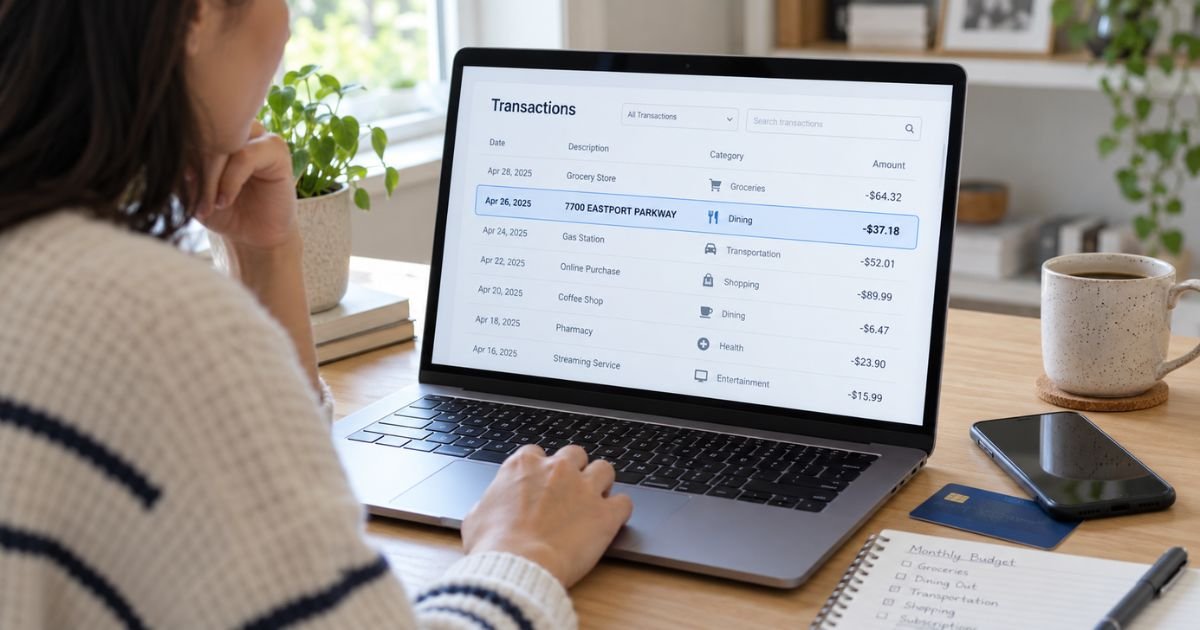
A PayPal 7700 Eastport Parkway charge on credit card can feel confusing if you never bought anything from a business with that name. In many cases, the address is connected with PayPal payment processing rather than the store, seller, or subscription you actually paid.
The fastest way to identify it is to compare the amount with your PayPal activity, email receipts, and recent online purchases. This guide explains what the address means, why it may appear without a recognizable merchant name, and what to do if the charge is not yours.
Table of Contents
What Is a PayPal 7700 Eastport Parkway Charge on Credit Card?
A PayPal 7700 Eastport Parkway charge on credit card generally points to a transaction connected with PayPal or a merchant using PayPal to process card payments.
The Better Business Bureau currently lists PayPal, Inc. at 7700 Eastport Pkwy, La Vista, Nebraska 68128-4397 as one of PayPal’s locations. PayPal’s headquarters is separately listed in San Jose, California.
This means you probably did not purchase something called “7700 Eastport Parkway.” Your bank may simply be displaying PayPal’s processing information instead of the name of the business that sold the product or service.
PayPal officially confirms a similar statement pattern involving its 402-935-7733 number. PayPal says this number may appear when you make a PayPal purchase or when a merchant uses PayPal as its credit card processor.
What Does the Charge Look Like?
Banks format card descriptors differently. Your issuer may shorten the address, add a phone number, or include part of the seller’s name.
Reported variations include:
| Statement wording | What it may indicate |
|---|---|
| 7700 EASTPORT PARKWAY | Payment associated with PayPal processing |
| 7700 EASTPORT PKWY | Shortened version of the address |
| 7700 EASTPORT PARKWAY 4029357733 | PayPal-related processing information |
| PAYPAL *MERCHANTNAME | PayPal payment with the seller identified |
| PP*MERCHANTNAME | Shortened PayPal merchant descriptor |
| PENDING 7700 EASTPORT PARKWAY | Transaction that has not fully posted |
Charge-identification databases report these variations, but PayPal does not guarantee one exact statement format. Your bank ultimately controls how much of the merchant data you see.
Pro Tip: Focus on the transaction amount before the posting date. A PayPal payment can post later than the day you originally placed an online order.
Why Does an Address Appear Instead of the Seller?
PayPal can act as the payment processor between you and an online business. Your card therefore may be charged through PayPal even though you remember shopping on another website.
PayPal says merchants can use its payment services to accept cards, and the card statement information can depend on merchant settings and the customer’s bank.
A 7700 Eastport Parkway entry could therefore relate to:
- An online store purchase.
- A marketplace seller.
- A donation.
- A digital product.
- A recurring subscription.
- A merchant that processed your card through PayPal.
- A purchase completed through PayPal guest checkout.
The address alone does not identify the underlying item or seller.
Could It Be a PayPal Guest Checkout Purchase?
Yes. This is especially important if you cannot find the transaction inside your PayPal account.
PayPal says a transaction on your credit or debit card statement may have been completed through guest checkout when it does not appear in your PayPal account. Guest checkout lets a merchant use PayPal as the processor without requiring you to sign in to PayPal.
You may therefore have a legitimate PayPal-processed transaction even if:
- You do not regularly use PayPal.
- You were not logged in to PayPal.
- The seller’s checkout page looked like a normal card form.
- The transaction does not appear in your PayPal Activity.
Search the email address you used at checkout. You may find an order confirmation or PayPal guest-payment receipt.
Common Mistakes: Do not assume a transaction is fraudulent only because it is missing from your PayPal Activity. PayPal officially says guest checkout transactions may not appear there.
How to Identify the Exact Merchant
Start by noting the exact amount, posting date, and complete statement descriptor. Open the transaction details through your bank because the mobile transaction list may shorten important information.
If you have a PayPal account:
- Sign in through the official PayPal site or app.
- Open Activity.
- Look for a payment matching the amount and approximate date.
- Open the payment details.
- Check the seller’s name and contact information.
PayPal specifically recommends comparing statement charges containing its 402-935-7733 identifier with your recent PayPal activity.
If nothing matches, search your email for the exact amount, “PayPal,” “receipt,” and the date. Check online orders, donations, subscriptions, and purchases made by another authorized cardholder.
Could the Charge Be a Subscription?
Yes. PayPal supports automatic payments, which may also be called subscriptions, recurring payments, or billing agreements.
PayPal says an automatic payment allows a merchant to charge your PayPal payment method without requiring you to sign in for every payment. You can review these agreements in your account under Subscriptions and saved businesses or the automatic-payment settings.
If you see the same 7700 Eastport Parkway amount monthly or annually, check your recurring agreements.
Look for:
- Streaming subscriptions.
- Software plans.
- Memberships.
- Online services.
- Donations.
- Trial subscriptions that converted to paid plans.
If you find the merchant, PayPal lets you cancel the automatic-payment authorization from the relevant merchant settings. Canceling future PayPal payments may not automatically settle any amount already owed under a separate agreement with the merchant.
What If You Do Not Recognize the Charge?
Do not ignore a posted charge that you cannot explain.
First ask other authorized card users whether they made the purchase. Also check recurring payments and guest-checkout purchases.
If you still believe the transaction was unauthorized, PayPal says to report it through the Resolution Center. You can select the payment and choose the option for unauthorized activity.
You should also contact your credit card issuer using the phone number printed on the back of the card. Tell the issuer you cannot identify the transaction and ask whether it recommends replacing or locking the card.
PayPal also recommends changing your password and reviewing account security if you believe your PayPal account has been compromised.
What If You Recognize the Seller but Have a Problem?
A purchase dispute is different from unauthorized card use.
If you made the purchase but did not receive the item, received something significantly different, were charged twice, or have a subscription problem, choose the dispute reason that accurately describes what happened.
PayPal’s Resolution Center supports categories including unauthorized activity, purchase problems, seller issues, billing errors, and subscription problems.
If you simply want a refund for a completed payment, PayPal generally directs you to contact the seller first. Seller contact details can usually be found by opening the payment in your Activity.
Keep receipts, emails, tracking information, cancellation confirmations, and screenshots until the matter is resolved.
Is PayPal at 7700 Eastport Parkway Legitimate?
Yes. The address itself has a documented connection with PayPal.
The BBB lists PayPal, Inc. at 7700 Eastport Parkway in La Vista, Nebraska, among its company locations. The same BBB profile identifies PayPal as an accredited payment-processing business with an A rating when checked.
However, a legitimate PayPal descriptor does not prove that you personally authorized the underlying purchase. Someone with stolen card information could potentially make a payment involving a legitimate processor.
BBB reported more than 26,000 PayPal complaints over the prior three years when checked. Those complaints cover many topics and should not be treated as proof that a particular Eastport Parkway charge is wrong.
Trustpilot currently shows more than 41,000 PayPal reviews and a TrustScore around 1.4 out of 5. Recent reviews frequently mention customer service, disputes, account restrictions, and unauthorized payments, but these user-submitted reports do not establish what happened with your transaction.
Reddit evidence specifically about 7700 Eastport Parkway is limited. Discussions involving PayPal’s 402-935-7733 identifier show that consumers sometimes become confused when PayPal processing information appears instead of a familiar seller name. These posts are anecdotal and should not replace your PayPal or bank records.
FAQs: PayPal 7700 Eastport Parkway Charge on Credit Card
Q. Is 7700 Eastport Parkway really connected to PayPal?
A. Yes. The BBB lists PayPal, Inc. at 7700 Eastport Parkway in La Vista, Nebraska. It is a PayPal location, although it is not the company’s listed headquarters.
Q. Why can’t I find the charge in my PayPal account?
A. You may have paid through PayPal guest checkout without logging in. PayPal says guest transactions can appear on your card even when you cannot find them in your PayPal account.
Q. Can 7700 Eastport Parkway be a recurring charge?
A. Yes. A merchant using PayPal can have an automatic-payment agreement that bills your card through PayPal. Review your subscriptions and saved businesses in PayPal to identify recurring merchants.
Q. What should I do if the charge is not mine?
A. Check authorized card users, PayPal Activity, guest-checkout receipts, and automatic payments first. If the payment still appears unauthorized, report it through PayPal’s Resolution Center and contact your credit card issuer promptly.
Conclusion
A PayPal 7700 Eastport Parkway charge on credit card usually indicates a purchase processed through PayPal rather than a purchase from a company named after that address. The actual seller may be an online retailer, subscription service, marketplace merchant, or other business using PayPal.
Compare the amount with your PayPal activity, email receipts, guest-checkout purchases, and recurring payments. If you still cannot identify the transaction, report it promptly to PayPal and your credit card issuer.
Disclaimer: This article is for informational purposes only and is not financial or legal advice. Merchant descriptors, PayPal dispute procedures, refunds, and credit card protections may vary, so verify account-specific questions with PayPal or your card issuer.
Meet the Author
