
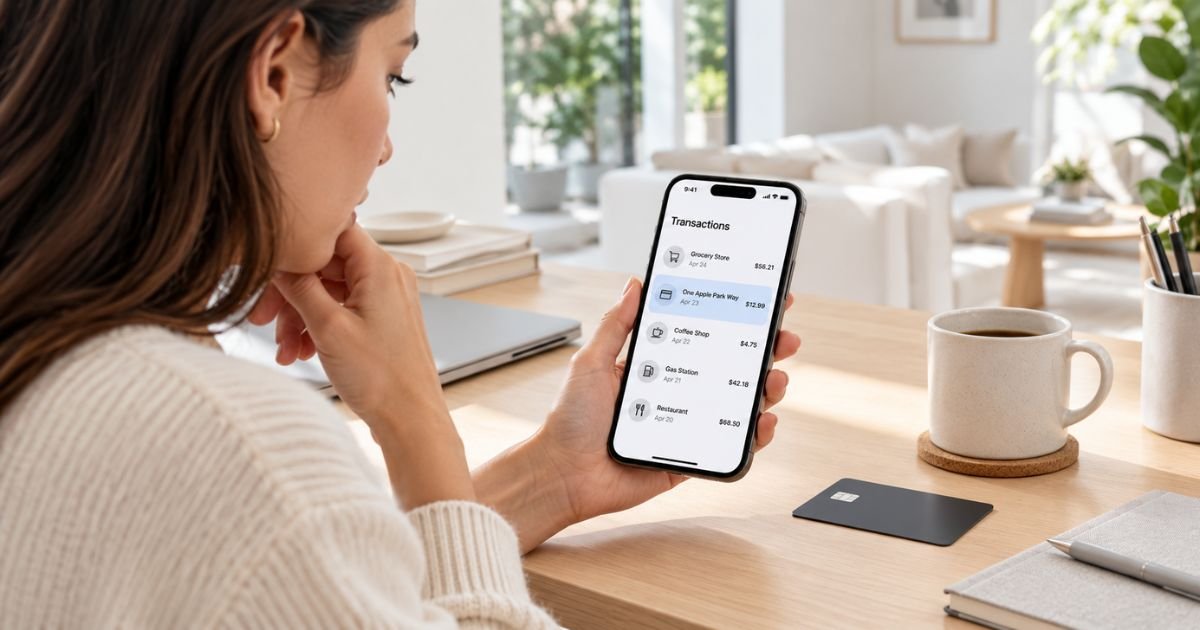
A One Apple Park Way Charge On Debit Card can feel confusing if you don’t remember buying anything from Apple. In many cases, the address points to a legitimate Apple purchase, subscription, or App Store transaction, but you should verify the charge before assuming that.
You can usually identify the payment through your Apple purchase history, subscriptions, receipts, and Family Sharing activity. If nothing matches, you can contact Apple and your bank to investigate possible unauthorized use.
Table of Contents
What Is the One Apple Park Way Charge On Debit Card?
One Apple Park Way is Apple’s official corporate address in Cupertino, California. Apple lists its corporate address as One Apple Park Way, Cupertino, CA 95014 on its official contact page.
Because this is Apple’s address, a debit card transaction containing “One Apple Park Way” may be connected to Apple. However, Apple doesn’t appear to publish a complete directory showing every possible bank statement descriptor.
Your bank may shorten or rearrange merchant information. You might therefore see the Apple name, APPLE.COM/BILL, Cupertino, or address information in different combinations.
Apple confirms that an apple.com/bill charge can relate to apps, subscriptions, music, movies, and other purchases from Apple.
What Could the Charge Be For?
You shouldn’t identify the purchase from the address alone. Several types of Apple transactions may ultimately appear as Apple-related charges on your debit card.
| Possible source | What you should check |
|---|---|
| App Store purchase | Your Apple purchase history |
| In-app purchase | Apps or games you recently used |
| App subscription | Your active and expired subscriptions |
| Apple Music | Your subscription settings |
| Apple TV+ | Your subscription settings |
| iCloud+ | Your iCloud storage plan |
| Movies or other media | Apple purchase history |
| Family purchase | Family Sharing purchase history |
| Several Apple purchases | A grouped Apple bill |
Apple specifically says multiple purchases and subscriptions can be grouped into one bill. That can make the amount on your debit card statement look unfamiliar even when every item is legitimate.
For example, you might buy an app and renew a subscription on separate days. Apple may combine those transactions, so your bank statement amount may not match either item by itself.
How to Identify a One Apple Park Way Charge
Your fastest option is usually to check Apple’s purchase history.
Apple says you can sign in at its Report a Problem website and review purchases connected with your Apple Account. You can also search your purchase history using the exact dollar amount shown on your bank statement.
You should check these places:
- Your Apple purchase history
- Your current and expired subscriptions
- Apple receipts in your email
- Other Apple Accounts you use
- Family Sharing purchases
- Recent in-app purchases
- Your Apple Store orders, if applicable
If you’re using an iPhone, you can also open the App Store, tap your account photo, choose Apps & Purchase History, and open Purchase History. Apple lets you adjust the date range if the transaction is older than the default view.
Pro Tip: Search your Apple purchase history by the exact debit card amount before searching by app name. Apple may combine several smaller purchases into one charge.
Check Family Sharing Before Reporting Fraud
A family member’s purchase may explain an unfamiliar Apple charge.
Apple says that if you use Family Sharing with Purchase Sharing enabled, you can review purchases made by family members. An unfamiliar charge can also come from someone who has access to your device.
You should ask family members whether they purchased an app, game item, movie, or subscription.
If someone is using your Apple Account without your permission, you should change your Apple Account password. Apple recommends securing your account when another person may have access.
Could It Be a Subscription Renewal?
Yes. A subscription renewal is one of the more common explanations for an unexpected Apple-related charge.
You may have started a free or discounted trial and forgotten that it would renew. You may also have an older app subscription that you no longer use.
On an iPhone, you can generally check by going to:
Settings > Your Name > Subscriptions
Choose the subscription to see its status. If you want to stop future billing, select Cancel Subscription when that option appears. Apple says that if you don’t see a Cancel button and instead see an expiration message, the subscription is already canceled.
Canceling generally prevents future renewals. It doesn’t automatically reverse a payment that has already been charged.
Common Mistakes: Don’t assume deleting an app cancels its subscription. You should cancel the subscription through your Apple subscription settings when Apple is handling the billing.
Can You Get a Refund for the Charge?
Possibly. Apple says certain App Store and iTunes Store purchases may be eligible for a refund.
You can generally sign in through Apple’s Report a Problem service and submit a refund request for an eligible purchase. Approval can depend on the purchase and circumstances.
Don’t assume every unexpected renewal will automatically be refunded. Consumer reviews show that some customers report unsuccessful refund requests, particularly for subscriptions and renewals.
Trustpilot reviews of Apple and Apple Support include complaints involving subscription billing, unexpected renewals, and rejected refund requests. These reports are individual consumer accounts, so they don’t establish whether your particular charge is incorrect.
Is One Apple Park Way a Legitimate Apple Address?
Yes. You can independently verify the address through Apple’s official website.
Apple lists:
Apple
One Apple Park Way
Cupertino, CA 95014
Apple’s legal pages also identify Apple Inc. at One Apple Park Way for the United States.
The Better Business Bureau profile for Apple Inc. also lists the company’s Cupertino location at 1 Apple Park Way. BBB contains thousands of consumer complaints covering Apple products, services, billing, and other issues.
That confirms the address is associated with Apple. It doesn’t prove that every transaction displaying the address was authorized by you.
What Consumers Report About This Charge
You aren’t the only person who may find the wording confusing.
Apple’s own Community forums include reports from users who saw descriptions containing wording such as APPLE COM ONE and APPLE PARK WAY on their bank statements. Some users reported that they initially couldn’t connect the transaction to their Apple purchase history.
Reddit users have also discussed Apple Park Way entries and reported finding matching amounts after reviewing their Apple purchase history. These reports are anecdotal and shouldn’t be treated as proof of what caused your transaction.
The recurring theme is useful, however. You should check your Apple purchase history and subscriptions before deciding that the transaction is fraudulent.
What If You Cannot Find the Charge in Your Apple Account?
Check whether you have another Apple Account.
Apple says purchases sometimes don’t appear because you bought the item using a different Apple Account. You can search your email for an Apple receipt or invoice and check which account appears on it.
You should also compare the exact amount and date. A purchase may reach your debit account several days after you originally made it.
If you still can’t identify the transaction, contact Apple Support through Apple’s official support site. Apple provides dedicated billing and subscription help for unfamiliar charges.
Avoid calling phone numbers taken from suspicious emails or text messages. Use Apple’s official website or your bank’s official app instead.
What If You Never Authorized the Charge?
You should act promptly if you’ve checked your Apple Accounts, Family Sharing, receipts, and subscriptions and still believe the debit was unauthorized.
Contact your bank or credit union and clearly state that you didn’t make or authorize the transaction. You may also want to lock or replace your debit card if you believe its information has been compromised.
The Consumer Financial Protection Bureau says you should notify your financial institution right away about unauthorized debit card transactions.
When your physical card hasn’t been lost or stolen, you generally must notify your institution within 60 days after it sends the statement showing the unauthorized transaction to preserve important federal protections.
If your debit card itself was lost or stolen, the timing can be more urgent. Reporting the loss within two business days generally limits your potential liability under federal rules.
FAQs: One Apple Park Way Charge On Debit Card
Q. Is One Apple Park Way an Apple charge?
A. The address belongs to Apple Inc. in Cupertino, California. A transaction showing that address may therefore be Apple-related, but you should verify the exact purchase through your Apple Account before assuming what caused it.
Q. Why did Apple charge your debit card when you didn’t buy anything?
A. You may have a subscription renewal, grouped purchase, Family Sharing purchase, in-app purchase, or transaction connected with another Apple Account. Apple recommends reviewing your purchase history and family purchases when a charge looks unfamiliar.
Q. How do you stop One Apple Park Way charges?
A. If the charge comes from an Apple-billed subscription, you can generally stop future renewals through Settings > Your Name > Subscriptions. Choose the subscription and tap Cancel Subscription if the option is available.
Q. Should you dispute a One Apple Park Way debit card charge?
A. You should generally identify the transaction first. If you can’t match it to any purchase and you didn’t authorize it, contact Apple and notify your bank promptly so the transaction can be investigated.
Conclusion
A One Apple Park Way Charge On Debit Card generally deserves a quick check rather than immediate panic. One Apple Park Way is Apple’s verified corporate address, and the charge may relate to an app, subscription, grouped purchase, or family transaction.
You should compare the amount with your Apple purchase history, receipts, subscriptions, and Family Sharing activity. If nothing matches and you didn’t authorize the payment, contact Apple and your bank promptly to protect your debit account.
Disclaimer: This article is for informational purposes only and isn’t financial or legal advice. Apple billing practices and bank dispute policies may vary, so verify account-specific questions with Apple or your bank.
Meet the Author
