
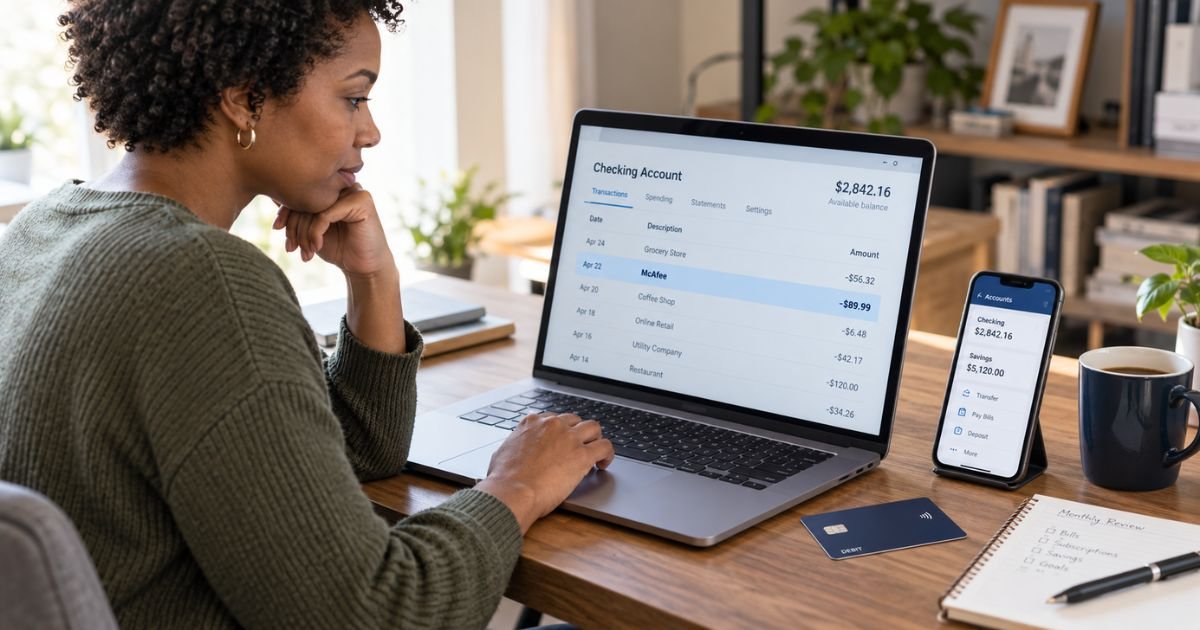
A McAfee charge on debit card statement can feel confusing if you don’t remember buying antivirus software recently. In many cases, the charge is connected to a current or older McAfee subscription that renewed automatically.
That doesn’t mean you should ignore a charge you don’t recognize. This guide explains what it usually means, how to verify it, how to stop future billing, and what to do if the transaction isn’t yours.
Table of Contents
What Is a McAfee Charge on Debit Card Statement?
A McAfee charge on debit card statement typically means your card was billed for a McAfee security or privacy subscription. McAfee sells antivirus, device security, identity monitoring, and related consumer services.
The charge may be for a new purchase or an automatic renewal. The exact merchant description can vary by bank and payment processor.
| Statement Description | What It May Mean |
|---|---|
| MCAFEE | Direct McAfee purchase or subscription |
| MCAFEE AUTORENEWAL | Automatic subscription renewal |
| MCAFEE*AUTORENEWAL | Automatic renewal processed by McAfee |
| Other McAfee wording | Descriptor may vary by bank or processor |
A statement descriptor is simply the shortened merchant name shown by your bank. It may not match the exact product name you remember buying.
Why Did McAfee Charge Your Debit Card?
The most common reason is automatic renewal. McAfee subscriptions bought directly from the company may renew automatically unless you turn that feature off.
Some computers come with McAfee preinstalled. A trial or promotional offer may later lead to a paid subscription if billing was set up.
Other possible reasons include:
- You bought McAfee directly online.
- You renewed an older subscription.
- A family member used your debit card.
- You have more than one McAfee subscription.
- A previous subscription remained set to auto-renew.
- Someone used your debit-card information without permission.
You can usually narrow down the cause by checking your McAfee account and email receipts.
Why Is the McAfee Renewal More Than You Expected?
Your renewal price may be different from the amount you originally paid. Introductory prices and promotional discounts generally don’t guarantee the same price for later terms.
McAfee says renewal pricing can change. Check your account and renewal notice for the amount tied to your subscription.
A higher renewal doesn’t automatically mean the charge is fraudulent. It may simply reflect the current renewal price.
Pro Tip: Search every email address you use for “McAfee,” “renewal,” “subscription,” and “receipt.” An older email account may help you match the debit-card charge to a forgotten subscription.
How to Check Whether the McAfee Charge Is Legitimate
Start with your McAfee account rather than a link in an unexpected email. Go to McAfee’s official website yourself and sign in.
Check your subscriptions, renewal status, and recent orders. Compare them with the date and amount on your bank statement.
You should also:
- Search your email for McAfee receipts.
- Ask household members if they bought or renewed McAfee.
- Check whether McAfee came with a computer you purchased.
- Look for older subscriptions under another email address.
- Compare payment details when available.
If you can’t match the transaction, contact McAfee through its official support site. Avoid phone numbers in unexpected renewal emails because fake McAfee invoices are a known phishing tactic.
McAfee Email Invoice vs. a Real Debit Card Charge
A renewal email does not automatically mean money left your bank account. Scammers sometimes send fake antivirus invoices to pressure you into calling a fraudulent support number.
Check your bank account directly. If no McAfee transaction appears there, the email may be a scam attempt rather than an actual charge.
Don’t call a number in a suspicious invoice or share bank login details, one-time codes, or your debit-card number.
If a real charge appears, use McAfee’s official website and your bank’s official app or phone number to investigate it.
How to Cancel McAfee Auto-Renewal
If the charge belongs to you but you don’t want another renewal, you can generally turn off auto-renewal from your McAfee account.
McAfee’s current account instructions generally involve these steps:
- Sign in to your McAfee account.
- Open the Subscriptions section.
- Find the unwanted subscription.
- Select the cancellation option.
- Choose Cancel Auto-Renewal.
- Save the confirmation.
Turning off auto-renewal normally stops the next renewal. It generally does not immediately end the paid time remaining on your current subscription.
McAfee recommends making the change more than 30 days before the subscription expires. Subscriptions billed by an app store or another provider may need to be canceled through that provider.
Can You Get a Refund for a McAfee Charge?
You may qualify for a refund depending on how and when you bought the subscription. McAfee currently says eligible annual subscribers who purchased directly from McAfee can generally request a full refund within 30 days of the initial purchase.
For an annual subscription that automatically renewed, McAfee currently allows eligible customers to request a refund of the most recent renewal within 60 days of the charge. Product type, purchase channel, location, and subscription terms can affect eligibility.
Contact McAfee Customer Service through the official website if you believe you qualify. Purchases made through an app store or another seller may need to be handled by that provider.
Keep your order confirmation, cancellation record, and refund correspondence. These records may help if the refund doesn’t appear as expected.
What If You Never Authorized the McAfee Charge?
If you can’t connect the transaction to any McAfee account or household purchase, treat it as potentially unauthorized. Because a debit-card transaction can remove money directly from your checking account, contact your bank promptly.
Ask your bank how to dispute the transaction. It may also recommend locking or replacing the card if your card details may have been compromised.
You should generally:
- Review nearby transactions for other unfamiliar charges.
- Lock the debit card if your bank offers that feature.
- Report the transaction through your bank’s official fraud channel.
- Ask whether a replacement card is appropriate.
- Keep copies of McAfee and bank communications.
Don’t file a fraud claim just because you forgot about a subscription. First check whether the charge is a legitimate renewal, unless other suspicious activity makes immediate card protection necessary.
Common Mistakes: Don’t rely only on uninstalling McAfee software to stop billing. Removing the app from your computer generally doesn’t cancel the subscription or turn off auto-renewal.
What Consumers Report About McAfee Billing
Consumer reports on BBB, Trustpilot, and Reddit include recurring complaints about unexpected renewals, cancellation difficulty, refund delays, and charges users say they didn’t expect. Some consumers also report receiving refunds after contacting McAfee.
These reports are individual experiences and don’t prove that every unfamiliar McAfee charge is improper. Keep cancellation confirmations and review your statements after changing renewal settings.
McAfee is a real cybersecurity company, so seeing its name on your statement isn’t automatically a scam. The key question is whether you or someone authorized to use your card agreed to the purchase or renewal.
FAQs: McAfee Charge on Debit Card Statement
Q. Why is McAfee taking money from my bank account?
A. A McAfee debit-card charge is usually connected to a purchase or subscription renewal. Check your McAfee account, old receipts, and auto-renewal settings to identify the transaction.
Q. How do I stop McAfee from charging my debit card?
A. Sign in to your McAfee account and turn off auto-renewal for the relevant subscription. If another company bills the subscription, you generally need to cancel through that provider.
Q. Can I dispute a McAfee charge with my bank?
A. Yes, if you believe the transaction was unauthorized or you can’t resolve an incorrect charge with the merchant. Bank dispute rules and deadlines may vary, so contact your bank promptly.
Q. Does uninstalling McAfee cancel the subscription?
A. Usually not. Uninstalling removes the software from your device, while billing is managed separately through your McAfee account or the provider that sold the subscription.
Conclusion
A McAfee charge on debit card statement is typically linked to a McAfee purchase or automatic subscription renewal. You can usually identify it by checking your account, email receipts, and renewal settings.
If the charge is yours, you can turn off future auto-renewal and check whether you qualify for a refund. If you can’t recognize it, contact McAfee through official support and notify your bank promptly if you believe your debit card was used without permission.
Disclaimer: This article is for informational purposes only and isn’t financial or legal advice. Billing, refund, and dispute policies may vary by company and card issuer, so verify account-specific questions directly with McAfee or your bank.
Meet the Author
