
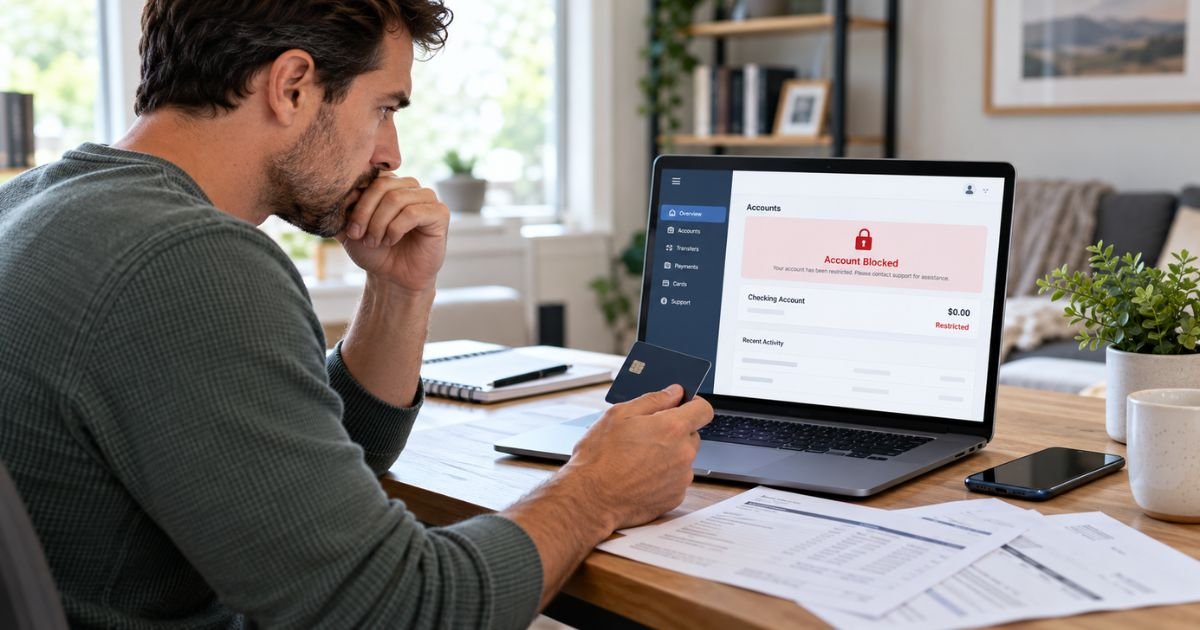
How to withdraw money from a blocked account can feel confusing if your balance is visible but your card, ATM withdrawal, or transfer will not work. A blocked account does not always mean your money is gone.
You generally need the bank or the authority behind the restriction to release the funds before you can withdraw them. This guide explains common blocks, lawful ways to restore access, and what to do if fraud, garnishment, or an account closure is involved.
Table of Contents
How to Withdraw Money from a Blocked Account: What It Means
A blocked bank account generally means some or all account functions have been restricted. You may still see your balance while withdrawals, debit purchases, checks, ACH transfers, or wires are unavailable.
“Blocked,” “restricted,” and “frozen” may mean different things at different banks. A debit card block may affect only the card, while a full account restriction can stop most outgoing transactions.
First Find Out What Is Blocked
Before trying another withdrawal, identify the exact restriction.
| Type of restriction | What may stop working | Usual next step |
|---|---|---|
| Debit card block | Purchases and ATM withdrawals | Verify activity or unlock/replace card |
| Security review | Most outgoing transactions | Complete bank verification |
| Deposit hold | Recently deposited funds | Resolve the deposit or wait for availability |
| Garnishment | Legally restricted balance | Review order and possible exemptions |
| IRS levy | Levied balance | Contact the IRS |
| Account closure | Normal account access | Ask how remaining funds will be returned |
Call your bank using the number on your card, statement, or official website. Ask whether the restriction applies to the card, one deposit, a specific amount, or the entire account.
Can You Withdraw Money While the Account Is Blocked?
You generally cannot withdraw money that is subject to a valid block. Another ATM, check, or transfer usually will not bypass the restriction.
A partial block may leave some funds available. Certain directly deposited federal benefits may also remain protected from many garnishment orders.
Pro Tip: Ask for your “available balance,” not only your current balance. Your app may show money that is present but temporarily unavailable.
How to Remove a Bank Security Block
Banks may restrict an account after suspicious activity or possible unauthorized access. You may need to confirm transactions or verify your identity.
The bank may ask for photo ID, an address check, security answers, or documents supporting a payment or deposit. Requirements vary by institution and by the reason for the block.
Use only official banking channels. Never give a password, PIN, or one-time security code to an unexpected caller or message. Federal banking guidance warns that phishing scams commonly impersonate financial institutions to obtain account information.
What If a Check or Deposit Caused the Block?
A suspicious or returned check can trigger a deposit hold or broader account review. A displayed balance does not always mean the money is fully collected and ready to withdraw.
Ask which deposit caused the restriction and whether other money remains available. Keep receipts, invoices, or messages that show why you received the payment.
Common Mistakes: Do not spend money from an unfamiliar check simply because the balance appears in your account. A bank may reverse the credit if the check is later returned or found to be fraudulent.
What If Your Account Is Blocked by a Garnishment?
A garnishment is different from a bank security review. State law generally controls the notice, deadlines, and exemptions that apply.
If you did not receive paperwork, ask your bank for a copy of the garnishment order. The notice may explain which court or creditor is involved and how to claim an exemption.
Certain directly deposited federal benefits, including Social Security, SSI, some Veterans benefits, and certain federal retirement payments, generally receive special protection from many garnishments. Your bank may be required to keep the protected amount available.
Do not move or hide money to defeat a valid court order. Use the exemption or court process that applies to your situation.
What If the IRS Blocked the Money?
An IRS bank levy generally reaches money in the account when the levy is served. For a standard bank levy, the bank generally holds the affected money for 21 calendar days before sending it to the IRS.
That period may give you time to contact the IRS if the levy is wrong or creates qualifying hardship. Money deposited after that levy is served is generally not reached by the same levy.
What If the Bank Closed the Account?
A closed account is different from a temporary restriction. Your debit card, checks, and transfers generally stop working once the relationship ends.
The bank may return an eligible remaining balance after pending items and valid charges are handled. If a fraud investigation or legal hold remains, release of the money may take longer.
Ask how the remaining balance will be returned and keep your contact information current.
Can You Go to a Branch and Take the Money Out?
A branch visit may help when the problem involves identity verification. Bring government-issued photo ID and any documents the bank requested.
A teller generally cannot override a fraud, compliance, court, or government restriction. However, branch staff may help verify you or identify the department handling the block.
Ask whether any unrestricted balance can be paid in cash or by official check.
How Long Does It Take to Unblock an Account?
There is no single timeline for every blocked account. A card security alert may clear quickly, while a fraud review, garnishment, levy, or legal dispute can take longer.
Ask what information the bank still needs and keep proof that you submitted it.
What If the Bank Will Not Release Your Money?
Keep a record of the date the block began, messages, letters, transaction amounts, case numbers, and the departments you contacted. Ask for the bank’s written escalation or complaint process.
If the problem remains unresolved, you can generally submit a complaint to the Consumer Financial Protection Bureau. National bank and federal savings association customers may also use the Office of the Comptroller of the Currency complaint process.
If a court judgment, bankruptcy, ownership dispute, or large balance is involved, consider legal aid or a consumer attorney.
How to Protect Yourself While the Account Is Blocked
Contact important billers if automatic payments may fail. Ask whether you can use another payment method while the bank reviews the restriction.
If wages or benefits are going into the blocked account, ask whether new deposits will also be restricted. You may need to update future direct deposits to another account you lawfully control.
Avoid anyone who promises to “unlock” your bank account for an upfront fee. Account-block messages are also used in phishing and bank impersonation scams.
FAQs: How to Withdraw Money from a Blocked Account
Q. Can you withdraw money from a blocked bank account at an ATM?
A. Usually not if the account or debit card is blocked. An ATM generally cannot override a bank restriction, legal freeze, or government levy.
Q. Can you transfer money from a blocked account to another bank?
A. Generally not if outgoing transfers are restricted. If only your debit card is blocked, other account functions may still work, so confirm the exact restriction with your bank.
Q. How do you get money out of a blocked account quickly?
A. First identify why the account is blocked. You may need to verify your identity, resolve a deposit problem, claim an exemption, or wait for the bank or issuing authority to release the restriction.
Q. Does a blocked account mean you lost your money?
A. Not necessarily. Your balance may still belong to you even when access is restricted, but legal orders, returned deposits, fees, or disputes can affect how much is ultimately available.
Conclusion
How to withdraw money from a blocked account depends on what caused the restriction. You generally cannot bypass a valid block, but you may restore access by completing verification, resolving a deposit issue, claiming protected funds, or following the required legal process.
Contact the bank through an official channel and ask exactly what is blocked. Keep records and act quickly on legal notices or unresolved account problems.
Disclaimer: This article is for general informational purposes only and is not financial or legal advice. Bank policies and federal or state rules may vary, so verify account-specific questions with your bank, the relevant agency or court, or a qualified attorney.
Meet the Author
