
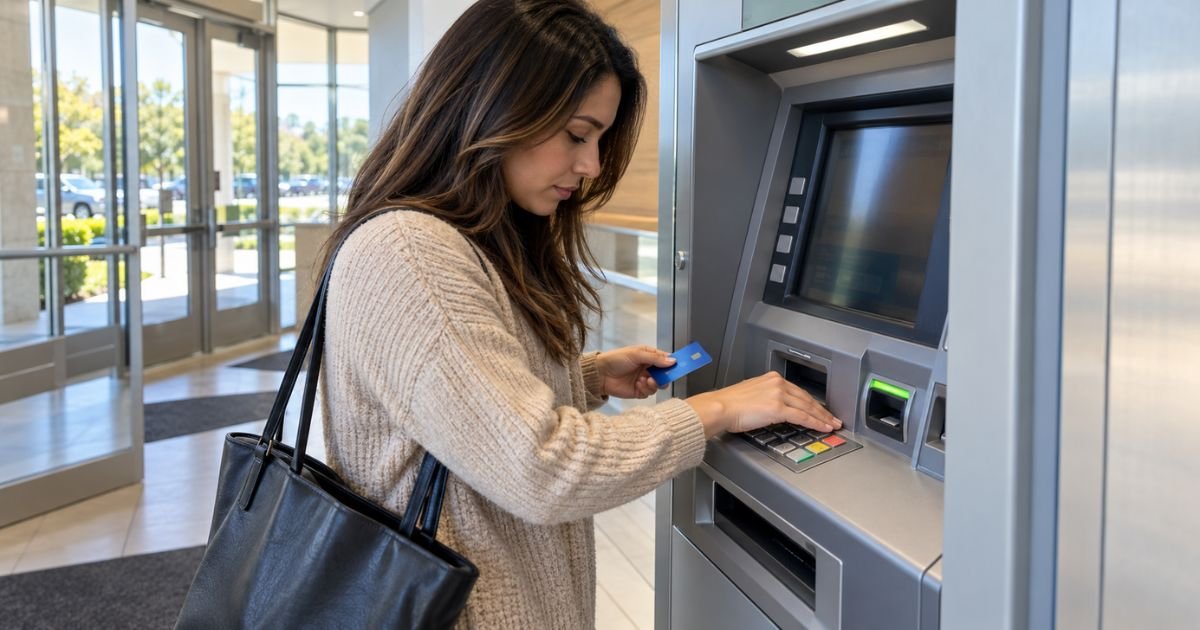
Learning how to use an ATM to withdraw money can feel confusing if you do not use cash often. The process is generally simple once you know which card, account, and menu options to choose.
You will typically need a debit or ATM card and your PIN. This guide explains the basic steps, possible fees and limits, security tips, and what to do when a withdrawal goes wrong.
Table of Contents
How to Use an ATM to Withdraw Money
An ATM, or automated teller machine, generally lets you access money in an eligible checking or savings account without visiting a teller. The exact screen layout may vary, but the basic withdrawal process is generally similar at most U.S. ATMs.
What You Need Before Using an ATM
You will generally need an active debit or ATM card and its personal identification number, or PIN. Some banks may also offer cardless access through their mobile apps.
Before leaving home, you may want to check your available balance, withdrawal limit, and nearby in-network ATMs.
Withdraw Money From an ATM: Step-by-Step
Most ATMs generally guide you through the transaction on the screen. You can usually follow these steps:
- Insert, tap, or use your card as directed.
- Choose your language if prompted.
- Enter your PIN while covering the keypad.
- Select Withdrawal, Get Cash, or a similar option.
- Choose checking or savings.
- Select or enter the amount you want.
- Review any ATM fee shown on the screen.
- Confirm the withdrawal.
- Take your cash.
- Take your card if the ATM has not already returned it.
- Choose a receipt if you want one.
- Make sure the session ends before you leave.
You should generally put your cash away before leaving the machine instead of counting it openly.
Pro Tip: Check your banking app before using an ATM. You can generally confirm your balance, card status, withdrawal limit, and nearby in-network machines in one place.
Which Account Should You Choose?
If your card is linked to several accounts, the ATM may ask you to choose checking or savings. You should generally select the account that contains the money you want to use.
Checking is typically used for everyday withdrawals, while savings access may vary by bank.
How Much Can You Withdraw From an ATM?
There is generally no single U.S. ATM limit that applies to every bank. Your daily limit may depend on your bank, debit card, account type, and the ATM itself.
If you need more than your limit allows, you can generally contact your bank about a temporary increase or visit a branch.
ATM Fees You May Pay
You may generally pay fees when you use an ATM outside your bank’s network. Your bank may charge a fee, and the ATM owner may add a separate surcharge.
The ATM operator generally must show its fee before you agree to continue. You can usually cancel if you do not want to pay the displayed fee.
Some banks may reimburse certain ATM fees, depending on your account terms.
Common Mistakes: Do not automatically accept an out-of-network fee if a nearby in-network ATM is available. You should also avoid repeated small withdrawals when each one may trigger another fee.
How to Use an ATM Safely
You should generally inspect the card reader and keypad before starting. A loose reader, unusual keypad, or unexpected attachment may suggest tampering.
Cover the keypad while entering your PIN, and use a well-lit ATM when practical. Never give your PIN to someone offering help.
What If the ATM Declines Your Withdrawal?
A declined withdrawal does not necessarily mean your account has no money. Several common issues may prevent the transaction.
Possible reasons generally include:
- You entered the wrong PIN.
- You reached your daily ATM limit.
- Your available balance is too low.
- Your card is locked, expired, or inactive.
- The ATM cannot dispense the requested amount.
- Your bank flagged the transaction for security review.
You can generally check your banking app and try a smaller amount or an in-network ATM. If the problem continues, contact your bank using its official app, website, or the number on the back of your card.
What If the ATM Takes Money From Your Account but Gives No Cash?
An ATM may sometimes debit your account even though no cash comes out. You should generally save the receipt and note the ATM location, time, and amount.
Contact the bank or credit union that issued your card promptly. ATM transaction errors are generally subject to federal error-resolution protections, although investigation timing may vary by situation.
Some failed withdrawals may reverse automatically, but you should report the problem if your balance remains incorrect.
What If the ATM Keeps Your Card?
If an ATM does not return your card, you should generally contact your card issuer immediately. You may also be able to lock or freeze the card in your banking app.
Do not follow instructions from a stranger who asks you to re-enter your PIN. A retained card may result from a technical fault, but card-trapping scams can also occur.
Should You Take an ATM Receipt?
For ATM transactions over $15, you generally must be given the option to receive a receipt. A receipt may help document the date, amount, and ATM involved if something goes wrong.
You may want one for a larger or unusual withdrawal. Store it securely if it contains account-related information.
Can You Withdraw Money With a Credit Card?
Some ATMs may allow a credit card withdrawal. This is generally treated as a cash advance rather than a normal withdrawal from your bank account.
Cash advances may carry a fee and separate interest rate. You should generally review your card terms before using this option.
How to Avoid ATM Problems
You can generally prevent many problems by checking your balance, limit, and card status first. Use an in-network ATM when practical, inspect the machine, and monitor your account afterward.
FAQs: How to Use an ATM to Withdraw Money
Q. Do you need a debit card to withdraw money from an ATM?
A. You generally need an ATM or debit card, although some banks may offer cardless withdrawals through a mobile app. Cardless access and eligible ATMs may vary by bank.
Q. Why will an ATM not let you withdraw money even when you have money?
A. You may have reached your daily limit, selected the wrong account, entered an incorrect PIN, or have funds that are not yet available. Your card or the ATM may also have a security or technical restriction.
Q. Can you use another bank’s ATM to withdraw money?
A. You generally can if the ATM supports your card network. Your bank and the ATM operator may each charge a fee, so you should review the on-screen fee notice before continuing.
Q. What should you do if an ATM gives you the wrong amount of cash?
A. You should generally keep the receipt, note the ATM location and time, and contact the bank that issued your card promptly. Your bank may review the ATM records and transaction under its error-resolution process.
Conclusion
Knowing how to use an ATM to withdraw money can generally make routine cash access simple. You usually insert or tap your card, enter your PIN, choose an account and amount, review any fee, and collect your cash.
You should generally use an in-network ATM, protect your PIN, inspect the machine, and check your account afterward. If the ATM keeps your card, gives no cash, or dispenses the wrong amount, contact your bank promptly.
Disclaimer: This article is for general informational purposes only and is not financial or legal advice. ATM, bank, debit card, fee, and withdrawal policies may vary by issuer, so you should verify account-specific questions with your bank or credit union.
Meet the Author
