
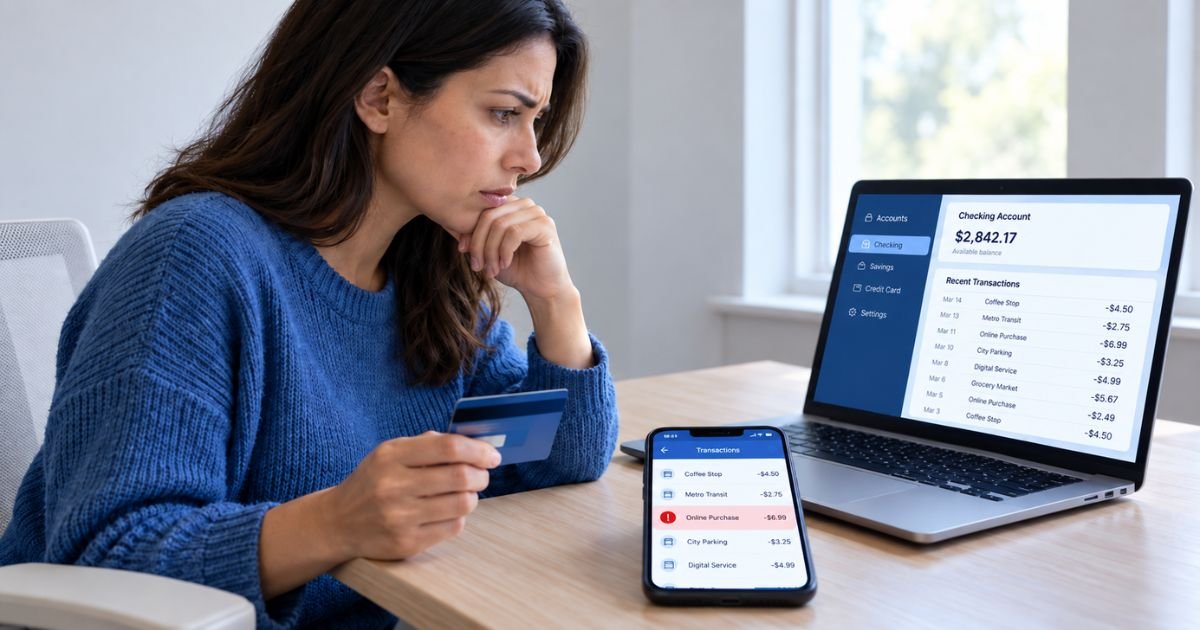
Finding an unfamiliar $2, $5, or $10 transaction on your bank statement can feel confusing, especially when you don’t remember making the purchase. Many small charges are legitimate, but some may result from billing mistakes or unauthorized transactions.
Knowing how to handle bank disputes for small charges helps you protect your money. This guide explains how to identify suspicious payments, dispute incorrect transactions, and understand your rights.
Table of Contents
What Are Bank Disputes for Small Charges?
A bank dispute happens when you ask your bank or card issuer to investigate a transaction you believe is incorrect or unauthorized. You can generally dispute small charges just as you would larger transactions.
For example, you might discover a $3.99 subscription payment you didn’t approve. Your bank may investigate whether the charge was legitimate and determine whether a refund or reversal is appropriate.
Small-charge disputes commonly involve:
- Purchases you didn’t authorize.
- Duplicate payments for one purchase.
- Incorrect transaction amounts.
- Subscriptions you canceled.
- Products or services you never received.
- Charges from unfamiliar merchants.
A dispute doesn’t automatically guarantee a refund. Your bank generally reviews the available evidence before making a decision.
Why Do Small Unknown Charges Appear on Bank Statements?
Small transactions can appear for several reasons. Identifying the cause helps you decide whether contacting the merchant or filing a bank dispute makes more sense.
| Charge Type | Possible Explanation |
|---|---|
| $0 or $1 authorization | Card verification |
| $2.99 subscription | Recurring digital service |
| Duplicate $5 payment | Processing or billing error |
| Unknown $1.50 charge | Possible unauthorized transaction |
| Small monthly fee | Account or service charge |
| Temporary transaction | Pending authorization hold |
Some merchants temporarily authorize small amounts to verify payment information. These authorizations may disappear without becoming completed charges.
However, fraudsters may also attempt small transactions to check whether stolen card details work. An unfamiliar charge isn’t proof of fraud, but it deserves attention.
Is It Worth Disputing a Charge Under $5?
Yes. You should consider disputing an incorrect or unauthorized charge even when the amount seems insignificant.
There’s generally no minimum dollar amount under federal billing-error protections that prevents you from reporting an unauthorized transaction. Your bank’s investigation process may depend on your account and payment method.
Disputing small unauthorized charges can help you:
- Recover money taken without permission.
- Identify possible card fraud.
- Stop repeated unauthorized transactions.
- Correct inaccurate account records.
- Prevent additional financial losses.
Pro Tip: Don’t ignore a suspicious $1 transaction simply because the amount is small. Report it promptly if you cannot identify it, especially when other unfamiliar payments appear.
What Should You Check Before Filing a Bank Dispute?
Before opening a dispute, review the transaction carefully. Some unfamiliar merchant names belong to businesses you already use.
Follow these steps:
- Check the merchant description. Search your purchase records for the business name or payment processor.
- Review recent purchases. Compare the transaction date and amount with your receipts.
- Check subscriptions. Look for recurring payments connected to apps, streaming services, or memberships.
- Ask authorized users. Another cardholder may recognize the transaction.
- Check transaction status. Determine whether the payment is pending or posted.
Pending transactions sometimes change or disappear after processing. Your bank may require a charge to post before opening a formal dispute.
However, report suspected fraud immediately, even when the transaction remains pending. Your bank can explain available security measures.
How to File a Bank Dispute for Small Charges
Filing a dispute is generally straightforward. Most banks provide assistance through online banking, mobile apps, or customer support.
Step 1: Identify the disputed transaction
Find the payment on your statement. Record its date, merchant name, amount, and transaction reference if available.
Step 2: Gather supporting evidence
Collect receipts, cancellation confirmations, merchant messages, or screenshots showing the problem. Clear documentation may help your bank understand the dispute.
Step 3: Contact your bank
Use your bank’s official website, mobile application, or the number printed on your card. Explain why the charge appears incorrect.
Tell the bank whether the transaction was unauthorized, duplicated, or related to a merchant disagreement. These situations may follow different dispute procedures.
Step 4: Submit the dispute
Complete the bank’s requested dispute process. For credit card billing errors, you should also send a written notice to the designated billing-inquiries address within the required deadline to protect your federal rights.
Step 5: Save the confirmation
Keep your claim number, supporting documents, and communication records. Check the case periodically until the bank communicates its decision.
Common Mistakes: Avoid describing a purchase you authorized as fraud simply because you’re unhappy with it. Explain the actual problem so your bank can apply the appropriate dispute process.
Bank Dispute Deadlines for Small Charges
Reporting deadlines depend on whether you used a debit card or credit card.
| Payment Method | Important Federal Timeline |
|---|---|
| Credit card billing error | Written notice generally within 60 days after the statement was sent |
| Debit card or electronic transfer error | Report generally within 60 days after the statement was sent |
| Credit card investigation | Generally within two billing cycles, no more than 90 days |
| Debit card investigation | Generally 10 business days initially, with permitted extensions |
For qualifying debit card disputes, your bank may provide temporary credit if its investigation takes longer than 10 business days. Certain exceptions apply.
If your debit card is lost or stolen, report it immediately. Waiting can increase your responsibility for unauthorized transactions under federal law.
Your bank may provide additional protections beyond these federal requirements.
What Happens After You Dispute a Small Charge?
After receiving your dispute, your bank generally reviews the transaction details. It may also request information from the merchant.
Possible outcomes include:
- Dispute approved: Your bank reverses the incorrect transaction or makes a temporary credit permanent.
- Dispute denied: Your bank determines that the available evidence doesn’t support your claim.
- Additional review: Your bank requests further information or continues investigating.
A temporary credit isn’t always a final refund. Your bank may remove it if the investigation determines that the charge was valid.
For qualifying credit card billing disputes, you generally don’t have to pay the disputed amount during the investigation. You must still pay undisputed amounts when due.
What If Your Bank Rejects a Small-Charge Dispute?
A rejected claim doesn’t necessarily mean you have no options. Start by reviewing the bank’s explanation.
You can request supporting information and ask whether reconsideration is available. Provide any new evidence that addresses the reason for denial.
If you believe your bank mishandled a covered dispute, you may submit a complaint to the Consumer Financial Protection Bureau (CFPB). Include the transaction details, dispute history, and relevant documents.
Keep your explanation factual and organized. Additional evidence may help clarify the issue, although a different outcome isn’t guaranteed.
How to Prevent Small Unauthorized Bank Charges
Regular account monitoring is one of the simplest ways to identify suspicious transactions.
Consider these precautions:
- Enable transaction alerts through your banking app.
- Review checking and credit card statements regularly.
- Cancel subscriptions you no longer use.
- Avoid entering card details on suspicious websites.
- Use strong passwords and multifactor authentication.
- Lock your card when suspicious activity appears.
- Request a replacement card when your bank recommends one.
Removing a saved card or replacing it may not cancel an existing subscription agreement. Contact the merchant to cancel authorized recurring services.
FAQs: How to Handle Bank Disputes for Small Charges
Q. Can I dispute a $1 charge on my bank statement?
A. Yes. You can generally report an unauthorized $1 charge to your bank.
First, determine whether it’s a temporary authorization or a completed transaction. If you don’t recognize it, contact your bank promptly.
Q. Will my bank refund a small disputed charge?
A. Your bank may refund the charge if its investigation confirms a covered billing error or unauthorized transaction.
Some banks issue temporary credits during investigations. However, refunds depend on the circumstances and applicable consumer protections.
Q. How long does a small bank dispute take?
A. Processing times vary depending on the payment method and investigation.
Covered debit card errors generally have an initial 10-business-day investigation period, subject to exceptions and extensions. Credit card billing errors may take up to two billing cycles, but no more than 90 days.
Q. Can I dispute several small charges at once?
A. Yes. You can generally report multiple suspicious transactions to your bank.
Identify each transaction separately, including its date, amount, and merchant. Your bank may create separate claims or review related transactions together.
Conclusion
Understanding how to handle bank disputes for small charges helps you respond confidently when unfamiliar payments appear.
Always review the transaction, gather evidence, and report suspected unauthorized activity promptly. Even a small amount matters when protecting your account from billing errors and possible fraud.
Disclaimer: This article is for informational purposes only and doesn’t provide financial or legal advice. Bank policies and dispute procedures may vary by issuer. Verify account-specific questions and applicable deadlines directly with your bank or card issuer.
Meet the Author
