
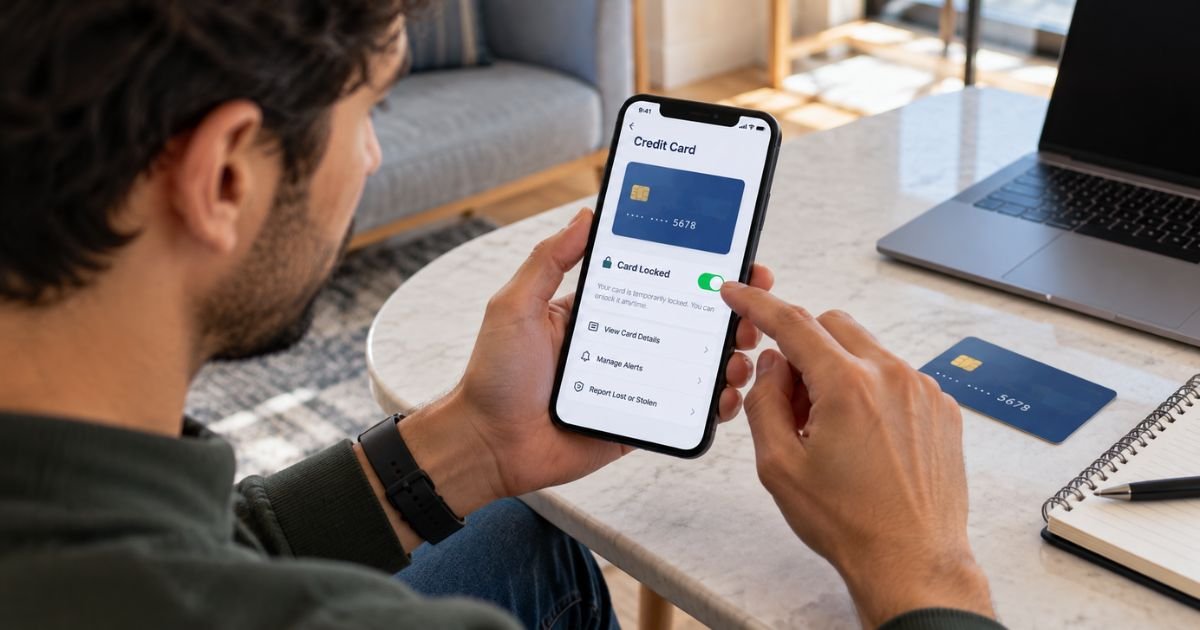
Knowing how to freeze a credit card temporarily for security can help when you misplace your card or notice something unusual. A temporary card lock can block many new purchases while you check what happened.
You can usually lock the card through your issuer’s app or website. This guide explains how to do it, what a lock may not stop, and when you should replace the card instead.
Table of Contents
How To Freeze A Credit Card Temporarily For Security
A temporary credit card freeze, often called a card lock, restricts certain new transactions without closing the account. Major issuers generally offer this control through online banking or their mobile apps.
A card lock is usually reversible. You can normally unlock the card after you find it and confirm that your account is safe.
Freeze Your Card Through the Mobile App
The mobile app is generally the fastest option. Sign in to your issuer’s official app and select the card you want to protect.
Look for wording such as:
- Lock card
- Freeze card
- Card controls
- Security settings
- Manage card
Confirm the lock when prompted. Some issuers apply the change immediately, but exact behavior varies.
Chase says a card lock can stop new charges and cash advances while recurring payments may continue. Discover says its Freeze It feature stops new purchases, cash advances, and balance transfers, while certain recurring transactions and account activity may still post.
Pro Tip: Turn on purchase alerts while the card is locked. Alerts can help you notice activity while you review the account.
Use Online Banking or Call the Issuer
You can usually lock a card through your issuer’s website if you cannot use the mobile app. Go directly to the official website, sign in, and look under card management or security settings.
If you cannot get online, call the number on a recent statement or the issuer’s official website. Ask for a temporary card lock.
If the card is definitely stolen or you see unauthorized charges, tell the representative. That situation may require replacement instead of a temporary freeze.
What a Temporary Credit Card Freeze Usually Blocks
A temporary lock generally blocks many new purchase attempts. It may also block cash advances and other new card transactions.
The restrictions depend on your issuer. Read the notice shown when you activate the lock because it often lists important exceptions.
| Transaction type | Usually blocked? |
|---|---|
| New store purchases | Often |
| New online purchases | Often |
| Cash advances | Often |
| Recurring subscriptions | Not always |
| Previously authorized charges | Not always |
| Refunds and credits | Usually not |
| Interest and account fees | Usually not |
| Digital wallet purchases | Varies |
Capital One says locking a credit card blocks most new purchases but may not stop recurring or previously authorized charges. Returns, credits, payments, interest, fees, and certain exempted transactions may also continue.
A Card Lock May Not Stop Subscriptions
Freezing your card is generally not a reliable way to cancel a subscription. Many issuers allow recurring charges to continue even when the card is locked.
Discover says recurring bills marked by merchants can continue while an account is frozen. American Express also says recurring bills and subscriptions can still post to a frozen card.
Cancel unwanted memberships directly with the merchant. Keep the cancellation confirmation in case another charge appears.
Common Mistakes: Do not treat a card freeze as a subscription cancellation. A card lock is a security control, not a cancellation request to the merchant.
Digital Wallet Purchases Can Be Different
A credit card stored in Apple Pay, Google Pay, or another digital wallet may not follow the same rules as the physical card. Some issuers may continue allowing certain wallet transactions after a freeze.
American Express currently says its frozen cards can still be used for eligible digital wallet transactions and some purchases at merchants where the card is already stored. Other issuers may apply different rules.
If you are worried about wallet access, remove the card from unfamiliar devices.
When a Temporary Freeze Makes Sense
A temporary lock works best when you think the card is misplaced rather than permanently lost. You may believe it is in your car, another bag, or somewhere inside your home.
You may also freeze the card after receiving a suspicious alert while you review recent transactions. The lock can reduce the chance of some new charges while you investigate.
When You Should Replace the Card Instead
A temporary lock may not be enough if the card was stolen or someone obtained the card number. Contact the issuer promptly and ask about reporting it lost, stolen, or compromised.
The Consumer Financial Protection Bureau says you cannot be held responsible for unauthorized charges if you report a lost or stolen credit card before it is used. If unauthorized use happens before you report it missing, federal law generally limits liability to no more than $50, and many issuers offer stronger protections.
You should generally request a replacement if:
- The card was stolen.
- You cannot find it after searching.
- You see a transaction you did not authorize.
- Your card details were exposed.
- Someone may have copied the card.
The CFPB advises contacting your card provider promptly when you see suspicious activity. Replacing a compromised card can help prevent additional unauthorized use.
Check Your Account Before Unlocking the Card
Review recent and pending transactions while the card is frozen. Look for unfamiliar merchants, small test charges, cash advances, or purchases you do not recognize.
Ask any authorized users whether they recognize questionable transactions. If you find an unauthorized charge, report it to the issuer instead of simply unlocking the card.
Once you find the card and everything looks normal, return to the same card-control screen. Choose the unlock option and confirm the change.
Issuer rules differ. American Express says its U.S. temporary freeze automatically ends after seven days if you do not unfreeze the card sooner.
Does Freezing a Credit Card Hurt Your Credit Score?
A temporary card lock does not normally close the account or directly change your credit score. Your payment obligations still remain.
Capital One notes that locking a card does not stop interest from accruing. You must still make required payments, and missed payments can still cause fees and credit-score damage.
Card Freeze vs. Credit Freeze
A credit card freeze and a credit-report freeze are different. A card freeze restricts transactions on one existing card.
A credit freeze at Experian, Equifax, or TransUnion limits access to your credit report. It can make it harder for someone to open new credit accounts in your name.
If identity theft is the concern, you may need more than a card lock. A credit-report freeze does not turn off an existing credit card.
FAQs: How To Freeze A Credit Card Temporarily For Security
Q. Can I freeze my credit card without canceling it?
A. Yes. Many issuers let you temporarily lock a credit card without closing the account, and you can generally unlock it later.
Q. Will automatic payments stop if I freeze my card?
A. Not necessarily. Many issuers allow recurring subscriptions, previously authorized transactions, refunds, and other account activity to continue.
Q. Can someone still charge a frozen credit card?
A. Some transactions may still post. Recurring charges, delayed authorizations, digital wallet purchases, or charges approved before the freeze may be treated differently.
Q. Should I freeze or replace a lost credit card?
A. Freeze it if you think the card is nearby and may be found quickly. If it was stolen, compromised, or used without permission, contact the issuer and ask about replacement.
Conclusion
Learning how to freeze a credit card temporarily for security gives you a quick way to restrict many new transactions while you look for a misplaced card. You can generally use your issuer’s mobile app, website, or customer service line.
A temporary freeze may not block subscriptions, delayed transactions, or every digital-wallet purchase. If the card is stolen or compromised, report it promptly and ask whether replacement is the safer option.
Disclaimer: This article is for general informational purposes only and is not financial or legal advice. Card-lock features, fraud protections, and transaction rules vary by issuer, so verify account-specific questions with your credit card company or bank.
Meet the Author
