
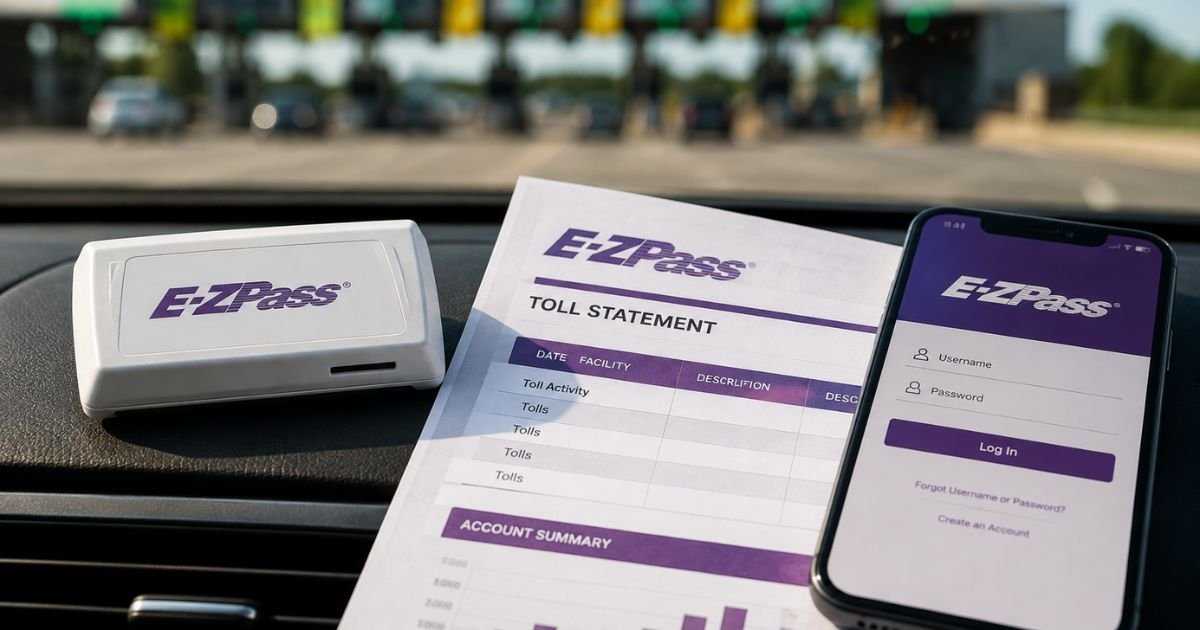
Wrong or unexpected E-ZPass charges can appear on your account statement or credit card. These often stem from toll roads, bridges, or tunnels in the Northeast and Mid-Atlantic.
You can usually dispute them directly with the issuing agency. This guide walks you through the process so you can resolve errors quickly and avoid extra fees.
Table of Contents
What Are E-ZPass Charges and Why Dispute Them?
E-ZPass is an electronic toll collection system used across multiple states.
A transponder in your vehicle or license-plate cameras records trips and bills your prepaid account or issues a violation notice. Charges then appear on your E-ZPass statement or get auto-paid from a linked credit or debit card.
Disputes are common when the system misreads a plate, fails to detect a valid transponder, bills the wrong vehicle, or posts a duplicate or incorrect rate.
Acting within the agency deadline is important. Missed deadlines can lead to penalties, collection activity, or registration issues in some states.
Common Reasons for Disputable Charges
Successful disputes often involve these situations:
- Your valid E-ZPass tag was mounted correctly and funded but the system did not read it.
- The license-plate photo shows a different vehicle or an unreadable plate.
- You sold or transferred the vehicle before the toll date and have proof.
- The vehicle or plates were reported stolen.
- A duplicate charge appears for the same trip.
- The wrong toll rate was applied (for example, cash vs. E-ZPass rate).
- You already paid the toll another way.
Gather evidence before you start. Strong documentation improves the chance of a credit.
How to Identify Which Agency to Contact
Look at the charge details, invoice, or violation notice. It will name the toll facility or agency, such as Pennsylvania Turnpike, New Jersey E-ZPass, New York State Thruway, MTA Bridges and Tunnels, or Port Authority. Each agency runs its own dispute process and deadlines.
Log into your E-ZPass account online if you have one. The transaction list usually shows the facility and a dispute option for recent charges. For violation notices, the form or instructions appear on the notice itself.
How to Dispute E-ZPass Charges: Step-by-Step
1. Note the exact date, time, location, amount, and any violation or transaction number.
2. Collect supporting documents (see list below).
3. Check the deadline printed on the notice or listed in your account terms. Pennsylvania often requires disputes within 45 days of the transaction. Other agencies set their own windows, sometimes up to 90–180 days for account holders.
4. Submit the dispute through the preferred method for that agency:
- Online through your E-ZPass account or the agency portal (fastest for many states).
- Phone using the customer service number on the notice or website.
- Mail using the dispute form or a written letter plus copies of evidence. Use certified mail for proof of delivery.
5. Keep copies of everything you submit and any confirmation or service request number.
6. Follow up if you do not receive a response within the timeframe the agency states.
For Pennsylvania Turnpike customers, you can dispute directly in your online account or use the official Customer Toll Dispute Form. Incomplete submissions are typically not processed.
New Jersey users can often start online at the E-ZPass NJ site by entering the violation number and plate, then uploading documents. Phone and mail options are also available.
New York agencies generally accept written disputes for recent account charges and have specific instructions on violation notices for Tolls by Mail or evasion notices.
Evidence That Strengthens Your Dispute
Include clear copies of:
- Your E-ZPass statement highlighting the disputed transaction(s).
- Photos of your properly mounted transponder if relevant.
- Vehicle registration or title.
- Bill of sale, title transfer, or odometer statement if the vehicle was sold.
- Police report for a stolen vehicle or plates.
- Proof of prior payment if you already paid the toll another way.
- Any other records showing your vehicle was elsewhere at the time (parking receipts, GPS logs, etc.).
Agencies review the system logs and your evidence. Vague explanations without documents are more likely to be denied.
What Happens After You File a Dispute
The agency reviews the request. Processing times vary from days to several weeks depending on volume and complexity. Many agencies place the disputed amount on hold while they investigate.
If approved, they typically credit your E-ZPass account or adjust the violation. You may see the credit reflected on a later statement or card charge. If denied, you will receive an explanation and the amount remains due.
Some agencies offer a further review or hearing process. Pay any undisputed amounts on time to avoid extra fees.
If the Charge Appeared on Your Credit Card
First resolve the issue with the E-ZPass agency. They control the original toll record. Once they credit the account, the linked card payment is often reversed or adjusted automatically.
If the agency does not resolve it and the charge is unauthorized or clearly erroneous, you can open a dispute with your credit card issuer. Provide the same evidence plus records of your contact with E-ZPass.
Card disputes have their own time limits, so act promptly. Resolving at the agency level is usually faster and more effective for toll charges.
Prevention Tips
- Keep your E-ZPass account funded and your plate information current.
- Mount the transponder correctly according to the instructions.
- Update your account immediately if you sell a vehicle or change plates.
- Review statements regularly and set up account alerts.
- Photograph your transponder placement if you frequently travel toll roads.
- Confirm acceptance and rates for new facilities before travel when possible.
FAQs: How to Dispute E-ZPass Charges
Q. How long do I have to dispute an E-ZPass charge?
A. Deadlines vary by agency. Pennsylvania often requires submission within 45 days of the transaction. Other states set their own windows based on the notice or account terms. Check the specific notice or website right away and do not wait.
Q. Can I dispute a charge if I no longer have an active E-ZPass account?
A. Yes. Use the violation or invoice number and license plate to file through the agency’s online portal, phone, or mail process. Provide the same supporting evidence.
Q. What if my dispute is denied?
A. Review the agency’s explanation. Some offer a second review or formal hearing. You can still pay the amount to stop penalties while exploring further options. Contact the agency for the next steps listed in their decision letter.
Q. Will disputing stop collection or registration holds?
A. Filing a timely dispute often places the amount on hold during review. Unresolved or unpaid violations can still lead to collection activity or registration consequences in some states. Address every notice promptly.
Conclusion
Disputing E-ZPass charges starts with identifying the correct agency and acting before the deadline. Gather clear evidence, submit through the online portal, phone, or mail, and keep records of every step.
Most legitimate errors, such as unread tags or wrong plates, can be corrected with proper documentation.
Review your statements regularly and keep your account details up to date. This reduces the chance of future problems.
When a charge looks wrong, the agency dispute process is the most direct path to a resolution and possible credit.
Disclaimer: This article is for informational purposes only and is not financial or legal advice. E-ZPass dispute rules, deadlines, and procedures vary by state and agency and can change. Always check the specific notice, your account terms, or the official agency website for the most accurate instructions for your situation.
Meet the Author
