
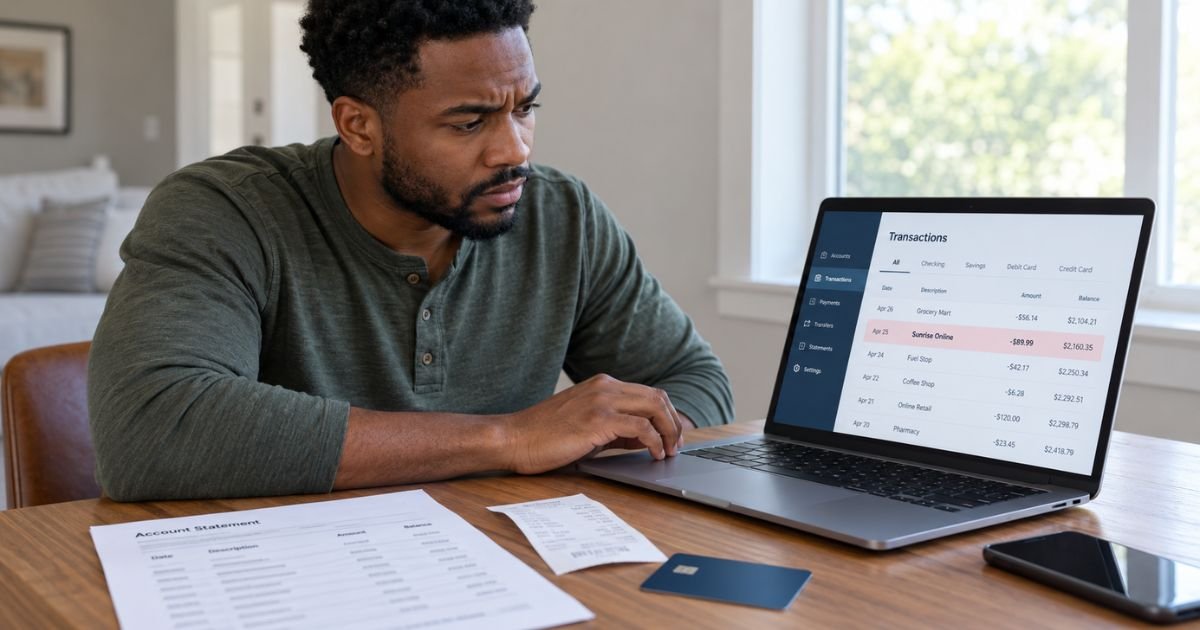
Knowing how to dispute a debit card charge can help you react quickly when money leaves your checking account unexpectedly. Debit card disputes can generally involve fraud, duplicate charges, billing mistakes, canceled subscriptions, or purchases that were not delivered as promised.
Your protections may depend on the type of problem and how quickly you report it. You should generally review the transaction, contact your bank promptly, gather proof, and follow any written-dispute instructions your bank provides.
Table of Contents
How to Dispute a Debit Card Charge
To dispute a debit card charge, you should generally contact the bank or credit union that issued your card. You can typically call the number on the back of the card, use the bank’s mobile app, or start the dispute through online banking.
Explain which transaction you are disputing and why. Your bank may generally ask whether the payment was unauthorized, duplicated, incorrectly processed, or connected with a merchant problem.
Federal Regulation E generally gives you important protections for unauthorized electronic fund transfers and certain account errors. The CFPB says you should usually notify your bank within 60 days after it sends the statement showing the error.
Check Whether the Charge Is Actually Wrong
You should generally review the transaction before filing the dispute. Merchant names on debit card statements may differ from the brand name you remember.
Open the full transaction details and check:
- Merchant name and location
- Amount and transaction date
- Whether the charge is pending or posted
- Recent online purchases
- Subscription renewals
- Purchases by another authorized card user
- Digital wallet transactions
A pending authorization may sometimes change or disappear. A posted charge that you still cannot identify generally deserves faster attention.
Pro Tip: Search your email for the exact transaction amount. A receipt may generally identify a merchant even when the bank statement uses an unfamiliar legal or billing name.
Contact the Merchant When Appropriate
If you recognize the merchant but believe the amount is wrong, you may generally contact the business first. A merchant can sometimes correct a duplicate payment, missing refund, canceled subscription, or delivery problem faster than a formal bank investigation.
However, you should generally contact your bank immediately if you believe the transaction is fraudulent. Waiting for a suspicious merchant to respond could reduce the time you have to protect your account.
The FTC generally recommends contacting your debit card company promptly when a charge is wrong. It also notes that debit card protections can be different and more limited than credit card protections.
Report an Unauthorized Debit Card Charge Quickly
Timing generally matters most when someone used your debit card without permission. Debit card transactions typically remove money directly from your checking account, so an unauthorized purchase can affect your available cash immediately.
If your physical debit card is lost or stolen, federal rules generally limit your liability to no more than $50 when you notify your bank within two business days after discovering the loss. If you wait longer, your potential liability can generally increase to as much as $500.
If an unauthorized transaction appears on your statement, you should generally report it within 60 calendar days after the statement was sent. Waiting beyond that period may leave you responsible for later unauthorized transfers that could have been prevented.
| Situation | General federal timing | Possible liability |
|---|---|---|
| Lost or stolen card reported within 2 business days | Report promptly | Generally up to $50 |
| Lost or stolen card reported after 2 business days | Report as soon as possible | May generally reach $500 |
| Unauthorized transaction shown on statement | Generally report within 60 days | Protections may depend on timing |
| Report delayed beyond 60 days | Higher risk | You may generally lose protection for later transfers |
Your bank may offer stronger protections than federal law requires. Card-network rules and individual bank policies may also reduce your liability.
What Information Should You Give the Bank?
Your dispute should generally be clear and specific. Give your bank enough information to identify the transaction and understand why you believe an error occurred.
Useful details generally include:
- Your name and account information
- Transaction date
- Merchant name
- Disputed amount
- Reason for the dispute
- Date you contacted the merchant
- What the merchant told you
You should generally keep copies of receipts, cancellation emails, return tracking, screenshots, chats, and refund promises. These documents may help your bank decide whether the transaction should be reversed.
Common Mistakes: Do not describe a merchant disagreement as fraud if you knowingly made the purchase. Your bank generally investigates unauthorized transactions differently from disputes about merchandise, subscriptions, or refunds.
Should You Submit the Dispute in Writing?
You can generally start a debit card dispute by phone or online. However, your bank may require written confirmation after you report an error orally.
Regulation E generally allows a financial institution to request written confirmation within 10 business days. The bank generally must tell you that written confirmation is required and provide the correct address.
The FTC also recommends following up in writing and keeping proof of your dispute. Certified mail may generally provide useful evidence that the bank received your letter.
How Long Does a Debit Card Dispute Take?
Your bank generally must investigate a qualifying Regulation E error promptly. In many cases, it generally has 10 business days to determine whether an error occurred.
If the bank cannot finish within that period, it may generally take up to 45 days if it provisionally credits your account. Certain debit card transactions, including some point-of-sale transactions, international transfers, and transactions involving newer accounts, may generally allow an investigation period of up to 90 days.
If the bank determines that an error occurred, it generally must correct it within one business day. It also generally must tell you the results within three business days after completing the investigation.
What Is a Provisional Credit?
A provisional credit is generally a temporary return of the disputed money while your bank continues investigating. It can help restore access to funds that were removed from your checking account.
If the bank cannot complete its standard investigation within 10 business days, Regulation E generally requires provisional credit in qualifying cases. The bank can generally continue investigating for the longer allowed period after providing that credit.
The temporary credit is not necessarily permanent. If the bank later concludes that the transaction was valid, it may generally remove the provisional credit after providing the required notice.
What If You Bought Something but Never Received It?
This situation can be more complicated with a debit card than with a credit card. Federal protections for debit card purchase disputes generally do not match the Fair Credit Billing Act protections available for credit cards.
The FTC says you may not have the same legal right to a debit card refund when merchandise was not delivered or was delivered incorrectly. However, your bank or debit card network may voluntarily provide a chargeback process.
You should generally contact the seller and your bank quickly. Keep the order confirmation, expected delivery date, tracking records, and your communication with the business.
How Do You Dispute a Subscription Charge?
If you originally authorized a subscription but canceled it, you should generally contact the company first. Ask it to cancel future billing and refund any charge processed after your cancellation became effective.
Save the cancellation confirmation. If billing continues, the FTC generally recommends disputing the later charge through your debit card issuer and keeping records showing that you canceled.
If you never authorized the subscription at all, report it to your bank as an unauthorized transaction. You may also want to ask whether replacing your debit card is appropriate.
What Happens If the Bank Denies Your Dispute?
Your bank generally must provide an explanation when it determines that no error occurred. Regulation E also generally gives you the right to request copies of the documents the bank relied on.
Review the explanation carefully. You may generally challenge the decision using the bank’s appeal or complaint procedure if you have additional evidence.
If you believe the bank failed to follow federal error-resolution rules, you can generally file a complaint with the Consumer Financial Protection Bureau. Keep your dispute number, bank letters, merchant messages, and supporting documents.
Should You Replace Your Debit Card?
You may generally want a replacement if the transaction was unauthorized and someone appears to have obtained your card number. Your bank can usually tell you whether replacing the physical card and account credentials is necessary.
You should generally review your recent transactions while the dispute is open. Multiple unfamiliar payments may indicate that your card information has been compromised.
The FTC recommends reporting a lost or stolen debit card immediately and continuing to monitor the account for unauthorized transactions.
FAQs: How to Dispute a Debit Card Charge
Q. How long do you have to dispute a debit card charge?
A. You should generally report a problem immediately. For many Regulation E errors, your notice generally needs to reach the bank within 60 days after the statement showing the transaction was sent.
Q. Does your bank give you the money back while investigating?
A. It may. If a qualifying investigation cannot generally be completed within 10 business days, your bank may need to provide provisional credit while it continues reviewing the claim.
Q. Can you dispute a debit card charge for something you never received?
A. You can generally ask your bank to dispute it, but debit card protections for merchant delivery problems may be more limited than credit card protections. Your bank or card network may still offer a voluntary chargeback process.
Q. Can your bank deny a debit card dispute?
A. Yes. Your bank may generally deny the dispute if its investigation finds that the transaction was authorized or that no covered error occurred. You can generally request the documents used in its decision and ask about any available appeal process.
Conclusion
Knowing how to dispute a debit card charge generally starts with acting quickly. You should identify the transaction, report unauthorized activity promptly, gather supporting records, and follow your bank’s dispute instructions.
Debit card rules generally differ from credit card rules because the money comes directly from your bank account. Pay particular attention to the two-business-day and 60-day reporting periods, and keep written proof of every step you take.
Disclaimer: This article is for informational purposes only and is not financial or legal advice. Debit card protections, dispute procedures, investigation periods, and bank policies may vary, so verify account-specific questions with your bank or credit union.
Meet the Author
