
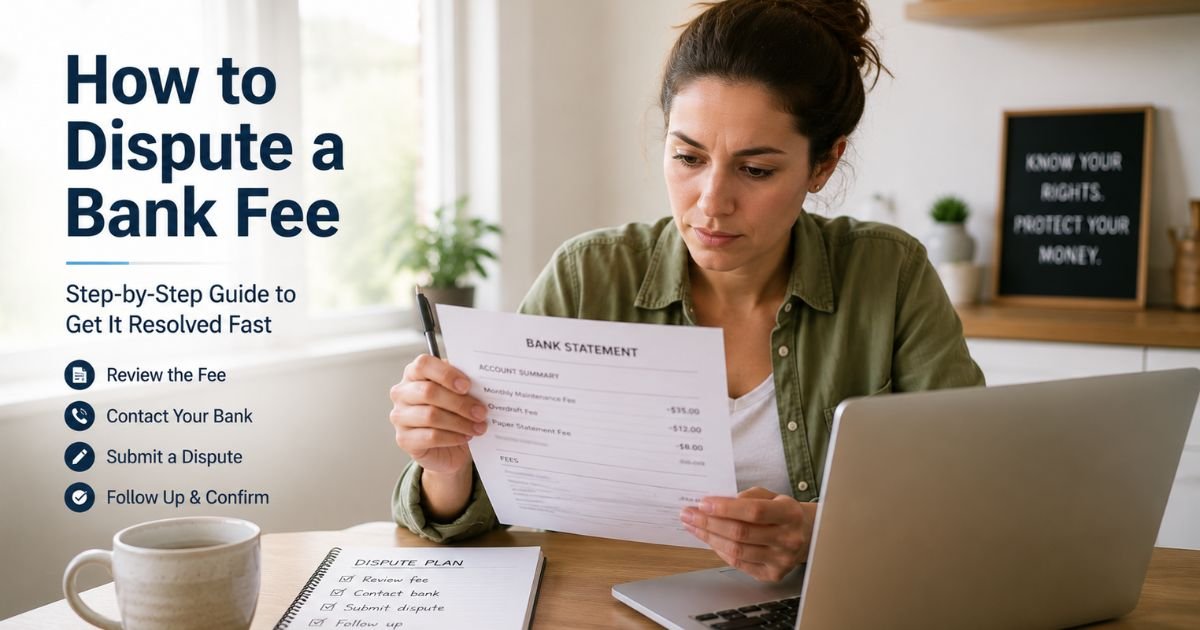
Unexpected bank fees can feel frustrating. Overdraft, monthly maintenance, ATM, or NSF fees often appear without much warning. The good news is that many banks will reverse or waive these fees if you ask the right way.
This guide shows you the practical steps most people use successfully.
Table of Contents
What Kinds of Bank Fees Can You Dispute?
Common fees include:
- Overdraft fees (when your account goes negative)
- Monthly maintenance or service fees
- Out-of-network ATM fees
- Non-sufficient funds (NSF) fees
- Wire transfer or other transaction fees
Banks have some discretion. They often waive fees for long-time customers, first-time occurrences, or when the fee resulted from a timing issue or bank error.
Results are never guaranteed, but asking politely works more often than many people expect.
Step 1: Gather the Details
Before you contact the bank, collect:
- The exact fee amount and date it posted
- Your account number
- Any relevant statements or screenshots
- Notes on why the fee happened (late paycheck, one-time mistake, met the waiver requirements, etc.)
Having this ready makes the conversation smoother.
Step 2: Contact Your Bank and Ask for a Waiver
Call the customer service number on your statement or use the bank’s secure chat or app messaging.
Be calm and clear. A simple script that often works:
“Hi, I noticed a [fee type] of $[amount] on [date]. I’ve been a customer for [X years / months] and this is unusual for my account. Would you be able to reverse it as a one-time courtesy?”
Key tips:
- Mention your account history if it is positive.
- Explain any special circumstances briefly (delayed direct deposit, medical issue, travel).
- Ask specifically for a “courtesy waiver” or “one-time refund.”
- If the first representative says no, politely ask to speak with a supervisor. Supervisors often have more authority.
Many banks allow one or two courtesy reversals per year for good customers. Success rates are generally higher for first-time overdrafts than for repeated ones.
Step 3: Follow Up in Writing If Needed
If the phone request does not work or the fee appears to be an error, send a written dispute.
Include:
- Your name and account number
- The exact fee details (date and amount)
- A clear explanation of why you believe it should be reversed
- A specific request (refund or investigation)
- Copies of any supporting documents
Send it by certified mail or through the bank’s secure message center. Keep a copy for your records. For electronic fund errors, federal rules under Regulation E generally give you 60 days from the statement date to report the problem.
Step 4: Escalate or File a Complaint
If the bank still refuses and you believe the fee was improper:
- Ask the bank for a written explanation of their decision.
- File a complaint with the Consumer Financial Protection Bureau (CFPB) at consumerfinance.gov. The CFPB forwards most complaints to the company and tracks the response.
- You can also contact your state banking regulator or the bank’s primary federal regulator (listed on your statement or the bank’s website).
Switching to a no-fee or low-fee account is another option if fees keep happening.
What Happens After You Dispute
The bank will typically review the request. For courtesy waivers, the decision is often made during the call or within a few business days. For formal error disputes, the bank generally has time limits to investigate and respond.
If approved, the fee is usually credited back to your account. Watch your next statement to confirm.
Prevention Tips
- Set up low-balance alerts on your account.
- Link a savings account for overdraft protection if available.
- Meet the minimum balance or direct-deposit requirements that waive monthly fees.
- Consider online banks that charge fewer or no fees for everyday accounts.
- Review statements regularly so small issues do not pile up.
FAQs: How to Dispute a Bank Fee
Q. Will my bank always refund an overdraft fee if I ask?
A. No. Many banks will reverse a first-time or occasional overdraft fee as a courtesy, especially for customers with a good history. Repeated fees are harder to reverse.
Q. How long do I have to dispute a bank fee?
A. For potential errors involving electronic transfers, report within 60 days of the statement that shows the problem. Courtesy waiver requests work best when made soon after the fee posts.
Q. Can I dispute a monthly maintenance fee?
A. Yes. Call and ask whether you met the waiver conditions (minimum balance, direct deposit, etc.). If you did, request a reversal. If not, ask what steps would waive future fees.
Q. What if the bank says no?
A. Ask for a supervisor, send a written request, or file a CFPB complaint if you believe the fee was improper. You can also consider moving to an account with fewer fees.
Conclusion
Disputing a bank fee starts with a calm, clear request to your bank. Many customers successfully get overdraft or maintenance fees reversed simply by asking for a one-time courtesy. Have your details ready, stay polite, and escalate in writing or through the CFPB if needed.
Checking your account regularly and setting up alerts can prevent most of these fees from appearing in the first place.
Disclaimer: This article is for informational purposes only and is not financial or legal advice. Bank policies, fee schedules, and dispute outcomes vary. Always verify the details of your specific account and situation directly with your bank or credit union.
Meet the Author
