
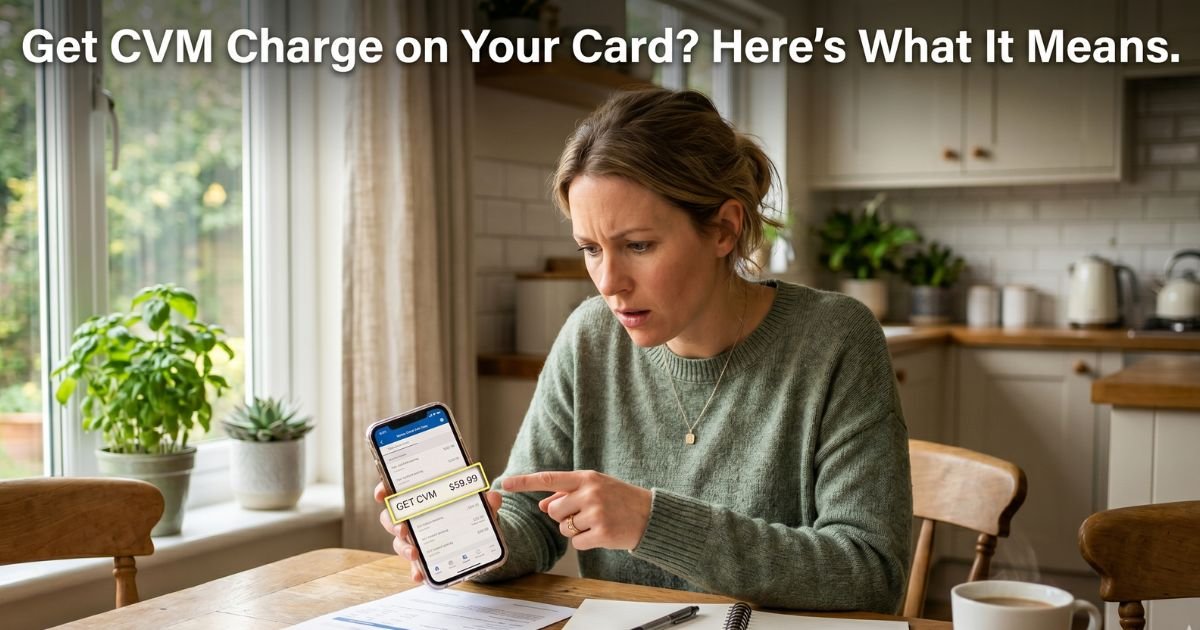
You glance at your credit card app during a busy afternoon and spot it: “GET CVM” or “GET*CVM” for $59.99. Your mind races. You have no idea what that is. You never signed up for any service with that name, yet the charge sits right there on your statement.
You are not alone. Plenty of people notice this exact line and wonder if their card got compromised or if they clicked something by mistake. The good news is you can fix it quickly.
Here you will learn exactly what the Get CVM charge on credit card means, how it got there, and the simple steps to stop it and ask for your money back.
Table of Contents
What Is the Get CVM Charge on Credit Card?
Get CVM appears to be a billing descriptor for an online platform that offers wellness tools, productivity guides, or digital lifestyle content. The service promises quick routines, trackers, and resources to help busy people stay organized and balanced from home.
The charge you see is typically a recurring subscription fee of around $59.99 for full access to their library. On statements it often shows up shortened as GET CVM, sometimes with extra numbers or a transaction ID added on.
How the Subscription Usually Starts
Many people land on the site after clicking a social media ad, pop-up offer, or free-trial link promising easy daily tips. The signup flow can feel quick and harmless, but it quietly sets up automatic monthly billing. The first charge often hits weeks later, long after you have forgotten the original click.
Take Rachel, a 37-year-old project manager from Illinois. She was scrolling through her feed one evening and tapped an ad for “5-minute mindset resets.” She entered her card for what she thought was a one-time download. A few weeks later she spotted the Get CVM charge. “I never saw anything about a monthly fee,” Rachel said. “It just showed up.” Her experience is common and matches what many others report.
Bottom line: The Get CVM charge on credit card is a real subscription for digital wellness or productivity content, but it often surprises people because the details are easy to miss during signup.
Why Do So Many People Get This Charge Unexpectedly?
The main reason is how the ads and checkout are designed. Offers for free tips or trial access can lead straight into a paid plan without clear warnings. The site may have low visibility and limited public details, which raises extra questions for some users.
Other common triggers include:
- Clicking a “start free” button that defaults to a paid subscription
- Using a saved card from another shopping site
- Following a link shared in a wellness or productivity group
Whatever the path, the charge processes through standard payment systems, but many feel the enrollment was not obvious enough.
How to Stop the Get CVM Charge (Step-by-Step)
You have two solid paths, and most people get the fastest results by starting with their card issuer.
Here is what works right now:
- Grab your statement and note the exact date, amount, and full descriptor.
- Call the number on the back of your credit card. Tell them you did not authorize the Get CVM charge and want it reversed plus future billing blocked.
- If you want to reach the company first, search for any support email or phone tied to the descriptor (many users report success with general merchant support lines). Ask them to cancel your subscription and refund the latest charge.
- Save every confirmation email and screenshot for your records.
Most banks reverse these charges quickly when you explain it was unexpected.
Pro Tip
After you dispute the charge, ask your issuer to place a merchant block on “GET CVM” or any similar name. This simple request prevents the company from trying again even months later.
What If You Want a Refund?
If the charge posted within the last 60 days, your card issuer can usually fix it under federal billing rules. Just say you never meant to subscribe and you would like the money returned. Many people see the refund within a few business days.
If you contact the company directly, be polite but clear. Explain you did not realize it was recurring and you want the subscription canceled plus a full refund of the recent payment.
Common Mistake
Contacting only the merchant and waiting for them to act. Some users report slow or no responses, while your bank has clear protections that get results faster. Do both if you want, but start with the card issuer.
How to Spot and Prevent Similar Mystery Charges
Unexpected subscription charges pop up more often than we would like. Use this quick checklist each month:
- Check your statements within a day or two of new postings
- Turn on push alerts for any charge over $10
- Use virtual card numbers for online ads and trials
- Keep a short list on your phone of every app or service you actually joined
If something looks unfamiliar, search the exact name plus “charge” online. You will usually find answers fast.
| Charge Descriptor | Typical Amount | What It Usually Covers | Best Action to Stop It |
|---|---|---|---|
| GET CVM | $59.99 | Digital wellness or productivity tools | Dispute with bank + merchant block |
| GET*CVM | $59.99 | Same online subscription service | Call issuer or support line |
| Related wellness apps | $39.99–$86 | Similar mindset or lifestyle plans | Same dispute steps |
Table based on customer reports as of April 2026. Always confirm details on your own statement.
When to Contact Your Bank Right Away
If you see more than one charge or the amount feels off, skip the wait and call your card issuer first. A short conversation can stop the billing at the source and create an official record. Most issuers handle these cases every day and make the process simple.
FAQs: Get CVM Charge on Credit Card
Q. Why did I get a Get CVM charge on my credit card when I never signed up?
A. Many people see the Get CVM charge after clicking a wellness or productivity ad or free-trial link on social media. The signup can feel like a simple download, but it quietly starts a monthly subscription. Even if you never entered your card on purpose, the charge can still appear. Treat it as unauthorized and dispute it with your bank for the quickest fix.
Q. How do I cancel a Get CVM subscription and stop future charges?
A. There is no public online cancellation page for most users. Call your credit card issuer and ask them to reverse the charge and block the merchant. You can also try to reach any support contact tied to the descriptor to request cancellation, but the bank route usually works faster and gives you stronger protection.
Q. Is the Get CVM charge on my statement a scam or just a regular subscription?
A. It is a real charge from an online wellness or productivity content site, but it has drawn complaints about unclear signup and unexpected billing. The service offers tools and guides, yet plenty of users say they never meant to join. If you did not authorize it, report the charge as unauthorized to your card issuer so they can investigate and refund you.
Conclusion
The Get CVM charge on credit card is usually a monthly subscription for digital wellness or productivity content. It often catches people off guard after a quick ad click or trial offer.
The good news is you can stop it easily: dispute it with your bank, request a refund, and block future attempts so it never happens again.
Take a quick look at your recent transactions right now and set up alerts for peace of mind. A few smart habits keep your statements clean and your budget on track.
You are in control, and handling this today saves you money month after month.
If this guide helped clear things up, explore more articles on common mystery charges here at ExplainCharges.com. Your money stays yours when you stay informed.
Disclaimer: The content on ExplainCharges.com is for informational and educational purposes only and does not constitute financial, legal, or professional advice. We are not affiliated with any companies or services mentioned. The information provided may not apply to your specific situation. If you suspect unauthorized charges or fraud, contact your bank or credit card issuer immediately. Always verify details directly with the source and consult a qualified professional if needed.
Meet the Author
