
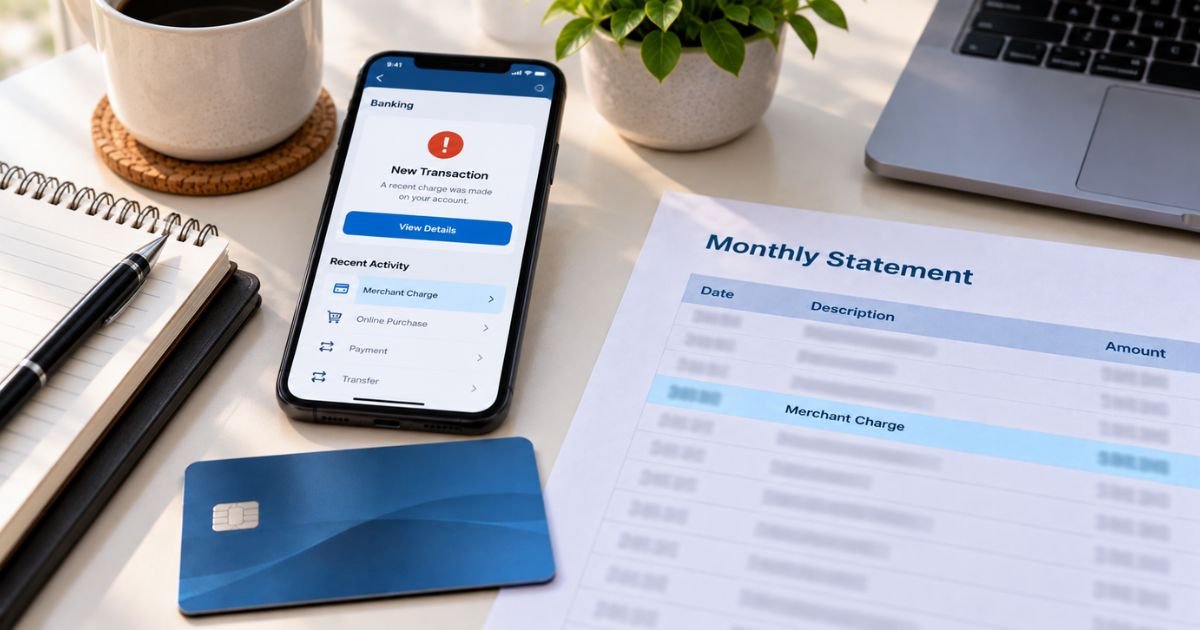
A fraudulent charge on a credit card can feel confusing if you don’t recall the purchase. The line can look like a real store. That does not mean you owe it.
Unfamiliar charges are often a subscription or a family tap. Some are true fraud.
This guide explains your federal rights, the steps to report a fraudulent charge on a credit card, and how credit cards differ from debit cards.
Table of Contents
What Is a Fraudulent Charge on a Credit Card?
A fraudulent charge on credit card is a pull you did not authorize and did not benefit from. Federal rules call this “unauthorized use.”
Regulation Z says that means use by someone who is not you, who had no actual, implied, or apparent authority, and from which you received no benefit.
That definition matters. A spouse or authorized user who went shopping is generally not fraud under that rule.
A merchant you paid, then later regretted, is usually a refund request, not unauthorized use.
A scammer who talked you into sending Cash App is often treated as a send you approved.
True card fraud is different. Someone used your number at a store you never visited, or the plastic was stolen and swiped.
CFPB guidance says you are generally not responsible when only the account number is stolen and you still have the card. If the lost card is used before you report it, federal law can cap what you owe at $50.
Most major issuers go further with a zero-liability policy. That policy is the company’s rule, not the $50 statute. Report fast and follow the issuer’s steps so that extra protection can apply.
Fraud Versus a Billing Error
The Fair Credit Billing Act also covers billing errors. Those include a wrong amount, a charge that is not clearly identified, goods you never received, and unauthorized use listed on the statement.
You generally have 60 days from when the issuer sent the first statement that showed the problem to send a written billing-error notice.
The issuer then has 30 days to say it got the letter. It generally must finish the review in two billing cycles, and not more than 90 days.
You can call first. For the FCBA investigation clock, send a follow-up letter to the billing-error address on your statement, not the payment P.O. box. Keep a copy.
Unauthorized-use notice under the $50 cap can be oral. Still write it down. Dates help.
What You Might Owe
| Situation | Typical federal limit | What issuers often do |
|---|---|---|
| Only your number is used; you still have the card | $0 for unauthorized credit charges | Investigate and usually reverse |
| Card lost or stolen and used before you report | Up to $50 | Many zero-liability policies waive that |
| You report before anyone uses the lost card | $0 | New card issued |
| Debit card, report within 2 business days of learning it is gone | Up to $50 | Bank investigates under Regulation E |
| Debit card, later than 2 business days but within 60 days of the statement | Up to $500 | Provisional credit may apply |
| Debit card, later than 60 days after the statement is sent | Later transfers can fall on you | Speed matters more than on credit |
Pay every charge you do recognize. You generally do not have to pay the disputed amount, or related finance charges on that amount, while a proper credit-card billing-error review is open. The rest of the bill is still due.
How to Report a Fraudulent Charge
Act the same day you spot it.
- Open your card app and confirm the date, amount, and merchant text.
- Call the number on the back of the card, or use the in-app fraud button.
- Say which charges you did not make. Ask the issuer to close the compromised card and send a new number.
- Ask how to send the written notice and where it must go.
- Change passwords on email and shopping accounts tied to that card.
- Watch the next statement for a repeat merchant.
If the card is missing, report the loss first. FTC guidance says you are not responsible for charges that happen after you report the loss.
Write a short letter if the charge is already on a statement. Include your name, account number, the date the statement was sent, each bad charge, and why it is unauthorized. Send it so you have proof of the date.
Pro Tip: Photograph the statement line and save the confirmation number from the phone call. That packet is what most issuer reviews actually use.
What Happens After You Report
The issuer investigates. You may see a temporary credit. That credit can come back off if the bank later decides the charge was valid.
During a billing-error review, the issuer generally cannot treat the disputed amount as late for credit reporting if you paid the rest on time. It also generally cannot charge interest on that disputed piece while the review is open.
If the issuer says the charge stands, it must tell you why, how much you owe, and when to pay to avoid extra fees. You can send more records or file a CFPB complaint.
A new card number does not cancel a gym or streaming plan. Update those accounts so the next draft does not hit the new card.
When It May Not Be Fraud
Check these before you swear it is a stranger.
- A family member used a card they are allowed to use.
- A free trial turned into a paid plan.
- The merchant name on the statement is the processor, not the store.
- A hotel or gas station hold posted later at a different amount.
- You typed your number into a site and the goods shipped.
Those can still be disputes. They are not always unauthorized use. Tell the issuer the true story. A false fraud claim can slow a real case.
Common Mistakes: People wait for “next month” and miss the 60-day written window. Others cancel only the plastic and leave a stored card on a shopping site. Update wallets and subscriptions after you get the new number.
Credit Card Versus Debit Card
Use a credit card for the purchase when you can. The money has not left your checking account. Federal unauthorized-use rules for credit are simpler than debit rules.
Debit and ATM cards follow Regulation E. Limits rise if you wait. A checking account can be drained before the bank finishes its review. Credit-card fraud generally hits a credit line first.
Prepaid cards have their own notices. Read that card’s agreement.
Extra Steps If Your Identity Was Used
If new accounts opened in your name, go further.
- Place a fraud alert or credit freeze with Equifax, Experian, and TransUnion.
- File a report at IdentityTheft.gov and follow the recovery plan.
- Review your credit reports for cards you never opened.
- Ask whether your city takes a police report. Many fraud cases run through the issuer first.
Do not give a code to a caller who claims to be the bank. Hang up and call the number on the card.
FAQs: Fraudulent Charge on Credit Card
Q. Do I have to pay a fraudulent charge on a credit card?
A. Federal law generally caps unauthorized credit-card use at $50, and at $0 when only the number is stolen. Many issuers advertise $0 liability if you report the activity.
You still must report it. Pay the charges you do recognize.
Q. How long do I have to report a fraudulent charge on a credit card?
A. Call as soon as you see it. For the billing-error process, send written notice within 60 days after the issuer sent the statement that first showed the charge.
Waiting longer can weaken those FCBA investigation rights. Unauthorized-use notice can be a phone call. Follow up in writing anyway.
Q. Will I get a new card?
A. Issuers typically close the old number and mail or app-issue a replacement when they treat the activity as fraud.
Update automatic payments after the new card arrives.
Q. What if the bank says I owe it?
A. Ask for the written explanation. Send any receipts, travel records, or police details that show you did not make the charge.
You can add a CFPB complaint. That does not replace the issuer review.
Conclusion
A fraudulent charge on a credit card is unauthorized use you did not approve. Federal rules generally limit what you can owe, and many issuers set that number at zero when you report promptly.
Call the number on the card the same day. Send the 60-day written notice if the line is already on a statement. Then watch the replacement card and your next bill.
Disclaimer: This article is for general information only. It is not financial or legal advice. Liability limits, zero-liability policies, and investigation timelines vary by issuer and by card type. Confirm your situation with your card company and, if needed, a consumer attorney.
Meet the Author
