
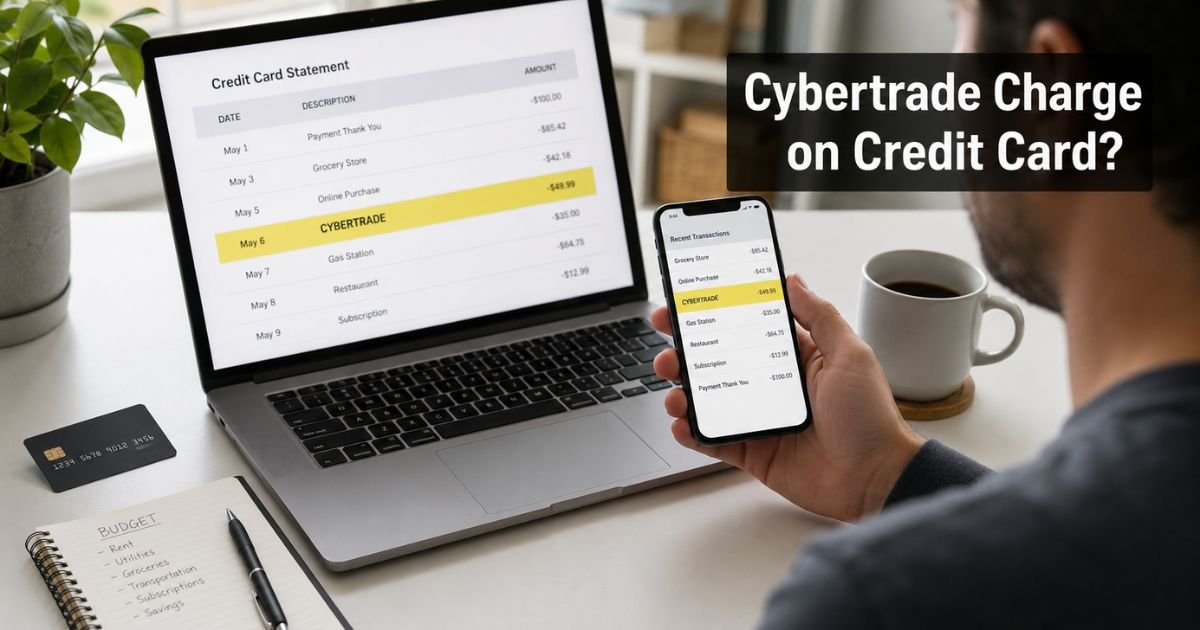
You’ve checked your credit card statement and spotted an unfamiliar “Cybertrade” charge. Your heart sinks, did someone steal your card info? You’re not alone. Many people report seeing Cybertrade on their statements, often for small amounts that raise red flags.
This guide explains exactly what a Cybertrade charge usually means, why it happens, and the practical steps you can take right now to resolve it. We’ll cover prevention tips so you can feel confident managing your cards moving forward.
Table of Contents
Quick Answer
A Cybertrade charge on credit card is typically an unauthorized transaction linked to fraud or card testing by scammers. It often appears as a small amount (e.g., $17–$20) and may relate to crypto scams or stolen card details.
Contact your bank or card issuer immediately to dispute it, they usually remove fraudulent charges quickly with $0 liability for you in most cases. Monitor your account and consider freezing your card.
What Is a Cybertrade Charge?
Cybertrade is a billing descriptor, the name that shows up on your credit or debit card statement for a transaction. Legitimate merchants use clear descriptors so you recognize purchases easily.
However, “Cybertrade” doesn’t match a widely recognized reputable company for everyday purchases.
Reports across forums and social media show it as a suspicious entry, frequently tied to unauthorized activity.
Scammers sometimes use obscure or generic descriptors like this for test charges (small amounts to verify stolen cards) or fraudulent purchases, especially those pretending to involve cryptocurrency.
These charges can come from data breaches, skimming, phishing, or malware that captures your card details.
Why Do Cybertrade Charges Appear on Statements?
Several common scenarios explain this:
- Card Testing by Fraudsters: Criminals make small purchases to check if a stolen card number works before attempting larger buys.
- Crypto-Related Scams: Some victims report links to fake crypto recovery services or trading platforms that bill under vague names.
- Data Breach Fallout: Your card info may have been sold on the dark web after a retailer or service hack.
- Recurring or Forgotten Subscriptions: Less likely here, as Cybertrade doesn’t align with popular services, but always double-check your recent sign-ups.
If you didn’t authorize it, treat it as fraud.
Immediate Steps to Take If You See a Cybertrade Charge
Act fast, most issuers offer strong protections for unauthorized charges.
- Contact Your Card Issuer Right Away: Call the number on the back of your card or use their app/chat. Report the charge as fraudulent. Provide the exact amount, date, and descriptor.
- Dispute the Transaction: Your bank will typically open a dispute. Under U.S. law (Fair Credit Billing Act), you’re generally liable for $0 on credit card fraud if reported promptly. Debit cards have similar but sometimes stricter timelines.
- Freeze or Replace Your Card: Ask for a temporary freeze or a new card number to stop further charges.
- Monitor Your Accounts: Check all linked accounts daily for the next few weeks. Set up transaction alerts.
- File a Police Report if Needed: For larger amounts or identity theft concerns, document it officially.
Most disputes resolve within 30–60 days, with provisional credits often issued quickly.
How to Prevent Future Unauthorized Charges
Staying proactive beats reacting every time:
- Use Virtual Cards: Many issuers let you create one-time or limited-use virtual numbers for online shopping.
- Enable Two-Factor Authentication (2FA): Add extra security to all financial and shopping accounts.
- Review Statements Weekly: Don’t wait for the monthly bill, catch issues early.
- Be Wary of Phishing: Never click links in unsolicited emails or texts asking for card details.
- Consider a Credit Monitoring Service: Services can alert you to potential breaches.
- Avoid Saving Card Info: On non-essential sites, enter details manually each time.
Pros and Cons of Common Responses to Suspicious Charges
| Action | Pros | Cons |
|---|---|---|
| Dispute with Bank | Fast resolution, $0 liability | Temporary account disruption |
| Freeze Card | Immediate protection | Inconvenience until new card arrives |
| Ignore Small Charge | None (risks escalation) | Potential for bigger fraud |
| Credit Freeze | Broad identity protection | Delays legitimate applications |
Real-Life Examples
Many people on platforms like Reddit and Instagram describe similar experiences: a sudden $17–$19 Cybertrade entry, no corresponding purchase, and quick bank refunds after reporting.
One couple reported attempted charges on separate cards the same day, prompting both to cancel immediately.
In another case, users linked it to Cash App activity, highlighting how fraud can cross platforms.
Common Mistakes to Avoid
- Delaying the report, timelines matter for full protection.
- Assuming it’s legitimate without checking (small test charges can lead to big ones).
- Sharing card details over unsecured sites or calls.
- Not updating passwords or enabling alerts after an incident.
FAQs About Cybertrade Charge on Credit Card
Q. Is Cybertrade a legitimate company?
A. No widely recognized legitimate merchant uses this descriptor for standard transactions. It strongly suggests unauthorized activity.
Q. Will disputing hurt my credit score?
A. No. Legitimate fraud disputes do not affect your credit score.
Q. Can I get my money back?
A. Yes, in most cases for credit cards if reported promptly. Debit cards may take longer but offer similar recourse.
Q. What if more charges appear?
A. Report each one and consider closing the account if fraud persists. Contact all three credit bureaus to place a fraud alert.
Conclusion
A Cybertrade charge on credit card is almost always a warning sign of potential fraud rather than a legitimate purchase.
By acting quickly, contacting your issuer, disputing the charge, and securing your accounts, you can resolve it with minimal hassle and protect yourself moving forward.
Stay vigilant with regular monitoring and smart habits. Your finances are worth the extra few minutes each month. If you’re dealing with this right now, reach out to your card issuer today.
Disclaimer: This article provides general information based on common consumer reports and standard practices. It is not financial, legal, or professional advice. Always contact your bank or a qualified advisor for your specific situation. Laws and policies vary by issuer and location.
Meet the Author
