
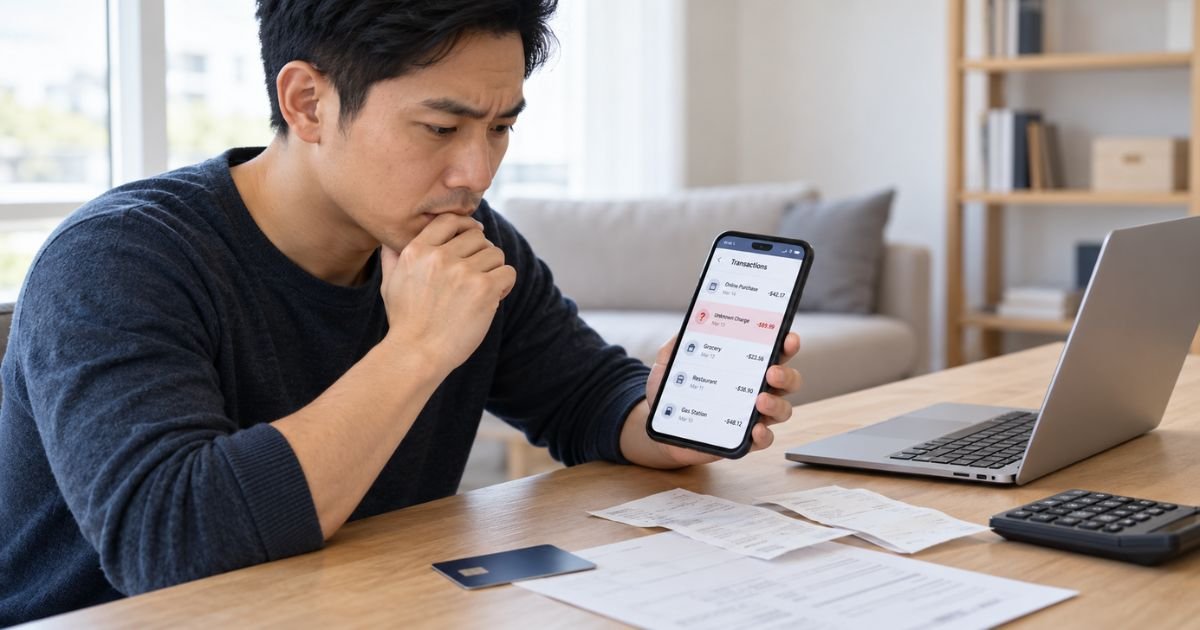
If your credit card was charged unexpectedly, the transaction can feel alarming when you don’t recognize the merchant. An unfamiliar charge is often legitimate, but you should still check it promptly.
The payment may be a subscription renewal, temporary authorization, delayed transaction, or unfamiliar merchant descriptor. This guide explains how to identify the charge and what to do if it was not authorized.
Table of Contents
Why Was Your Credit Card Charged Unexpectedly?
Your credit card was charged unexpectedly for many possible reasons. The merchant name shown on your statement may not match the business name you remember.
Credit card statements often display a legal company name, payment processor, shortened business name, website, or parent company. That can make a normal purchase look suspicious.
Other common explanations include:
- A subscription renewal
- A free trial becoming paid
- A hotel or rental car hold
- A delayed restaurant transaction
- A tip added later
- A purchase by an authorized user
- A split shipment
- A recurring online service
- A foreign merchant descriptor
- An actual unauthorized purchase
Start by gathering details before assuming fraud.
Check Whether the Charge Is Pending
The first question is whether the transaction says pending or posted.
A pending charge is generally an authorization. The merchant asks your card issuer to reserve part of your available credit before the payment is completed.
Hotels, gas stations, restaurants, and rental car companies commonly use authorization holds. The amount may be higher than the final bill.
For example, a hotel may authorize your card for the room price plus an amount for incidentals. The larger pending amount generally changes or disappears when the final transaction settles.
A pending charge can also appear beside the final posted payment for a short period.
Pro Tip: Avoid adding a pending authorization and a posted charge together immediately. Check whether the pending transaction disappears after several business days.
Look at the Full Merchant Descriptor
Your banking app may show only part of the merchant name. Open the transaction details or view the full monthly statement.
Look for:
- Merchant name
- Website
- Phone number
- City and state
- Transaction date
- Posting date
- Reference number
A descriptor may use the legal company behind a familiar brand.
For example, a restaurant payment may show its payment processor. An online purchase may display a parent company rather than the website where you placed the order.
Searching the exact descriptor can generally help identify the business.
Check for Forgotten Subscriptions
Recurring subscriptions are one of the most common explanations for unexpected charges.
You may have signed up months ago and forgotten about the renewal. Annual memberships can be especially difficult to recognize because a full year may pass between payments.
Check for:
- Streaming services
- Fitness memberships
- VPN services
- Software subscriptions
- Dating apps
- News subscriptions
- Credit monitoring
- Online shopping memberships
- Cloud storage
- Mobile apps
Search your email for the exact amount and merchant name.
Also check Apple, Google Play, PayPal, Amazon, and other payment platforms. The merchant may not bill your card directly.
Check Whether a Free Trial Ended
A free or low-cost trial may automatically turn into a paid subscription.
You may remember agreeing to a $1 trial but not the monthly payment that followed. The recurring charge could appear under a different descriptor from the website you originally visited.
Read the original confirmation email if you still have it.
Look for:
- Trial length
- Renewal date
- Monthly price
- Cancellation instructions
- Automatic renewal wording
Common Mistakes: Do not assume a charge is unauthorized only because you remember paying a smaller amount. A trial or introductory offer may have converted to regular pricing.
Ask Other Authorized Card Users
If someone else has permission to use your credit card, ask whether they made the purchase.
A spouse, partner, child, employee, or business partner may recognize the merchant.
Also check whether your card is saved in:
- A family Amazon account
- Food delivery apps
- Gaming accounts
- Streaming services
- Ride-sharing apps
- Digital wallets
A purchase may be legitimate even if you did not personally make it.
Check for Split or Delayed Charges
One purchase can sometimes create several transactions.
Online retailers may charge each package when it ships. A $150 order could therefore appear as three separate transactions totaling $150.
Restaurants can also update the amount after you add a tip.
Travel transactions may appear weeks later. Rental car tolls, parking fees, and hotel adjustments can post well after your trip.
Compare the total with your receipt before assuming you were charged twice.
Is It a Duplicate Charge?
Two identical posted transactions deserve closer review.
First confirm that both are fully posted. If one remains pending, it may disappear.
If both transactions settle, contact the merchant and ask whether the payment was processed twice. Keep screenshots and your receipt.
If the merchant cannot fix a duplicate billing error, you can generally contact your card issuer about a dispute.
What Consumer Complaint Sites Show
BBB complaints across many industries frequently involve automatic renewals, duplicate charges, canceled subscriptions that allegedly kept billing, and unfamiliar merchant descriptors.
Trustpilot reviews also commonly mention subscription confusion and refund problems. These reports can help identify patterns, but they generally cannot determine whether your specific transaction is legitimate.
Reddit discussions show a similar theme. Cardholders often discover that an unfamiliar charge came from a parent company, annual subscription, family purchase, or payment processor.
Consumer reports are useful clues. Your statement, receipts, and account history are usually stronger evidence.
When Should You Contact the Merchant?
Contact the merchant if you recognize the company but believe something is wrong with the amount.
Examples include:
- You were charged twice.
- You already canceled.
- You returned the item.
- You never received the purchase.
- The amount is incorrect.
- You were promised a refund.
Ask for written confirmation of any refund or cancellation.
Keep emails, chat transcripts, receipts, and screenshots. These records can help if you later need to involve your credit card issuer.
When Should You Contact Your Credit Card Issuer?
Contact your issuer promptly when you cannot identify the payment after checking your records.
Use the number on the back of your card or your issuer’s official app.
Tell the representative:
- The merchant descriptor
- Transaction amount
- Transaction date
- Whether it is pending or posted
- Why you believe it is unauthorized
Your issuer may have additional merchant information that does not appear in your app.
If the issuer believes the card details were compromised, it may close the card number and issue a replacement.
How to Dispute an Unexpected Credit Card Charge
Federal credit card billing protections can cover unauthorized transactions, duplicate charges, wrong amounts, and certain purchases that were not delivered as agreed.
The CFPB and FTC generally recommend contacting your issuer immediately.
To preserve your rights under the Fair Credit Billing Act, you generally should also send a written billing-error notice within 60 calendar days after the issuer sent the statement containing the disputed charge.
The written notice typically should include:
- Your name
- Account number
- Disputed amount
- Transaction date
- Explanation of the problem
Send the notice to the address your issuer provides for billing disputes, not the normal payment address.
Your issuer generally has 30 days to acknowledge a valid written dispute unless it resolves the issue sooner. It generally must complete its investigation within two billing cycles, but no more than 90 days.
Do You Have to Pay the Disputed Charge?
You generally do not have to pay the disputed amount or related finance charges while a qualifying billing-error investigation is underway.
You still need to pay the undisputed portion of your bill on time.
Do not stop paying your entire credit card balance simply because one transaction is disputed. Missing other required payments may cause late fees or other account problems.
Federal law generally limits your liability for unauthorized credit card use to $50. Many issuers may provide additional protections under their card policies.
What If Several Strange Charges Appear?
Several unrelated transactions may suggest that your card information has been compromised.
Contact your issuer promptly rather than investigating each merchant for days.
Ask whether the card should be locked or replaced.
Also review:
- Recent online purchases
- Saved payment accounts
- Digital wallets
- Password security
- Authorized users
- Other cards and bank accounts
Continue monitoring your account after the replacement card arrives.
How to Reduce Unexpected Charges
Review your credit card activity regularly rather than waiting for the monthly statement.
Turn on instant transaction alerts if your issuer offers them.
You can also:
- Save subscription confirmations.
- Note annual renewal dates.
- Cancel unused trials early.
- Remove cards from old accounts.
- Review authorized users.
- Keep important receipts.
- Check statements every month.
Fast detection generally makes billing problems easier to investigate.
FAQs: Credit Card Was Charged Unexpectedly
Q. Why did your credit card get charged when you bought nothing?
A. The charge may come from a subscription renewal, delayed transaction, authorized user, temporary hold, or unfamiliar merchant descriptor. Check the complete transaction details before assuming fraud.
Q. Should you cancel your card for one unknown charge?
A. Not always. First identify the merchant when practical. If nobody recognizes the payment or you see several suspicious transactions, contact your issuer promptly and ask whether card replacement is appropriate.
Q. How long do you have to dispute an unexpected credit card charge?
A. To preserve federal billing-error protections, you generally should send written notice within 60 days after the issuer sent the first statement showing the error.
Q. Can you dispute a charge after paying your credit card bill?
A. Generally, yes. Paying the bill does not necessarily prevent you from disputing a qualifying billing error, although the refund may not arrive until the issuer finishes its investigation.
Conclusion
If your credit card was charged unexpectedly, start by checking whether the payment is pending, reviewing the full merchant descriptor, and looking through subscriptions, receipts, and authorized users.
If the transaction still cannot be explained, contact your credit card issuer promptly. Keep written records and pay attention to the 60-day federal billing-dispute window when a charge may qualify as a billing error.
Disclaimer: This article is for informational purposes only and is not financial or legal advice. Credit card protections, dispute procedures, merchant policies, and deadlines may vary by issuer and situation, so verify account-specific questions with the merchant or your credit card company.
Meet the Author
