
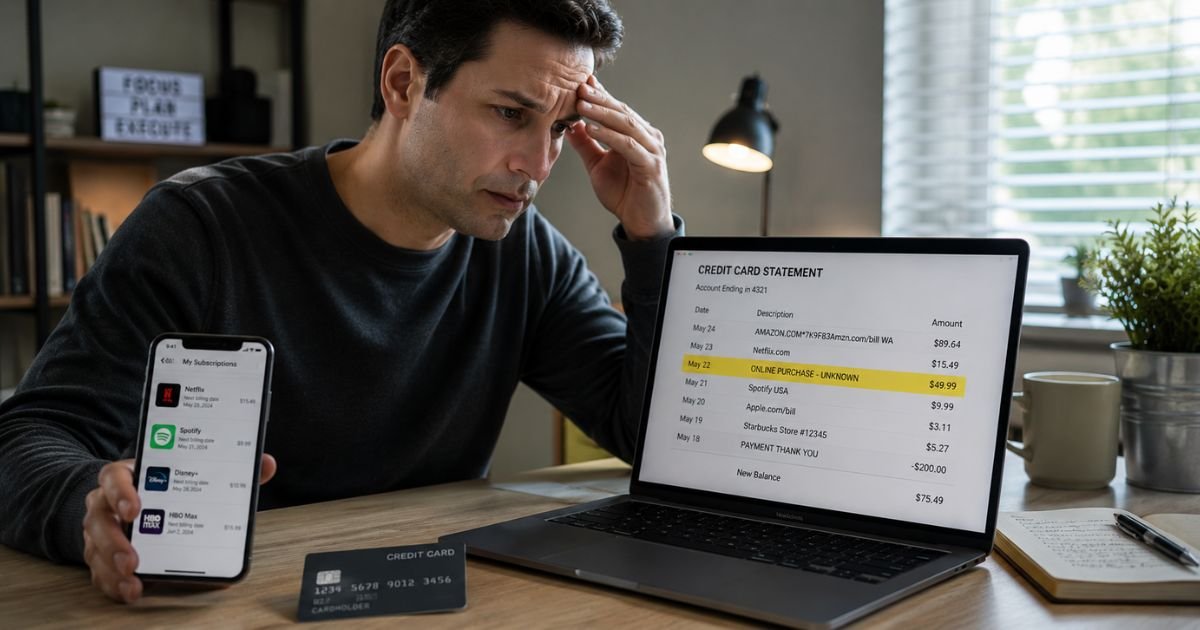
If you noticed a “CardProtect” or “Card Protect” charge on credit card statement, you are probably wondering what it is and whether it is legitimate. These charges often appear as recurring monthly fees and catch many people by surprise.
This article explains what the charge means, why it appeared, and exactly what to do next.
Table of Contents
What Is the CardProtect Charge?
The CardProtect charge represents a subscription fee for a credit card protection or monitoring service.
The provider, sometimes operating as CardProtect or through Global Privacy Solutions, typically offers features such as fraud alerts, monitoring for unauthorized use, or insurance-like coverage for certain card-related issues.
On your statement the charge usually appears as CardProtect, CARDPROTECT, or Card Protect. It is almost always a recurring charge rather than a one-time purchase.
The amount is often modest, which is why people sometimes overlook it until several months have passed.
Why Did This Charge Appear on Your Credit Card?
The CardProtect charge most often appears for one of these reasons:
- You signed up for the protection plan after receiving a phone call, email, or online offer.
- A “free trial” period ended and the service automatically converted to a paid monthly or annual subscription.
- Someone in your household or an authorized user on the card enrolled in the service.
- The charge stems from a previous bank promotion or add-on offer you accepted without realizing the recurring nature.
- In rare cases, the charge results from unauthorized use of your card information to sign up for the service.
Many people discover these charges months later because the signup process or renewal notices were not prominent.
Some consumers also report that similar protection plans use aggressive sales tactics that make the recurring cost unclear at the time of enrollment.
How to Verify the Charge
Use this checklist to confirm whether the CardProtect charge is yours:
- Search your email inbox and spam folder for messages containing “CardProtect,” “Global Privacy Solutions,” or “credit card protection.”
- Look for any welcome email, confirmation, or receipt that shows the signup date and terms.
- Check your credit card account online or in the app for additional transaction details, such as a phone number or website linked to the charge.
- Review recent phone calls or online activity around the time the first charge appeared.
- Ask other authorized users on the card or household members if they signed up for any protection service.
- If you still cannot match it, contact your credit card issuer and request the full merchant details or contact information associated with the transaction.
Is It Legitimate or Fraud?
CardProtect operates as a legitimate company offering credit card protection services.
The charge itself is usually not fraudulent in the sense that the company exists and provides the service to paying subscribers.
However, consumer experiences vary widely. Some people find the service useful, while others feel the features duplicate protections already offered for free by most credit card issuers and credit bureaus.
Common complaints include unclear renewal terms and difficulty reaching customer service to cancel.
Warning signs that the charge may be unauthorized:
- You have no record of signing up or receiving any welcome materials.
- The service continues to charge you after you attempted to cancel.
- You cannot locate a working website or responsive customer service for CardProtect.
- Multiple unknown recurring charges appear around the same time.
If any of these apply, treat the situation seriously and move to cancel and dispute the charges.
How to Cancel the CardProtect Subscription
Because CardProtect is a third-party service and not managed directly by your bank, you usually need to cancel with them directly.
Start by searching for “CardProtect cancel subscription” or “Global Privacy Solutions cancel” online. Look for an account login page or cancellation instructions on any site associated with the service.
If you find an account, log in and complete the cancellation process. Take screenshots of every step and confirmation.
If you cannot locate a website or account portal, call your credit card issuer. Explain that you want to stop recurring charges from CardProtect and request they place a stop payment or block the merchant. Provide the charge details from your statement.
Keep detailed records of every cancellation attempt, including dates and names of anyone you speak with.
Can You Get a Refund?
Refund chances are highest when you act quickly after discovering the charge.
Contact CardProtect or Global Privacy Solutions first and request a refund for recent charges, especially if you never used the service or were unaware of the recurring billing. Ask for written confirmation of any refund they agree to provide.
If the merchant is unresponsive or refuses a refund, dispute the charge with your credit card issuer.
Credit cards offer strong consumer protections, and you can usually dispute recurring charges you did not authorize or that continued after cancellation attempts.
Act within 60 days of the statement date for the best results under the Fair Credit Billing Act.
What to Do If the Charge Is Unauthorized
If you determine the CardProtect charge was not authorized by you or anyone on your account, follow these steps:
- Contact your credit card issuer immediately to dispute the charge and request they block future charges from this merchant.
- Ask the issuer to issue a new card number if you suspect your information was compromised.
- Attempt to cancel directly with CardProtect or Global Privacy Solutions and document every step.
- Monitor your statements and online banking closely for any other unfamiliar activity.
- Consider placing a fraud alert with the major credit bureaus if broader concerns exist.
- Keep records of all communications in case you need to escalate the dispute.
Quick action limits your liability and helps stop further charges.
Prevention Tips
Avoid surprise charges like the CardProtect charge on credit card statements with these practical habits:
- Be cautious of phone calls or online offers for “credit card protection” plans. Many banks and card issuers already provide robust fraud monitoring and alerts at no extra cost.
- Read the full terms and cancellation policy before accepting any trial or promotional offer.
- Set up real-time transaction alerts on your credit card so every charge notifies you immediately.
- Review your credit card statements weekly instead of waiting for the monthly bill.
- Use virtual or single-use card numbers when signing up for new online services.
- Regularly check your accounts for recurring subscriptions and cancel any you no longer need or use.
- Never share your card details over the phone unless you initiated the call to a verified company.
- Keep a simple list of active subscriptions so you can track renewal dates easily.
- If you do sign up for a paid protection service, confirm the exact billing frequency and how to cancel before providing payment information.
Common Reasons for Unrecognized Recurring Charges
| Reason | What It Usually Means | Recommended First Step |
|---|---|---|
| Forgotten subscription | You signed up and the trial ended or renewal hit | Check email for welcome or renewal notices |
| Converted free trial | Promotional period ended without clear notice | Locate cancellation instructions |
| Household or authorized user | Another person on the account enrolled | Ask family members or authorized users |
| Unauthorized signup | Someone used your card details without permission | Dispute with card issuer immediately |
| Duplicate or error | Merchant processed the same charge twice | Contact merchant and card issuer |
FAQs: CardProtect Charge on Credit Card
Q. What does the CardProtect charge mean on my credit card statement?
A. It is a recurring subscription fee for a credit card protection or monitoring service offered by CardProtect or a related provider such as Global Privacy Solutions. The service typically includes fraud monitoring or related features.
Q. Is CardProtect a scam or a legitimate company?
A. CardProtect operates as a real company providing credit card protection services. However, many consumers report that the value is limited because most credit card issuers already offer free fraud alerts and monitoring. Some also experience difficulty canceling.
Q. How do I cancel my CardProtect subscription?
A. Search online for CardProtect or Global Privacy Solutions cancellation instructions and look for an account login. If you cannot find a working site or portal, contact your credit card issuer and request they stop future recurring charges from this merchant.
Q. Can I get a refund for CardProtect charges I did not want?
A. Yes. Contact the service provider first to request a refund. If they do not respond or refuse, dispute the charges with your credit card issuer. Act quickly for the strongest consumer protections.
Conclusion
The CardProtect charge on credit card is typically a recurring subscription for a third-party credit card protection service.
In many cases it stems from a signup you or a household member completed, even if the recurring nature was not immediately clear.
Verifying the charge through your email and card account usually reveals the source.
If the charge does not match any activity you recognize, or if canceling proves difficult, work directly with your credit card issuer to dispute it and block future billing.
Most major card issuers already provide strong fraud protection tools for free, so evaluate whether the paid service adds meaningful value before continuing it.
Disclaimer: This article provides general information for educational purposes only and is not financial, legal, or professional advice. Company policies, billing practices, and consumer protections can change. Always verify details directly with CardProtect or your credit card issuer for your specific situation. For disputes or account issues, contact your financial institution promptly.
Meet the Author
