
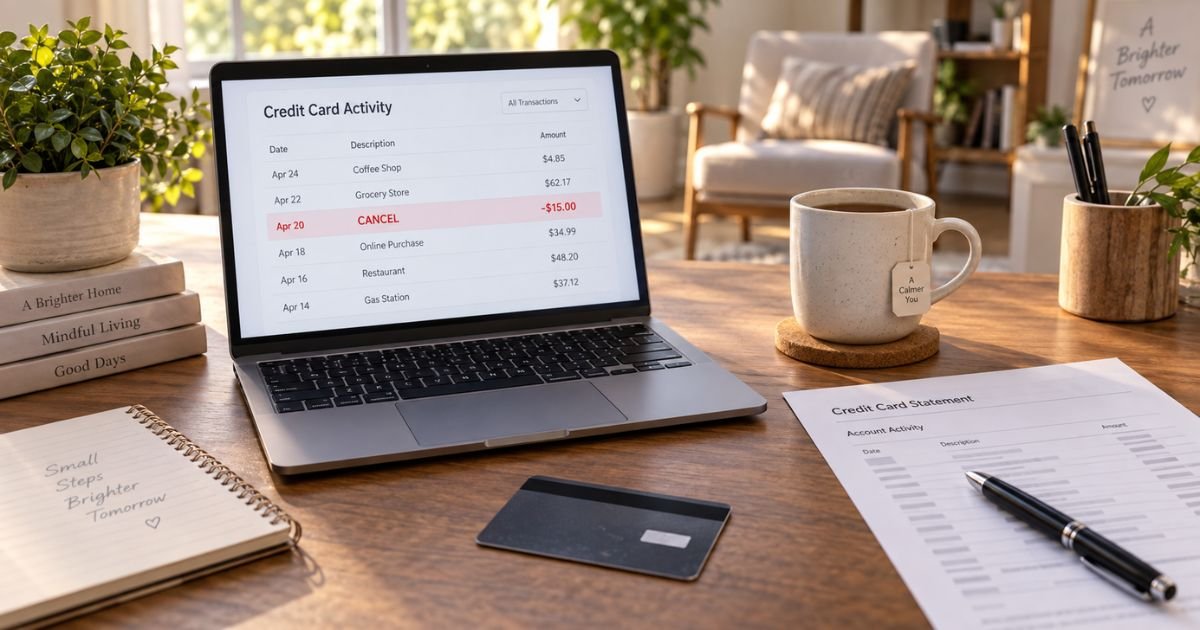
Seeing a cancel charge on a credit card can feel confusing if you don’t recall signing up for anything. The line may look like a new merchant.
In many cases it is a voided sale, a refund after you canceled an order, or a cancellation fee from a trip or membership.
This guide explains what that label usually means and the practical steps to cancel a pending charge, a posted charge, or a subscription that keeps billing.
Table of Contents
What a cancel charge on a credit card is
A cancel charge on credit card is not one company. It is usually one of four things.
First, the merchant voided a sale before it settled. That pending line may disappear or show as CANCEL, VOID, or REVERSAL.
Second, you canceled an order and the store sent a credit. The original purchase and the cancel credit can both appear.
Third, the business charged a cancellation fee. Airlines, hotels, events, and some memberships do this when you cancel outside the free window.
Fourth, you are trying to stop a charge you do not want. That is an action, not a merchant name. The steps depend on whether the charge is still pending or already posted.
Read the full descriptor. A fee for canceling is money leaving your available credit. A credit for a canceled order is money coming back.
How a cancel charge usually appears
Issuers shorten labels. You may see:
- CANCEL, CANCELED, or CANCELLED next to a store name
- VOID or AUTH REVERSAL on a pending hold
- A second line for the same merchant with a credit amount
- CANCEL FEE, CANCELLATION, or CHANGE FEE on a travel brand
- The original subscription name with no extra word at all
Match the date and dollar amount to an email receipt, hotel booking, airline ticket, or app subscription. Pending and posted views can differ. Check both in your issuer’s app.
Pro Tip: Screenshot the pending line, the posted line, and any cancel confirmation email. Dates and confirmation numbers matter more than a phone call you cannot prove later.
How to cancel a pending charge
A pending charge is an authorization hold. The merchant asked your issuer to set money aside. The sale is not fully settled yet.
You generally cannot make the issuer erase a pending hold on its own. The merchant still controls that authorization. Contact the store, airline, hotel, or website first and ask it to void the sale or release the hold.
Call or use the order page the same day if you can. Ask for a void, not only a future refund. A void is meant to drop the pending line. A refund after posting is a new credit and takes longer.
Typical pending windows are a few business days for ordinary purchases. Hotels, car rentals, and gas pumps can hold more and hold longer. If the merchant never settles, the hold may expire on its own. Watch the account for several days in case the final charge still posts.
If the pending charge is fraud, call the number on the back of your card right away. Ask the issuer to lock the card. You may still need to wait until the line posts before a formal dispute can start. Report the fraud anyway so more charges do not go through.
How to cancel a posted charge
Once a charge posts, the merchant has captured the sale. A void is usually too late. You now have two paths.
Start with the merchant if you authorized the purchase and simply want out. Ask for a refund to the same card. Keep the case number. Refunds often take several business days after the store processes them.
If the merchant will not help, or you never authorized the charge, use your card issuer. Billing errors and unauthorized use on a credit card fall under the Fair Credit Billing Act. The CFPB says you should also send a written billing-error notice within 60 calendar days after the charge appeared on your statement.
After the issuer gets that notice, it generally has 30 days to confirm receipt unless it already finished the required steps. It then generally has two billing cycles, and no more than 90 days, to resolve the issue.
Send the letter to the billing-inquiries address on your statement, not the payment address. Include your name, account number, the date and amount, and why the charge is wrong. Keep copies. The FTC publishes a sample dispute letter you can adapt.
You generally do not have to pay the disputed amount or related finance charges while a valid review is open. You still need to pay the rest of the bill on time.
Closing the credit card does not cancel a merchant’s right to bill a subscription you still have. Cancel the service first. Then deal with any leftover charge on the card.
Canceling a subscription that keeps charging
Recurring charges are the most common “please cancel this” problem. Your issuer cannot log into the gym, streaming app, or trial site for you.
Use this order:
- Find the original site or app from the descriptor and your receipt email.
- Cancel inside the account, membership, or subscription page.
- Save the confirmation screen and email.
- Watch the next statement. Many plans bill through the end of the paid period.
- If another charge posts after that confirmation date, send it to the merchant in writing, then dispute it with your issuer as a billing error.
Ask the issuer about blocking future charges from that merchant descriptor if the company ignores you. A block is not the same as canceling the contract. You still want written proof that you ended the membership.
A trial that converted to a paid plan is still a merchant charge. Look for the trial email, not only the latest statement line.
When the “cancel charge” is a cancellation fee
Some cancel lines are fees, not refunds. Travel and event sellers often keep a deposit, one night’s stay, or a stated cancel penalty when you miss the free window.
Airline tickets bought at least seven days before departure generally get a federal 24-hour rule. The airline must either hold the reservation unpaid for 24 hours or let you cancel within 24 hours for a full refund.
That 24-hour rule generally does not cover tickets bought through an online travel agency. After that window, the fare rules on your confirmation control refunds and fees.
If the airline canceled the flight or made a significant change and you declined the new plan, U.S. Department of Transportation refund rules may require a refund of the unused ticket to the original form of payment.
That is different from you canceling a flight you no longer want. Check transportation.gov for the current passenger-refund details.
Hotel and event fees follow the rate you booked. A prepaid or nonrefundable rate may allow little or no cash back. A flexible rate may allow a free cancel until a printed deadline. Compare the posted cancel charge with that confirmation before you dispute it.
A dispute is stronger when the fee does not match the written policy, the seller canceled on you, or you canceled inside the free window and still got billed. It is weaker when you missed a deadline you accepted at checkout.
| What you want | Who to call first | What success usually looks like |
|---|---|---|
| Stop a pending hold | Merchant | Hold drops or is voided |
| Undo a posted purchase | Merchant, then issuer | Refund credit or dispute credit |
| Stop a subscription | Merchant account, then issuer | Cancel confirmation, then no new bills |
| Question a cancel fee | Merchant policy, then issuer | Fee reversed only if it breaks the terms |
Common Mistakes: Waiting for the issuer to cancel a pending hold the merchant still owns. Cutting up the card and assuming a gym bill stops. Disputing a cancel fee without reading the booking rules you accepted. Skipping written cancel proof, then having no evidence when the next bill posts.
FAQs: Cancel Charge on Credit Card
Q. Can I cancel a charge on a credit card from the bank app?
A. Sometimes you can start a dispute in the app after the charge posts. You generally cannot force a pending merchant hold to vanish from the app alone. Ask the merchant to void a pending sale. Use the issuer for posted billing errors, unauthorized charges, or bills that continue after you canceled.
Q. How long do I have to cancel a charge on a credit card?
A. For a pending void, act as soon as you see the hold, often within a day or two. For a credit-card billing error, send written notice so it arrives within 60 days after the issuer sent the first statement that showed the charge. Issuer apps may let you tap Dispute sooner. The written notice is what triggers the federal timeline.
Q. Does a cancel charge on a credit card mean I got my money back?
A. Not always. A cancel credit or dropped pending hold usually returns available credit. A cancellation fee is the opposite. It is a charge for ending a booking or plan. Read whether the line is a credit or a debit before you assume the purchase is gone.
Q. Will canceling the credit card stop the charge?
A. Usually no. Merchants can keep billing a stored card number, or send the balance to collections, if the membership is still open. Cancel the service in writing first. Then dispute leftover charges and ask the issuer about blocking that merchant. Keep paying any undisputed card balance so you do not add late fees.
Conclusion
A cancel charge on a credit card is usually a void, a refund, a cancellation fee, or a charge you want stopped. Pending holds belong to the merchant. Posted problems belong to a refund request and, if needed, a written billing-error notice within 60 days.
Cancel the subscription or booking in writing, save the confirmation, and only then use your issuer. That order solves most cancel-charge surprises without turning a simple return into a longer dispute.
Disclaimer: This article is for general information only. It is not financial, legal, or travel advice. Merchant cancel windows, airline rules, and issuer dispute tools vary. Confirm account-specific questions with the merchant on the charge, your card issuer, or the official CFPB and DOT pages that apply to your purchase.
Meet the Author
