
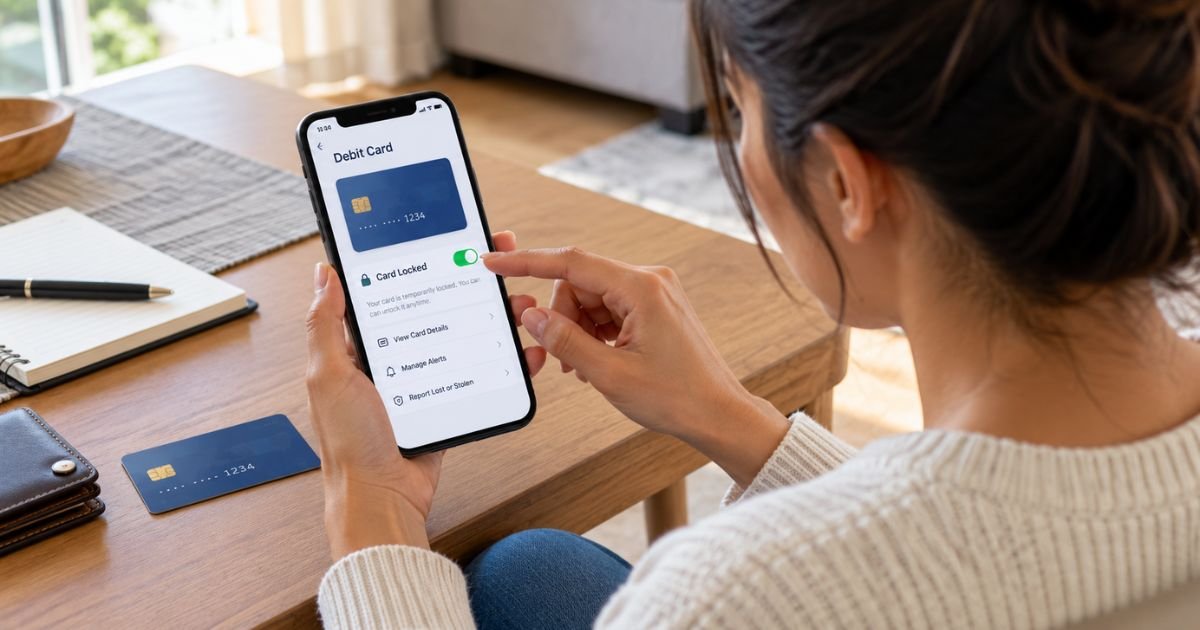
The best methods to freeze your debit card temporarily can help when you misplace your card or want to stop new purchases for a short time. A temporary lock is generally fast, reversible, and available through many U.S. banking apps.
Freezing your card does not always block every type of transaction. This guide explains the safest ways to lock your debit card, what may still go through, and when you should replace the card instead.
Table of Contents
What Are the Best Methods To Freeze Your Debit Card Temporarily?
The best methods to freeze your debit card temporarily usually involve your bank’s mobile app, online banking website, or customer service department. Many large U.S. banks now let you turn a debit card off and back on without closing your checking account.
A temporary freeze generally stops many new debit card purchases. However, the exact transactions blocked can vary by bank and card network.
For example, some banks may continue processing previously authorized payments, recurring subscriptions, refunds, credits, or account transfers. You should check your bank’s card-lock terms before assuming every transaction has stopped.
Freeze Your Debit Card Through Your Banking App
Using your bank’s mobile app is generally the fastest method. Major banks including Chase, Bank of America, Wells Fargo, and Capital One currently provide debit-card locking tools for eligible customers.
The exact menu names vary. You may see options such as:
- Lock Card
- Lock & Unlock Card
- Turn Card On or Off
- Manage Debit Card
- Card Controls
- Card Settings
Open your checking account and look for card-management settings. Select the debit card you want to freeze and follow the prompts to turn it off.
The change is generally effective quickly. Your bank may send a notification confirming that the card has been locked.
Pro Tip: Turn on transaction alerts before you lock your card. You can generally receive a notification if someone attempts to use it while you are looking for the card.
Freeze the Card Through Online Banking
You can generally use your bank’s website if you do not have its mobile app. Sign in through the bank’s official website instead of clicking a link in an email or text message.
Look under sections such as card management, account services, security, or debit card settings. You may find the same lock and unlock control offered in the mobile app.
Online banking can be useful if your phone is lost along with your wallet. You can sign in from another trusted device and temporarily disable the card.
You should generally avoid logging into your bank account on public computers or unsecured public Wi-Fi. Use a private device whenever possible.
Call Your Bank to Temporarily Block the Card
Calling your bank is another option if you cannot access online banking. Use the official number shown on your bank’s website, a previous statement, or another trusted bank document.
Tell the representative that the card is temporarily misplaced. Ask whether they can lock the debit card without permanently canceling it.
Not every bank handles phone requests the same way. Some may let you temporarily freeze the card, while others may recommend replacing it if you cannot find it.
If you believe the card was stolen rather than misplaced, tell the bank clearly. A stolen card generally calls for stronger action than a temporary freeze.
Use Dedicated Card Controls
Some banks and credit unions provide more detailed card controls instead of one simple lock switch. These settings may let you restrict certain transaction types.
Depending on your issuer, you may be able to disable:
- ATM withdrawals
- Online purchases
- International purchases
- Contactless payments
- In-store card purchases
- Certain transaction categories
These controls can be helpful when you still have the card but want tighter control over how it is used.
Features vary significantly between banks. You should check the controls available for your particular debit card.
Temporary Freeze Methods Compared
| Method | Speed | Best Used When | Easy to Reverse? |
|---|---|---|---|
| Mobile banking app | Usually immediate | You temporarily misplaced the card | Usually yes |
| Online banking | Usually immediate | You cannot use the mobile app | Usually yes |
| Customer service | Usually fast | You cannot access digital banking | Usually |
| Individual card controls | Usually immediate | You want to block certain purchase types | Usually yes |
| Card replacement | Permanent for old card | Card is lost, stolen, or compromised | No |
A temporary lock should generally be used only when you expect to recover the card. Replacing the card is usually safer when theft or fraud is possible.
What Happens When You Freeze Your Debit Card?
A frozen debit card generally cannot be used for many new purchases. Someone who finds the physical card may therefore have trouble using it at a store or online.
However, freezing the debit card does not usually freeze your checking account. You can generally still receive direct deposits, use online banking, and make certain account transfers.
Exactly what continues to work depends on your financial institution.
Capital One, for example, currently says locking its debit card does not stop automatic bill payments or scheduled transfers. Wells Fargo says some previously authorized recurring payments, credits, refunds, and reversals may still be approved when its card is turned off.
This is why a temporary lock should not be treated as the same thing as closing the card.
Will Subscriptions Still Charge a Frozen Debit Card?
They may. Many issuers specifically warn that recurring or previously authorized transactions can continue after a card is locked.
That means freezing your debit card is generally not a reliable method for canceling subscriptions.
If you want to stop a subscription, cancel it directly with the merchant. Keep the cancellation email or confirmation number in case another charge appears.
If a merchant continues billing you after a valid cancellation, contact your bank and ask about its dispute process.
Common Mistakes: Don’t use a card freeze as a substitute for canceling a recurring membership. Some automatic payments may continue because your bank already considers them authorized transactions.
When Should You Unlock Your Debit Card?
You can generally unlock your card after you find it and confirm that it remained secure.
Before turning it back on, review your checking account for transactions you do not recognize. Even small unfamiliar purchases can deserve attention.
If everything looks normal, return to the same card-control section in your banking app or website. Switch the card back on and wait for confirmation.
Your card should generally begin working again quickly. Timing may vary by issuer.
When a Temporary Freeze Is Not Enough
A temporary freeze is most appropriate when you think your card is somewhere safe but temporarily misplaced. For example, you may have left it in another jacket, your car, or somewhere inside your home.
You should generally contact your bank immediately if:
- You believe the card was stolen.
- You see an unauthorized transaction.
- Someone may know your PIN.
- Your card details were exposed online.
- Your wallet was taken.
- You cannot find the card after searching.
- You received an unexpected fraud alert.
Your bank may recommend permanently closing the old card and issuing a replacement.
A replacement card generally comes with a new card number, expiration date, or security code. You may then need to update legitimate recurring payments.
Why Fast Reporting Matters With Debit Cards
Debit cards usually connect directly to your checking account. That means unauthorized transactions can remove money you need for bills and everyday expenses.
Federal protections generally depend partly on how quickly you report a lost or stolen debit card.
If you notify your bank within two business days after discovering that your debit card was lost or stolen, your potential liability under federal rules is generally limited to $50. Waiting longer can potentially increase your liability.
Different rules can apply when your physical card was never lost but an unauthorized transaction appears on your statement. You should still report suspicious activity as soon as possible.
Your bank may provide protections that are stronger than the federal minimum. Check your debit card agreement for details.
How to Protect Your Account While the Card Is Frozen
Freezing the card is only one security step. You should also review your recent transactions while the card is turned off.
Consider taking these steps:
- Turn on purchase and withdrawal alerts.
- Review pending and completed transactions.
- Change your PIN if you believe it was exposed.
- Change your online banking password if necessary.
- Use two-factor authentication when available.
- Contact your bank about unfamiliar transactions.
- Remove the card from unfamiliar digital wallets.
Continue watching the account after finding or replacing your card. Unauthorized activity may not always appear immediately.
Should You Freeze or Cancel Your Debit Card?
Your choice generally depends on why you cannot use or locate the card.
Freeze the card when you believe it is temporarily misplaced and there is little reason to think someone else has it. You can generally unlock it once you find it.
Cancel and replace the card when you believe it was stolen, copied, compromised, or used without permission.
If you are unsure, contact your bank. Explain what happened and ask whether a temporary lock or permanent replacement is more appropriate.
FAQs: Best Methods To Freeze Your Debit Card Temporarily
Q. Can I temporarily freeze my debit card without closing my account?
A. Yes, many U.S. banks generally let you lock a debit card without closing the checking account. You can usually continue using other account features while the physical debit card is locked.
Q. Can I still receive money when my debit card is frozen?
A. Generally, yes. A debit-card freeze normally affects card transactions rather than direct deposits or the entire checking account.
Your bank’s rules may vary, so check its card-lock terms.
Q. Will freezing my debit card stop pending transactions?
A. Not always. Transactions that were already authorized before you locked the card may still post to your account.
Recurring payments, refunds, and reversals may also continue with some banks.
Q. Can I unfreeze my debit card immediately?
A. Usually, yes. Many banks let you unlock the card through the same app or online banking screen you used to freeze it.
The card may become usable quickly, but exact timing can vary by issuer.
Conclusion
The best methods to freeze your debit card temporarily are generally your bank’s mobile app, online banking portal, customer service line, or built-in card controls. A temporary lock can give you time to search for a misplaced card without immediately replacing it.
Remember that a freeze may not stop subscriptions, previously authorized payments, or every type of transaction. If your card is stolen, compromised, or connected with unauthorized activity, contact your bank promptly and ask about replacing it instead.
Disclaimer: This article is for general informational purposes only and is not financial or legal advice. Debit-card features, fraud protections, and transaction policies vary by issuer, so verify account-specific questions with your bank or credit union.
Meet the Author
