
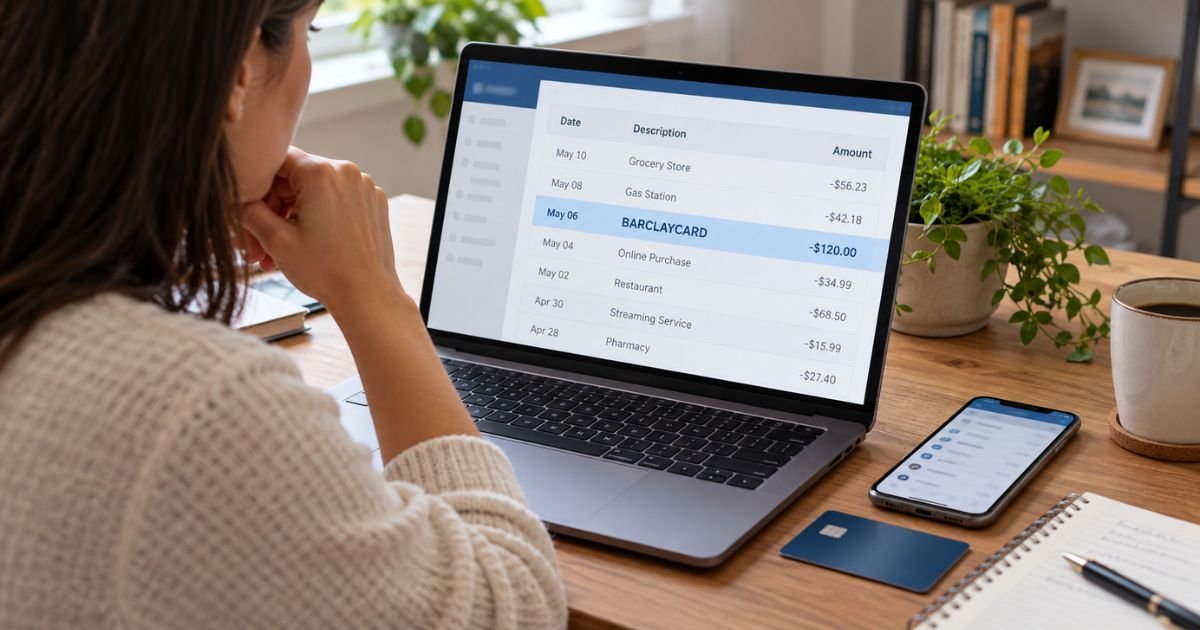
A Barclaycard charge on bank statement can feel confusing if you do not remember paying a merchant by that name. In many cases, the entry is not a normal store purchase.
It may instead be a payment from your bank account to a Barclaycard credit card, a Direct Debit for your card balance, or a business merchant-service charge. The exact meaning depends on the account and whether money left or entered it.
Table of Contents
What Is a Barclaycard Charge on Bank Statement?
A Barclaycard charge on bank statement generally means Barclays or Barclaycard processed a payment connected with a credit card or merchant-services account. For personal customers, one common explanation is a payment toward a Barclaycard credit card balance.
Barclays says Barclaycard bills can be paid by Direct Debit, bank transfer, and other supported methods. A Direct Debit can collect an agreed amount automatically from your bank account.
If you run a business using Barclaycard Payments, the entry may instead relate to merchant-service fees or settlements. Barclaycard lists monthly, transaction, equipment, and activity-based charges on merchant accounts.
Why You May See Barclaycard on Your Bank Statement
The most common explanation is that you or another account holder made a credit card payment. Your bank statement may show Barclaycard because that is the payee receiving the money.
Other possibilities include:
- A monthly Direct Debit for your Barclaycard bill.
- A one-time bank transfer to your card account.
- A debit card payment toward the balance.
- A business merchant-service fee.
- A card-processing settlement or adjustment.
- A payment made by another joint account holder.
If the amount matches your latest Barclaycard statement balance or minimum payment, that is a strong clue that it is a card repayment.
Is Barclaycard a Merchant Charge?
Usually, not in the same way as a restaurant, retailer, or subscription service. Barclaycard is a credit card and payment-services brand connected with Barclays.
For personal banking customers, a Barclays or Barclaycard entry may simply show who received your credit card payment. That is different from a purchase you made with a Barclaycard at another merchant.
Pro Tip: Check whether the entry is on your checking account or your credit card statement. A Barclaycard debit from checking is often a card payment, while an unfamiliar charge on the credit card itself may mean something different.
Could It Be a Direct Debit?
Yes. A recurring Barclaycard entry may be a Direct Debit that pays your credit card bill each month.
Barclays explains that a Direct Debit is an instruction allowing a company to collect an agreed payment from your bank account. Barclaycard customers can generally use one to help pay their monthly balance on time.
The amount may be the minimum payment, full statement balance, or a fixed amount. Check your payment settings if the debit differs from what you expected.
Why Is the Amount Different From What You Expected?
Your payment can change if your balance changes before collection. Refunds, credits, extra payments, or account adjustments may affect the amount ultimately taken.
You may also have more than one Barclaycard account, each with its own balance and payment instruction.
If you are a business customer, the amount may instead be a merchant-services charge. Barclaycard says merchant statements can include transaction fees, monthly service fees, authorization charges, and chargeback-related fees.
What If You Use Barclaycard Payments for Your Business?
If your business accepts customer cards through Barclaycard, a debit from your bank account may be a merchant-services fee. A credit may represent card sales being settled into your business account.
Barclaycard says merchant-service fees are generally billed after it processes customer transactions. Depending on your agreement, you may see POS service fees, e-commerce charges, authorization fees, or chargeback administration fees.
| Bank statement activity | Possible explanation |
|---|---|
| BARCLAYCARD debit | Card repayment or merchant-service fee |
| BARCLAYCARD Direct Debit | Automatic card-bill payment |
| BARCLAYCARD credit | Possible merchant settlement or refund |
| Repeating similar amount | Fixed payment or recurring fee |
| Changing monthly amount | Statement-balance payment or usage-based fee |
Common Mistakes: Do not assume every Barclaycard entry is an unauthorized retail purchase. First check your card payment history, Direct Debits, and any Barclaycard merchant account you use.
How to Verify the Barclaycard Charge
Start by comparing the amount with your Barclaycard account. Check your latest statement balance, minimum payment, and recent payment history.
Also review your bank’s Direct Debit list. If Barclaycard appears as an active instruction, compare the collection date with the transaction.
Then check for a payment confirmation, bank transfer, merchant statement, or another account holder’s payment. If nothing matches, contact Barclaycard through its official app, website, or number on your card.
Is Barclaycard Legitimate?
Yes. Barclaycard is a long-established Barclays credit card and payment-services brand.
That does not mean every transaction displaying the name was authorized by you. A legitimate company can still appear on a payment set up incorrectly or without your permission.
Trustpilot, BBB, and Reddit contain mixed consumer reports about Barclays, including payment timing, fees, fraud disputes, and customer service. These reports are individual experiences, so your own account records are more useful for identifying your transaction.
What If You Do Not Have a Barclaycard?
An unfamiliar Barclaycard debit deserves prompt attention if you have never held a Barclaycard account and do not use Barclaycard merchant services.
First ask any joint account holder whether they made a payment. Someone may have used the bank account to pay their own card.
If nobody recognizes it, contact your bank. Ask whether the transaction is a Direct Debit, card payment, bank transfer, or another payment type.
Your bank may have a creditor reference or mandate details that identify it.
How to Stop an Unknown Barclaycard Direct Debit
Do not cancel a legitimate Barclaycard Direct Debit if you still owe a balance and have no replacement payment method. Missing a required card payment may lead to interest or late-payment consequences.
If the Direct Debit is genuinely unknown, contact your bank and Barclaycard promptly. Barclays advises customers who see an unrecognized transaction or Direct Debit to report it through official bank channels.
Can You Get the Charge Refunded?
It depends on the type of transaction.
If it was a valid payment toward your own credit card, it is generally not treated like a merchant purchase refund. If you overpaid, your card account may show a credit balance, and Barclaycard can explain how it may be returned.
For a business merchant-service fee, compare the amount with your merchant statement and contract. Contact Barclaycard Payments if the amount does not match your agreed pricing.
If the payment was unauthorized, contact your bank promptly. Protections may vary by transaction type.
FAQs: Barclaycard Charge on Bank Statement
Q. Why does Barclaycard appear on my bank statement?
A. It generally appears because your bank account was used to pay a Barclaycard credit card or because you use Barclaycard business payment services. Check whether the amount matches a card payment or merchant-service fee.
Q. Is a Barclaycard bank statement charge a subscription?
A. Usually not. A repeating entry is more likely to be an automatic credit card payment or a recurring merchant-services fee.
Q. What if I do not own a Barclaycard?
A. Ask other account holders whether they made the payment. If nobody recognizes it, contact your bank promptly and ask for the full payment details.
Q. How do I stop Barclaycard from taking money from my bank account?
A. First confirm whether the payment is a valid Direct Debit for your card bill. If it is unauthorized, contact your bank and Barclaycard before canceling or changing anything.
Conclusion
A Barclaycard charge on bank statement usually means money moved between your bank account and a Barclaycard credit card or merchant-services account. It may be a Direct Debit, one-time repayment, merchant fee, or settlement-related entry.
Check the amount against your Barclaycard statements, Direct Debits, and payment history first. If the Barclaycard charge on bank statement remains unexplained, contact your bank and Barclaycard promptly so the transaction can be identified.
Disclaimer: This article is for general informational purposes only and is not financial or legal advice. Payment descriptions, Direct Debit rules, refunds, and dispute procedures can vary by bank and account, so verify account-specific questions with Barclaycard or your bank.
Meet the Author
